


Hepatoprotective effect of Pandanus odoratissimus seed extracts on paracetamol-induced rats
- PMID: 33403907
- PMCID: PMC7801105
- DOI: 10.1080/13880209.2020.1865408
Hepatoprotective effect of Pandanus odoratissimus seed extracts on paracetamol-induced rats
Abstract
Context: Pandanus odoratissimus Linn. (Pandanaceae) seed extract is known to have antioxidant activities. However, the potential hepatoprotective effect is still unclear.
Objective: To investigate the hepatoprotection aspect of P. odoratissimus methanol extract towards paracetamol-induced rats.
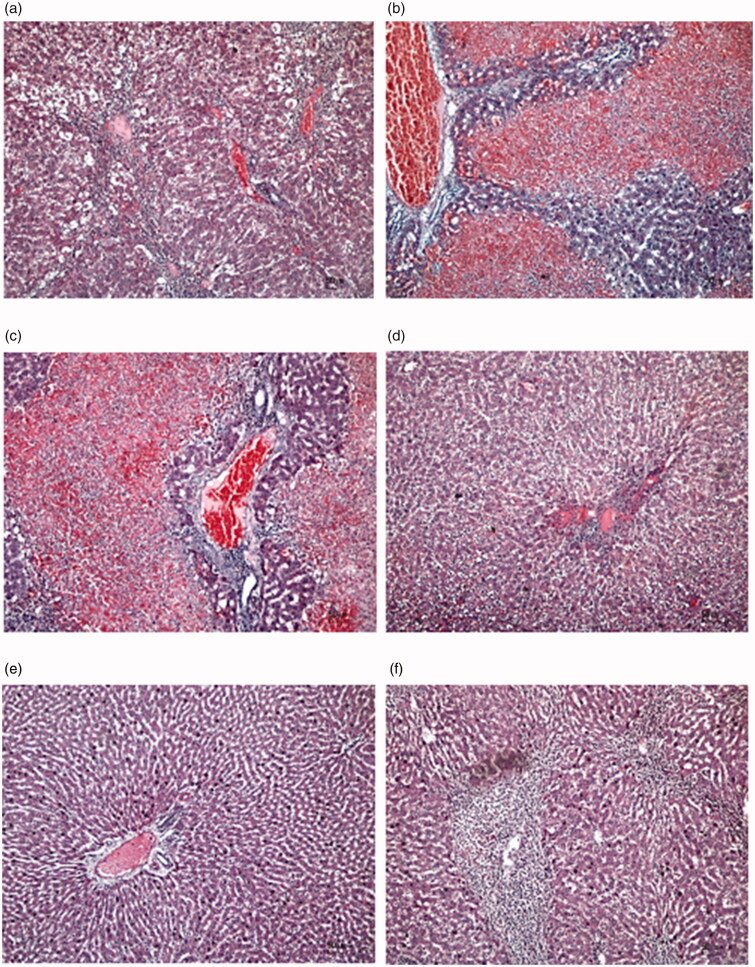
Materials and methods: Thirty male Sprague-Dawley rats were randomly divided into six equal groups: one group served as the healthy control and five groups with hepatotoxicity (hepatotoxic control and 4 treatment groups). The oral treatment of paracetamol-induced hepatotoxicity of 3 g/kg using three different concentrations of P. odoratissimus (300, 600 and 900 mg/kg), and silymarin (200 mg/kg) groups were administered once a day for 14 days. Enzyme activities and protein levels in serum were determined in rats at the end of the treatments. The histopathology of rat livers was observed under an electron microscope with 10× magnification.
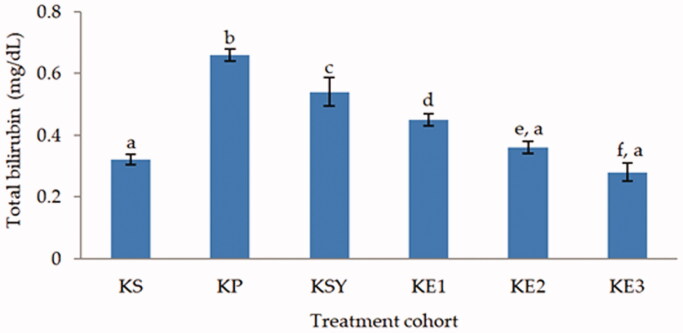
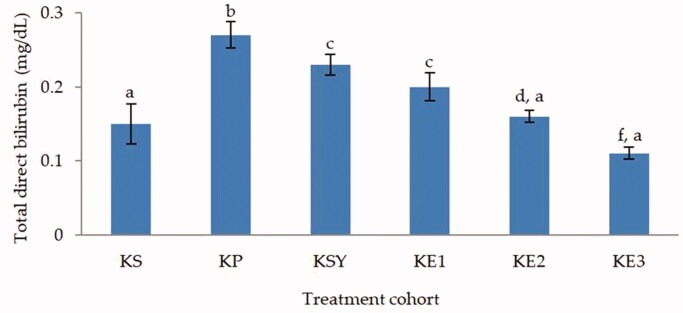
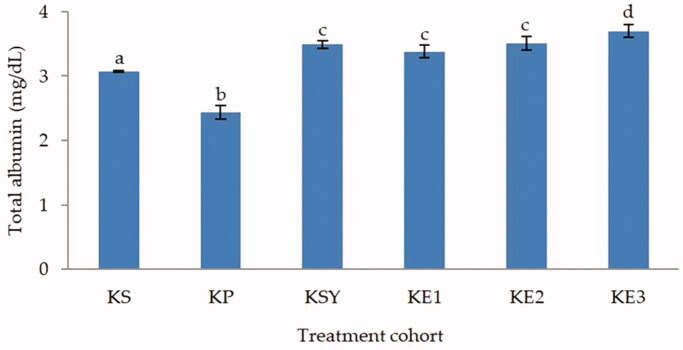
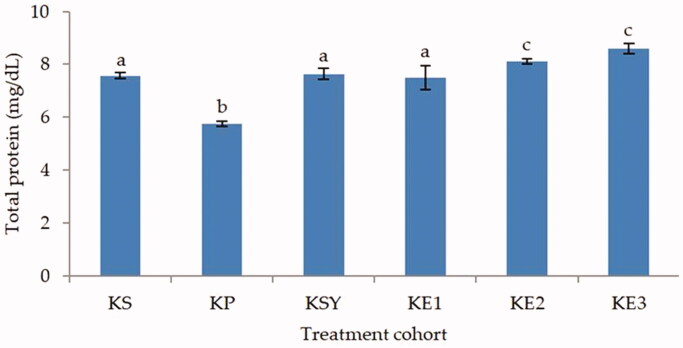
Results: Pandanus odoratissimus significantly decreased the serum glutamic-oxaloacetic transaminase (SGOT), serum glutamic pyruvic transaminase (SGPT), alkaline phosphatase (ALP) and γ-glutamyl transferase (GGT) activities in induced-paracetamol rat serum (p < 0.05). Moreover, P. odoratissimus significantly decreased total bilirubin and direct bilirubin levels (p < 0.05). It significantly blocked the decline of serum albumin and protein levels (p < 0.05). Histopathological changes amplified paracetamol-induced liver damage and the hepatoprotective effect of P. odoratissimus in the liver.
Discussion and conclusions: Pandanus odoratissimus improved the hepatoprotective effect in a concentration-dependent manner by reducing related hepatic enzyme and protein markers, suggesting as a useful agent in hepatotoxicity treatment, and it can be generalized to a broader study population in different hepatotoxic animal models.
Keywords: antioxidant; Anti-hepatotoxicity; histopathology; silymarin.
Conflict of interest statement
No potential conflict of interest was reported by the author(s).
Figures
References
-
- Abirami A, Nagarani G, Siddhuraju P.. 2015. Hepatoprotective effect of leaf extracts from Citrus hystrix and C. maxima against paracetamol induced liver injury in rats. Food Sci Hum Wellness. 4(1):35–41.
-
- Ahmad U, Faiyazuddin M, Hussain MT, Ahmad S, Alshammari TM, Shakeel F.. 2015. Silymarin: an insight to its formulation and analytical prospects. Acta Physiol Plant. 37(11):1–17.
-
- Albano E. 2006. Alcohol, oxidative stress and free radical damage. Proc Nutr Soc. 65(3):278–290. - PubMed
MeSH terms
Substances
LinkOut - more resources
Full Text Sources
Other Literature Sources
Medical
Miscellaneous
