


Use of donor human milk in nonhospitalized infants: An infant growth study
- PMID: 33404169
- PMCID: PMC7988867
- DOI: 10.1111/mcn.13128
Use of donor human milk in nonhospitalized infants: An infant growth study
Abstract
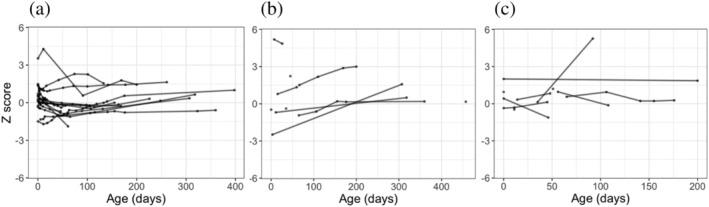
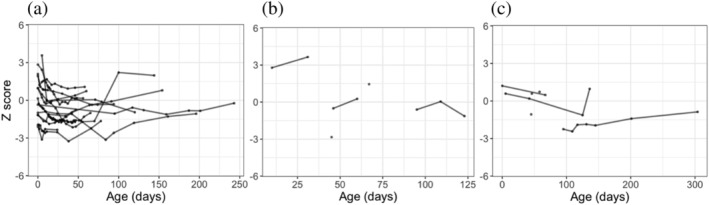
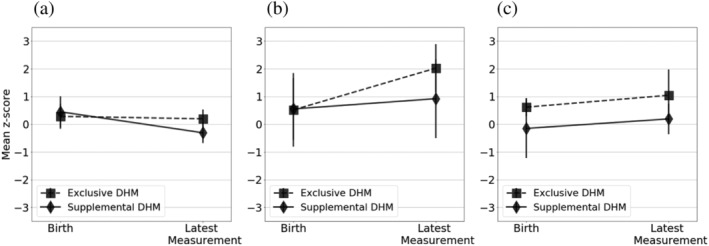
When mother's own milk (MOM) is unavailable or insufficient, donor human milk (DHM) is recommended as the next best alternative for low birthweight infants. DHM use for healthy, term infants is increasing, but evidence for growth and tolerability is limited. This retrospective study evaluated growth in term infants in the community who received DHM from a UK milk bank. Mothers of infants receiving DHM between 2017 and 2019 were contacted (n = 49), and 31 (63.2%) agreed to participate. Fourteen infants received DHM as a supplement to other feeds (MOM and/or infant formula) and 17 were exclusively fed DHM where breastfeeding was impossible (range: 3-6 weeks). Growth was assessed by deriving z-scores using the WHO standard for infant growth and compared with 200 exclusively breastfed infants. Multivariate regression analysis revealed no feeding method-specific association between z-score and age, nor between weight and age, suggesting that z-scores and growth velocity were not affected by feeding exclusive MOM, supplemental DHM or exclusive DHM. DHM was well-tolerated with no adverse events that led to early cessation. After receiving supplemental DHM group, 63% of infants whose mothers had no physical barrier to breastfeeding (5/8 infants) were exclusively breastfed. This novel study reports adequate growth outcomes of healthy nonhospitalized infants receiving DHM, either as the sole milk source or supplement. Prospective studies are needed to confirm whether DHM is a suitable feeding alternative for term infants in the community, optimal durations, as well as the impact of DHM availability on breastfeeding rates and maternal mental health.
Keywords: breastfeeding; feeding problems; growth; human milk; infant feeding; infant growth; milk banks.
© 2021 The Authors. Maternal & Child Nutrition published by John Wiley & Sons Ltd.
Conflict of interest statement
Natalie Shenker and Gillian Weaver are nonremunerated cofounders of the Human Milk Foundation and the Hearts Milk Bank. The other authors have no potential conflicts of interest to disclose. R. B. reports receiving personal fees for consultancy in the past 3 years from Prota Therapeutics and DBV Technologies who develop food allergy treatments and from the Dairy Goat Cooperative for design of a clinical trial. Imperial College London has a formal research and innovation partnership with Nestle. None of the authors or their research groups are involved in this work in any way.
Figures
References
-
- Adhisivam, B. , Vishnu Bhat, B. , Banupriya, N. , Poorna, R. , Plakkal, N. , & Palanivel, C. (2017). Impact of human milk banking on neonatal mortality, necrotizing enterocolitis, and exclusive breastfeeding—Experience from a tertiary care teaching hospital, south India. The Journal of Maternal‐Fetal & Neonatal Medicine, 32, 1–4. 10.1080/14767058.2017.1395012 - DOI - PubMed
-
- Battersby, C. , Marciano Alves Mousinho, R. , Longford, N. , Modi, N. , & UK Neonatal Collaborative Necrotising (UKNC‐NEC) Study Group (2018). Use of pasteurised human donor milk across neonatal networks in England. Early Human Development, 118, 32–36. 10.1016/j.earlhumdev.2018.01.017 - DOI - PubMed
Publication types
MeSH terms
Grants and funding
LinkOut - more resources
Full Text Sources
Other Literature Sources
