


Sex differences in factors predicting post-treatment opioid use
- PMID: 33405314
- PMCID: PMC8254742
- DOI: 10.1111/add.15396
Sex differences in factors predicting post-treatment opioid use
Abstract
Background and aims: Several reports have documented risk factors for opioid use following treatment discharge, yet few have assessed sex differences, and no study has assessed risk using contemporary machine learning approaches. The goal of the present paper was to inform treatments for opioid use disorder (OUD) by exploring individual factors for each sex that are most strongly associated with opioid use following treatment.
Design: Secondary analysis of Global Appraisal of Individual Needs (GAIN) database with follow-ups at 3, 6 and 12 months post-OUD treatment discharge, exploring demographic, psychological and behavioral variables that predict post-treatment opioid use.
Setting: One hundred and thity-seven treatment sites across the United States.
Participants: Adolescents (26.9%), young adults (40.8%) and adults (32.3%) in treatment for OUD. The sample (n = 1,126) was 54.9% male, 66.1% white, 20% Hispanic, 9.8% multi-race/ethnicity, 2.8% African American and 1.3% other.
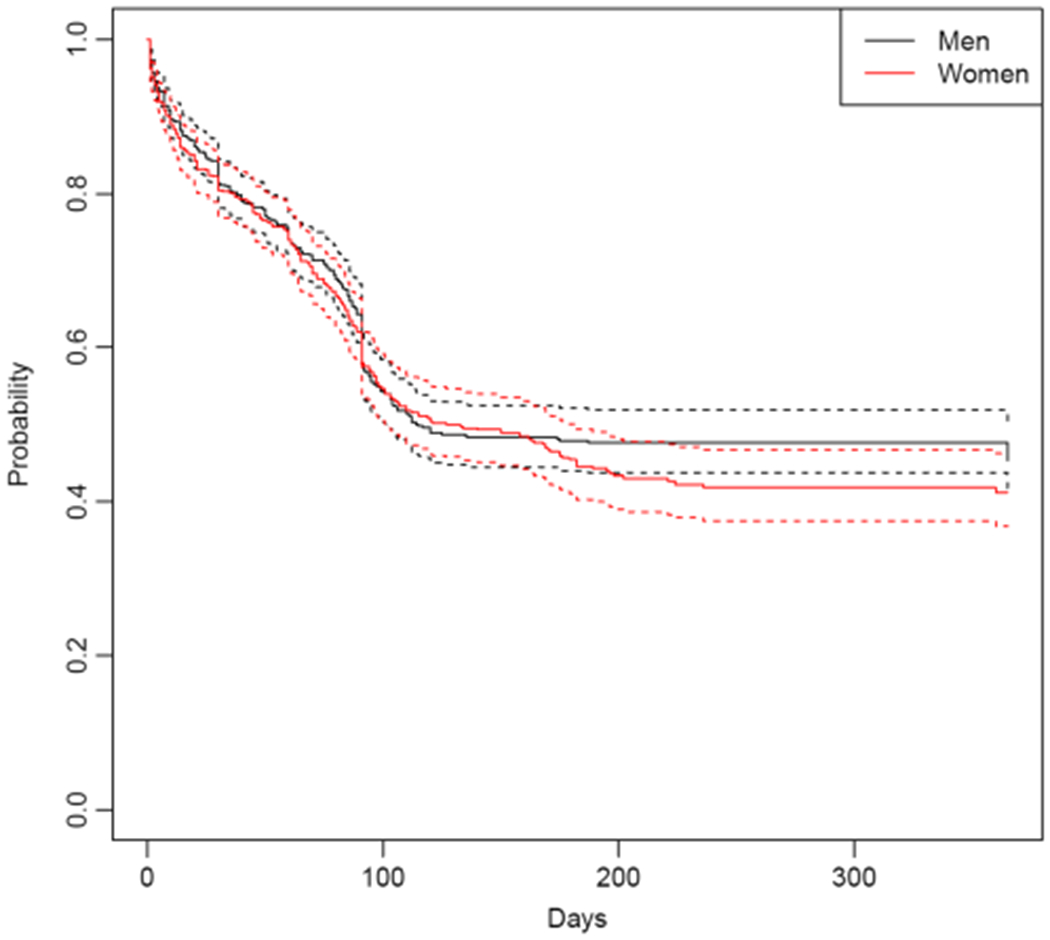
Measurement: Primary outcome was latency to opioid use over 1 year following treatment admission.
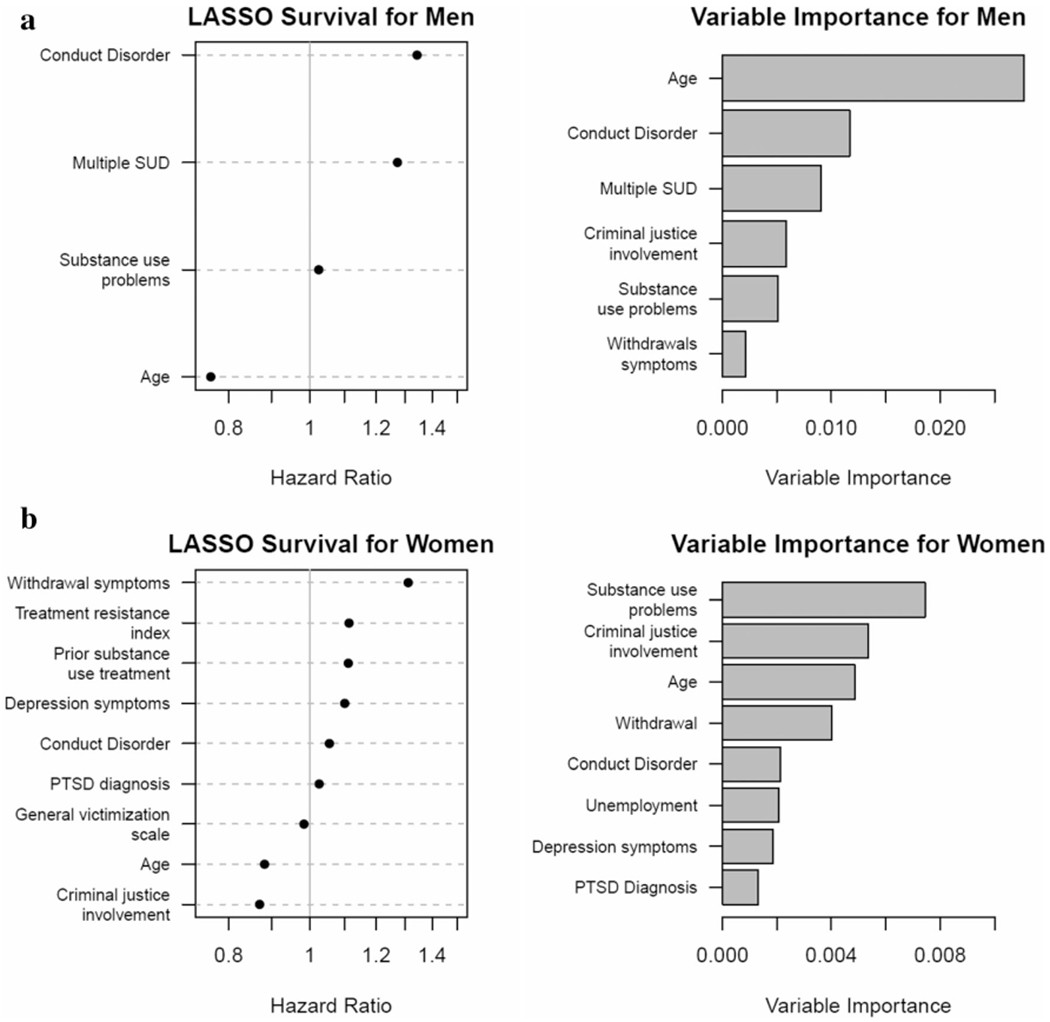
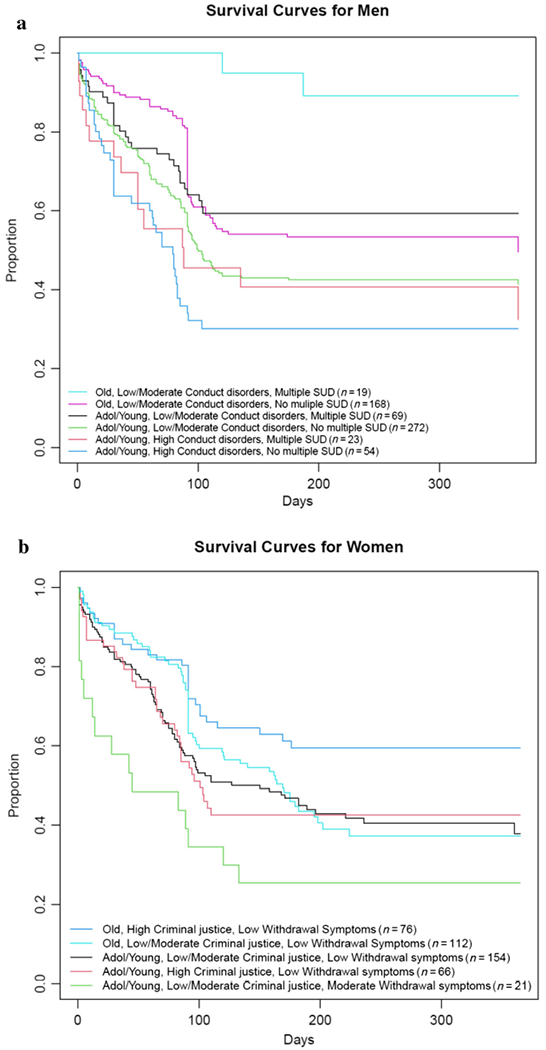
Results: For women, regularized Cox regression indicated that greater withdrawal symptoms [hazard ratio (HR) = 1.31], younger age (HR = 0.88), prior substance use disorder (SUD) treatment (HR = 1.11) and treatment resistance (HR = 1.11) presented the largest hazard for post-treatment opioid use, while a random survival forest identified and ranked substance use problems [variable importance (VI) = 0.007], criminal justice involvement (VI = 0.006), younger age (VI = 0.005) and greater withdrawal symptoms (VI = 0.004) as the greatest risk factors. For men, Cox regression indicated greater conduct disorder symptoms (HR = 1.34), younger age (HR = 0.76) and multiple SUDs (HR = 1.27) were most strongly associated with post-treatment opioid use, while a random survival forests ranked younger age (VI = 0.023), greater conduct disorder symptoms (VI = 0.010), having multiple substance use disorders (VI = 0.010) and criminal justice involvement (VI = 0.006) as the greatest risk factors.
Conclusion: Risk factors for relapse to opioid use following opioid use disorder treatment appear to be, for women, greater substance use problems and withdrawal symptoms and, for men, younger age and histories of conduct disorder and multiple substance use disorder.
Keywords: Adolescents; machine learning; opioid use disorder; opioids; risk factors; trauma; treatment.
© 2021 Society for the Study of Addiction.
Conflict of interest statement
Declaration of interests
None.
Figures
References
-
- Degenhardt L, Charlson F, Mathers B, Hall WD, Flaxman AD, Johns N, et al. The global epidemiology and burden of opioid dependence: results from the Global Burden of Disease 2010 study. Addiction 2014; 109: 1320–33. - PubMed
-
- 2017 Drug Overdose Death Rates. CDC Injury Center. Available at: https://www.cdc.gov/drugoverdose/data/state-deaths/drug-overdose-death-2... (Accessed 8 January 2020).
-
- Cornelius JR, Maisto SA, Pollock NK, Martin CS, Salloum IM, Lynch KG, et al. Rapid relapse generally follows treatment for substance use disorders among adolescents. Addict Behav 2003; 28: 381–6. - PubMed
Publication types
MeSH terms
Substances
Grants and funding
LinkOut - more resources
Full Text Sources
Other Literature Sources
Medical
