. 2021 Jan 6;21(1):22.
doi: 10.1186/s12893-020-01013-1.

Surgical options for symptomatic old osteoporotic vertebral compression fractures: a retrospective study of 238 cases

Affiliations

Surgical options for symptomatic old osteoporotic vertebral compression fractures: a retrospective study of 238 cases

Zhengwei Xu et al. BMC Surg. .

Abstract

Background: Symptomatic osteoporotic vertebral compression fractures (OVCF) are increasing, as are acute and chronic pain episodes and progressive spinal deformities. However, there are no clear surgical treatment criteria for patients with these different symptoms. Therefore, this study aims to explore the surgical approaches for the treatment of OVCF with different symptoms and evaluate the feasibility of these surgical approaches.

Methods: We retrospectively analyzed 238 symptomatic OVCF patients who entered our hospital from June 2013 to 2016. According to clinical characteristics and imaging examinations, these patients were divided into I-V grades and their corresponding surgical methods were developed. I, old vertebral fracture with no apparent instability, vertebral augmentation; II, old vertebral fracture with local instability, posterior reduction fusion internal fixation; III, old fractures with spinal stenosis, posterior decompression and reduction fusion and internal fixation; IV, old vertebral fracture with kyphosis, posterior osteotomy with internal fixation and fusion; V, a mixture of the above types, posterior osteotomy (decompression) with internal fixation and fusion. Postoperative visual analog score (VAS), oswestry disability index (ODI) scores, sagittal index (SI) and ASIA grades of neurological function were observed.

Results: All 238 patients were followed up for 12-38 months, with an average follow-up of 18.5 months. After graded surgery, the VAS score, ODI score, and vertebral sagittal index SI of 238 patients were significantly improved, and the difference between the last follow-up results and the preoperative comparison was statistically significant (P ˂ 0.05). Besides, the postoperative ASIA grades of 16 patients with nerve injury were improved from 14 patients with preoperative grade C, 2 patients with grade D to 4 patients with postoperative grade D and 12 patients with postoperative grade E.

Conclusion: In this study, we concluded that graded surgery could better treat symptomatic old OVCF and restore spinal stability. This provides clinical reference and guidance for the treatment of symptomatic old OVCF in the future.

Keywords: Graded surgery; Oswestry disability index; Sagittal index; Symptomatic old osteoporotic vertebral compression fractures; Visual analog score.


Conflict of interest statement

The authors indicated no potential conflicts of interest.

Figures
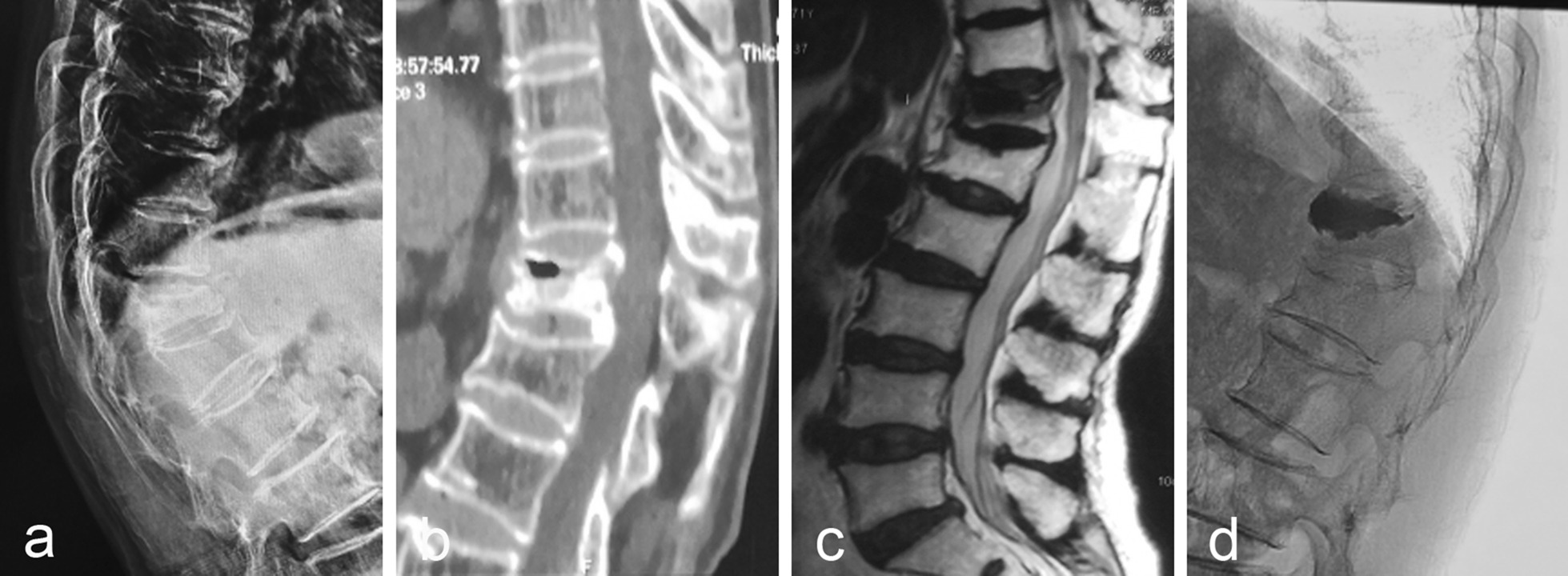
Fig. 1
Fig. 1
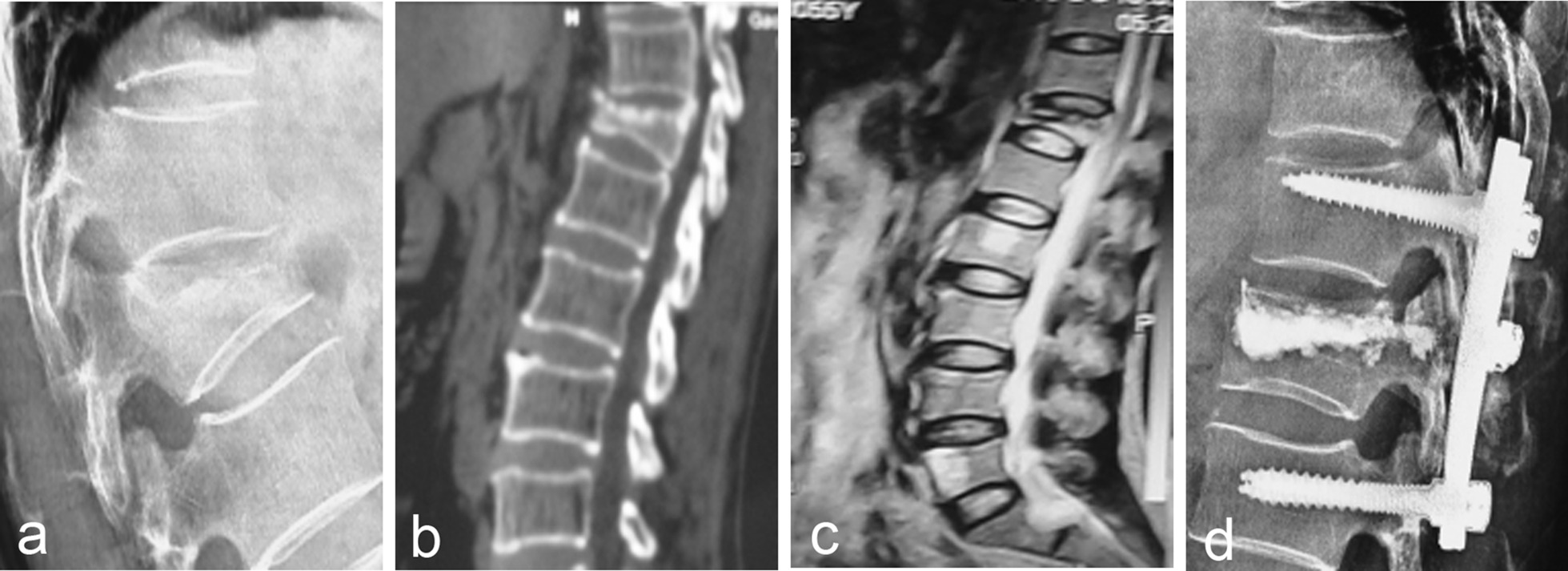
A 71-year-old female patient (Grade I) presented with minor trauma 5 months ago and low back pain 2 months ago, which was associated with activity. a The X-ray showed wedge-shaped changes of the T12 vertebra with kyphosis of the spine; b CT showed anterior collapse of the T12 vertebra with low-density shadow and peripheral sclerosis; c MRI T2 showed low signal in the vertebral body; d Postoperative X-ray showed that the height of the injured vertebra recovered well and the kyphosis deformity was corrected
Fig. 2
Fig. 2
A 56-year-old female patient (Grade II) presented with low back pain due to heavy lifting 7 months ago and aggravated low back pain 2 months ago, which was correlated with activity. a The X-ray showed wedge-shaped changes in the T12 vertebra; b CT showed wedge-shaped changes in the vertebral body, collapse of the upper endplate of the T12 vertebral body, unhealed vertebral fracture, and small fractures in front of the injured vertebral body; c MRI T12 showed low signal in the vertebral body; d Postoperative X-ray showed that the patient underwent posterior reduction fixation and fusion and vertebral augmentation
Fig. 3
Fig. 3
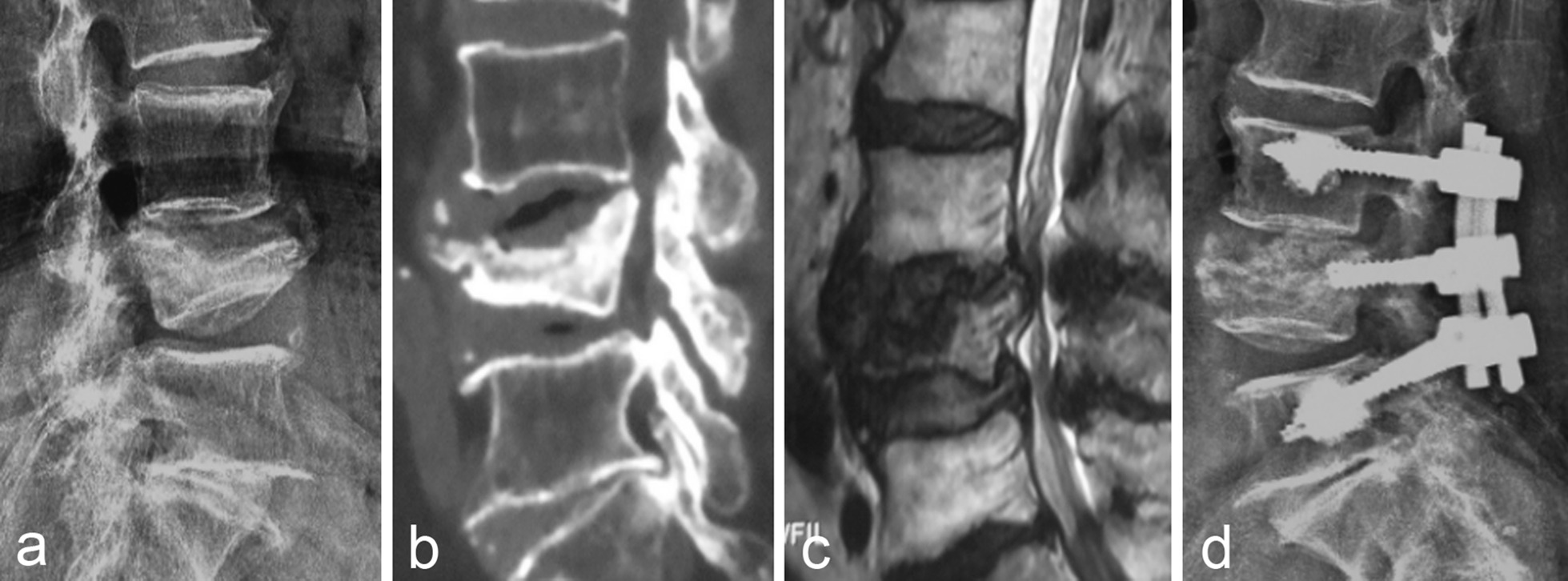
A 73-year-old female patient (Grade III) presented with mild back pain due to trauma 4 months ago, and presented with increased pain and numbness and weakness in both lower limbs 1 month ago, accompanied by intermittent claudication. a Lumbar spine X-ray showed the height of the L4 vertebra was lost and the endplate collapsed; b Sagittal CT showed collapse of the L4 vertebral body, low-density shadow in the vertebral space, protrusion of fracture block into the spinal canal, and spinal stenosis at the same level; c MRI T2 showed abnormally low signal in the L4 vertebra, with obvious dural compression and spinal stenosis at the same level; d Postoperative X-ray showed that the patient underwent posterior decompression and bone graft fusion with cement-reinforced internal fixation
Fig. 4
Fig. 4
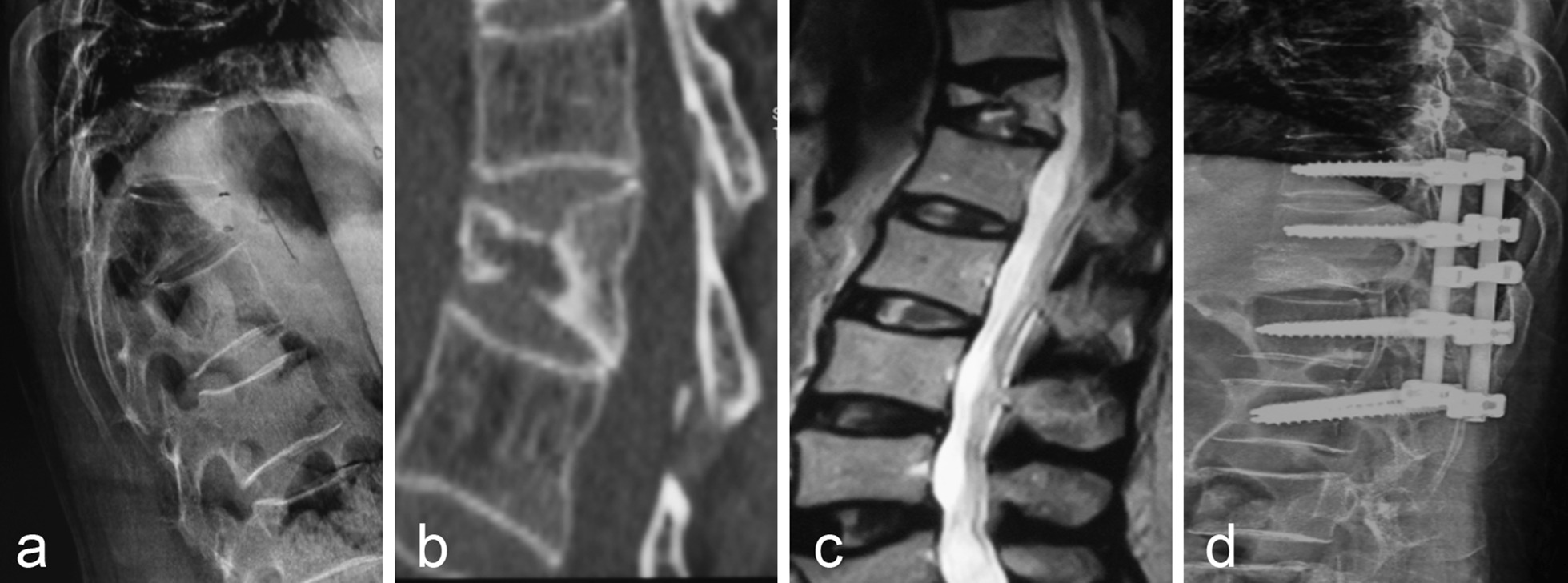
A 63-year-old female patient (Grade IV) presented with minor trauma 10 months ago and low back pain 2 months ago, which was associated with activity. a Thoracic X-ray showed a height loss of the T12 vertebral body and kyphosis of the thoracolumbar segment; c MRI T2 image showed low signal in the T12 vertebra; d Postoperative X-ray showed that the patient underwent posterior osteotomy and fusion internal fixation
Fig. 5
Fig. 5
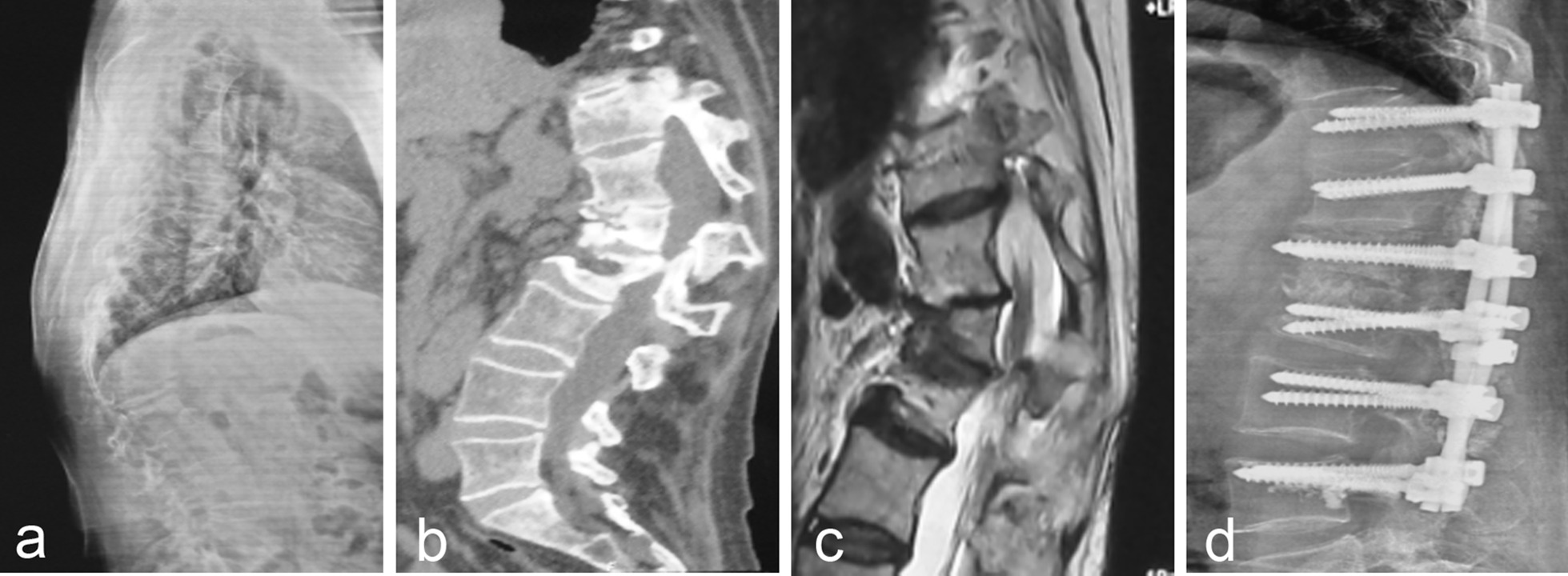
A 55-year-old female patient (Grade V) presented with back pain due to a fall 6 months ago and increased back pain accompanied by numbness and weakness in both lower limbs 2 months ago. a Thoracic X-ray showed wedge-shaped changes of L1 and L2 vertebra with kyphosis of thoracolumbar segment; b CT showed wedge-shaped changes in L1 and L2 vertebrae, kyphosis of the spine, and lumbar spinal stenosis; c Sagittal MRI T2 showed low signal of L1 and L2 vertebrae, kyphosis of thoracolumbar segment, spinal canal stenosis and obvious compression of dural sac; d Postoperative X-ray showed that the patient underwent posterior osteotomy and decompression and reduction combined with internal fixation

References

    1. Abdelgawaad AS, Ezzati A, Govindasamy R, Krajnovic B, Elnady B, Said GZ. Kyphoplasty for osteoporotic vertebral fractures with posterior wall injury. Spine J. 2018;18:1143–1148. doi: 10.1016/j.spinee.2017.11.001. - DOI - PubMed
    1. Ahn TK, Kim JO, Kumar H, Choi H, Jo MJ, Sohn S, Ropper AE, Kim NK, Han IB. Polymorphisms of miR-146a, miR-149, miR-196a2, and miR-499 are associated with osteoporotic vertebral compression fractures in Korean postmenopausal women. J Orthop Res. 2018;36:244–253. - PubMed
    1. Liu FY, Zhao ZQ, Ren L, Gu ZF, Li F, Ding WY, Sun XZ. Modified grade 4 osteotomy for kyphosis due to old osteoporotic vertebral compression fractures: Two case reports. Medicine (Baltimore) 2018;97:e13846. doi: 10.1097/MD.0000000000013846. - DOI - PMC - PubMed
    1. Kim DY, Lee SH, Jang JS, Chung SK, Lee HY. Intravertebral vacuum phenomenon in osteoporotic compression fracture: report of 67 cases with quantitative evaluation of intravertebral instability. J Neurosurg. 2004;100:24–31. doi: 10.3171/jns.2004.100.1.0024. - DOI - PubMed
    1. Katsumi K, Hirano T, Watanabe K, Ohashi M, Yamazaki A, Ito T, Sawakami K, Sano A, Kikuchi R, Endo N. Surgical treatment for osteoporotic thoracolumbar vertebral collapse using vertebroplasty with posterior spinal fusion: a prospective multicenter study. Int Orthop. 2016;40:2309–2315. doi: 10.1007/s00264-016-3222-3. - DOI - PubMed

MeSH terms