


The relationship between the home environment and child adiposity: a systematic review
- PMID: 33407598
- PMCID: PMC7788808
- DOI: 10.1186/s12966-020-01073-9
The relationship between the home environment and child adiposity: a systematic review
Abstract
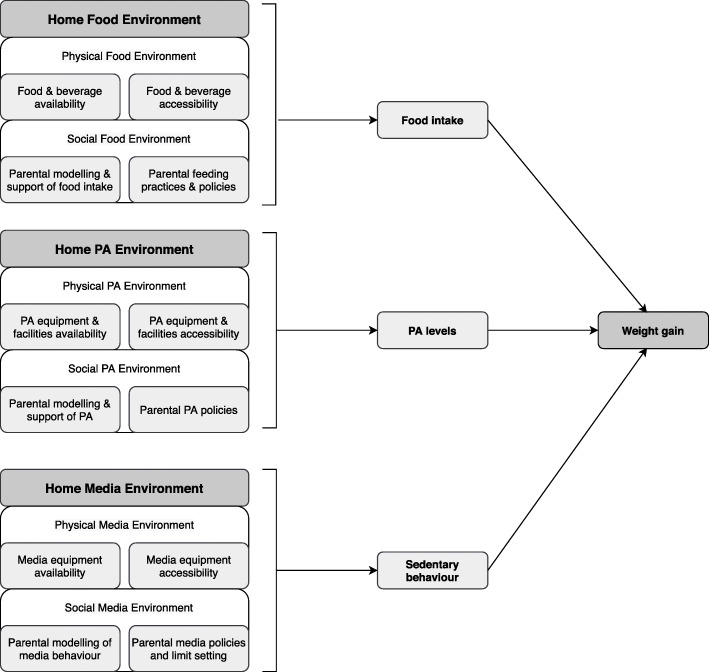
Background: Extensive research has demonstrated the role of the Home Environment (HE) in shaping children's energy balance behaviours. Less is known about direct relationships with bodyweight. This review examines associations between the social and physical aspects of three pre-defined Home Environment domains (food, physical activity and media) and adiposity measures in children ≤12 years.
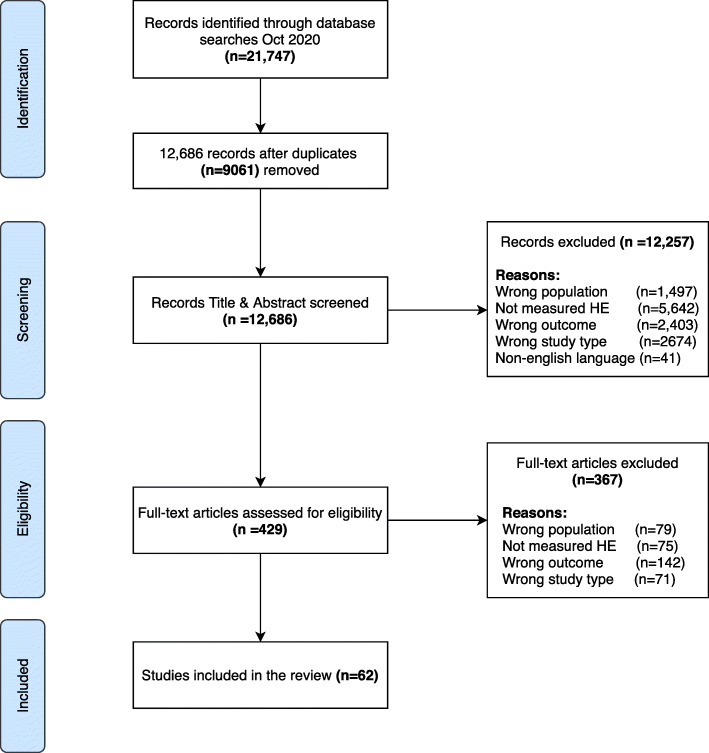
Methods: Six electronic databases (PubMed, Medline, EBSCO CINAHL, EMBASE, Web of Science, PsycInfo) were systematically searched up to October 2020. Studies reporting at least one physical and/or social aspect of the food, physical activity and/or media domains of the Home Environment in relation to child adiposity outcomes were included (n = 62).
Results: Most studies examined one (n = 41) or two domains (n = 16). Only five studies assessed all three domains of the Home Environment. Most consistent relationships were observed for physical aspects of the home media environment; with greater availability of electronic devices associated with higher child adiposity (21/29 studies). Findings were less consistent for the smaller number of studies examining physical aspects of the home food or physical activity environments. 8/15 studies examining physical food environments reported null associations with adiposity. Findings were similarly mixed for physical activity environments; with 4/7 reporting null associations, 2/7 reporting negative associations and 1/7 reporting positive associations between access to physical activity equipment/garden space and adiposity. Fewer studies assessed social aspects (e.g. caregiver modelling or limit setting) of the Home Environment in relation to child adiposity and findings were again mixed; 9/16 media environment, 7/11 food environment and 9/13 physical activity environment studies reported null associations with child adiposity outcomes.
Conclusions: The home media environment was most consistently associated with adiposity in childhood. Findings were less consistent for the home food and physical activity environments. Greater agreement on definitions and the measurement of the obesogenic home environment is required in order to clarify the strength and direction of relationships with child adiposity. Robust longitudinal research using comprehensive measures of the holistic home environment is needed to better identify which aspects contribute to excess weight gain in childhood.
Trial registration: PROSPERO Systematic review registration number: CRD42018115139 .
Keywords: Adiposity; Childhood obesity; Home environment.
Conflict of interest statement
Dr. Clare Llewellyn (CHL) reports personal fees from Yellow Kite; personal fees from The Experiment; and personal fees from Diamond Inc., outside the submitted work. The remaining authors have no conflicts of interest to declare.
Figures
References
-
- Boodhna G. Chapter 11: Children’s body mass index, overweight and obesity. 2014. pp. 1–24.
-
- S NH . National Child Measurement Programme, England - 2017/18 school year [PAS]. 2018 heal Soc care Inf cent. 2018.
-
- Rosenkranz RR, Dzewaltowski DA. Model of the home food environment pertaining to childhood obesity. 2008. - PubMed
Publication types
MeSH terms
LinkOut - more resources
Full Text Sources
Other Literature Sources
Medical
