


Perinatal psychological interventions to promote breastfeeding: a narrative review
- PMID: 33407656
- PMCID: PMC7789781
- DOI: 10.1186/s13006-020-00348-y
Perinatal psychological interventions to promote breastfeeding: a narrative review
Abstract
Background: Emotional distress in mothers inhibits the let-down reflex, thus affecting breastfeeding self-efficacy. A breastfeeding mother may have to cope with both physical discomfort and psychological distress. However, literature on initiatives to improve breastfeeding rates has focused mainly on providing community-based peer support, or social policies. The aim of this review is to assess evidence on the effectiveness of a broad range of psychological interventions to facilitate breastfeeding for mothers facing difficulties around the time of delivery.
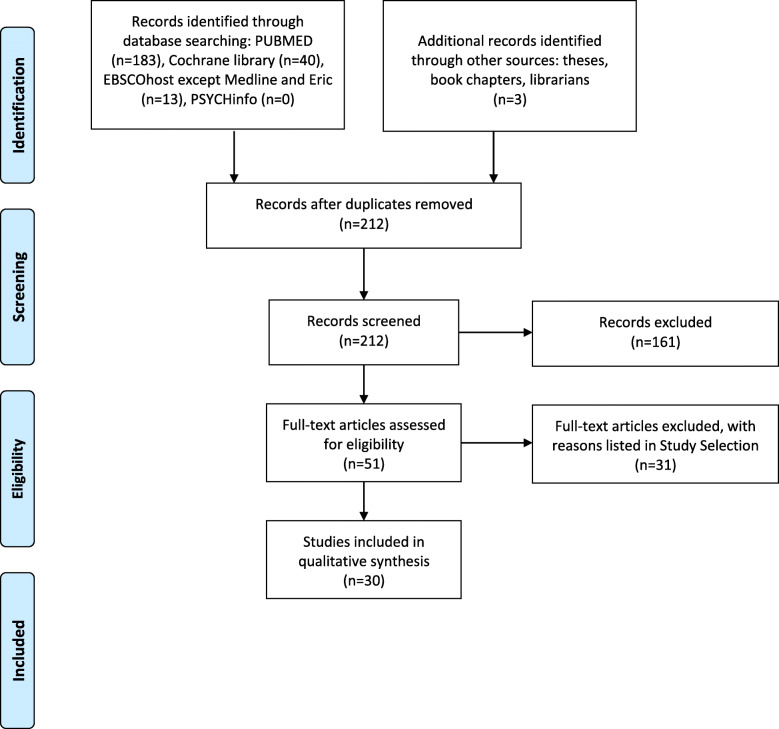
Methods: The review of the literature is derived from a search on Cochrane Library, PubMed, EBSCOhost, and PsycINFO for papers published since 1980. The approach was to explore quantitative and qualitative parameters. Quantitative parameters included breastfeeding initiation, duration, and composition. Qualitative parameters recorded the evaluation of maternal perceptions on breastfeeding success. The high heterogeneity of the studies led to a narrative review; 20 selected papers that report on breastfeeding outcomes and psychological programs met the inclusion criteria.
Results: The evidence on breastfeeding support through psychotherapy is heterogeneous and scant. Out of the included studies, 11 were randomized controlled trials, two were non-randomised trials, and two used a quasi-experimental design. None of the studies reported an increase in adverse breastfeeding outcomes. Three studies failed to report an association between psychological procedures and improved breastfeeding outcomes. A literature review showed that 17 (85%) analyses support stress-releasing techniques to facilitate breastfeeding.
Conclusions: This review suggests that relaxation interventions carefully tailored to address perinatal emotional distress may lead to important health benefits, including improvement in breastfeeding outcomes. There is also some indication that psychotherapy support while breastfeeding may have more impact than routine counselling. Conversely, this review did not find an association between self-hypnosis and breastfeeding outcomes. Data from this study can be used in designing prevention programs and future research with appropriate theoretical underpinning.
Keywords: Anxiety; Breastfeeding; Depression; Narrative review; Perinatal; Postpartum; Pregnancy; Psychotherapy.
Conflict of interest statement
The authors declare that they have no conflict of interest.
References
-
- Becker GE, McCormick FM, Renfrew MJ. Methods of milk expression for lactating women. Cochrane Database Syst Rev. 2008;4:CD006170. - PubMed
-
- Centers for Disease Control and Prevention. Strategies to Prevent Obesity and Other Chronic Diseases: The CDC Guide to Strategies to Support Breastfeeding Mothers and Babies. Atlanta. Department of Health and Human Services. 2013; 10.3945/an.114.005900. (last time accessed 11th October, 2020). - PMC - PubMed
Publication types
MeSH terms
LinkOut - more resources
Full Text Sources
Other Literature Sources
Medical
Miscellaneous
