


Association of inflammatory biomarkers with subsequent clinical course in suspected late onset sepsis in preterm neonates
- PMID: 33407770
- PMCID: PMC7788923
- DOI: 10.1186/s13054-020-03423-2
Association of inflammatory biomarkers with subsequent clinical course in suspected late onset sepsis in preterm neonates
Abstract
Background: Sepsis is a major health issue in preterm infants. Biomarkers are used to diagnose and monitor patients with sepsis, but C-reactive protein (CRP) is proven not predictive at onset of late onset neonatal sepsis (LONS) diagnosis. The aim of this study was to evaluate the association of interleukin-6(IL-6), procalcitonin (PCT) and CRP with subsequent sepsis severity and mortality in preterm infants suspected of late onset neonatal sepsis.
Methods: The study was conducted at the Erasmus University Medical Center-Sophia Children's Hospital Rotterdam. Patient data from January 2018 until October 2019 were reviewed for all preterm neonates born with a gestational age below 32 weeks with signs and symptoms suggestive of systemic infection, in whom blood was taken for blood culture and for inflammatory biomarkers determinations. Plasma IL-6 and PCT were assessed next to CRP at the moment of suspicion. We assessed the association with 7-day mortality and sepsis severity (neonatal sequential organ failure assessment (nSOFA) score, need for inotropic support, invasive ventilation and thrombocytopenia).
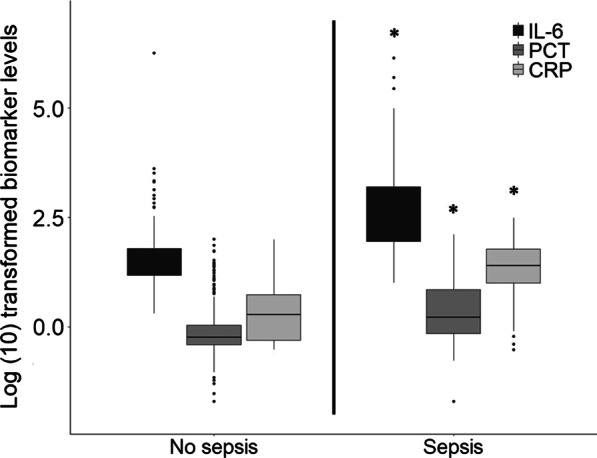
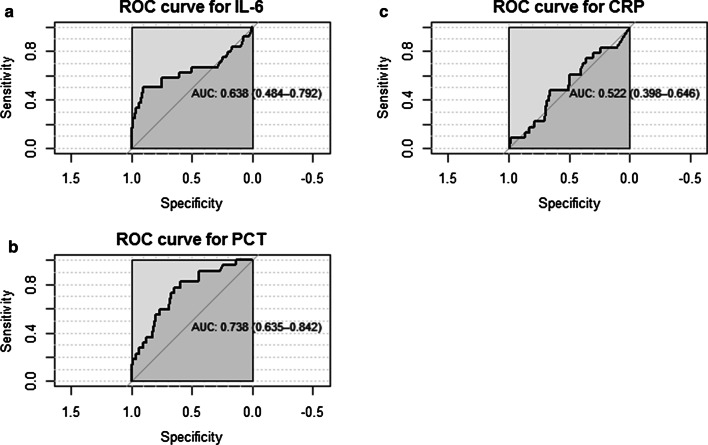
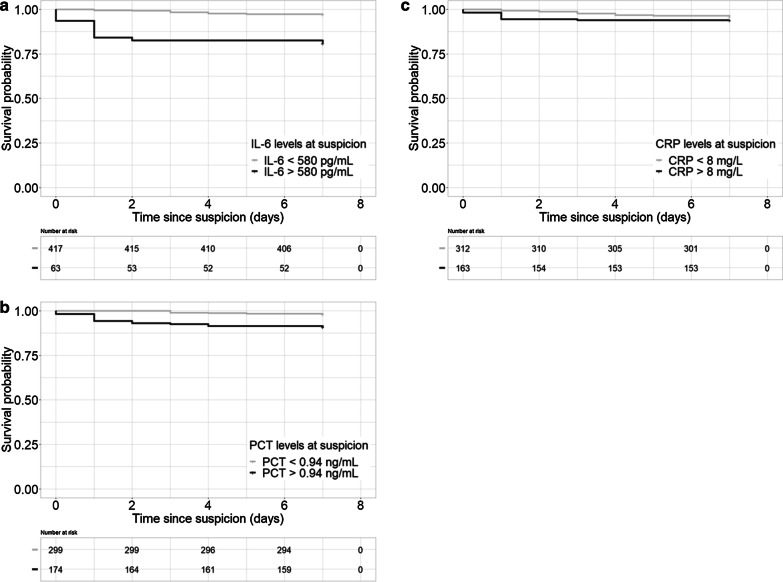
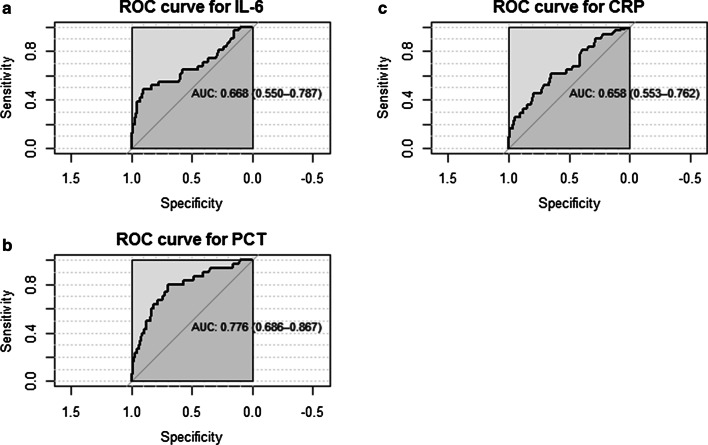
Results: A total of 480 suspected late onset neonatal sepsis episodes in 208 preterm neonates (gestational age < 32 weeks) were retrospectively analyzed, of which 143 episodes were classified as sepsis (29.8%), with 56 (11.7%) cases of culture negative, 63 (13.1%) cases of gram-positive and 24(5.0%) cases of gram-negative sepsis. A total of 24 (5.0%) sepsis episodes resulted in death within 7 days after suspicion of LONS. Both IL-6 (adjusted hazard ratio (aHR): 2.28; 95% CI 1.64-3.16; p < 0.001) and PCT (aHR: 2.91; 95% CI 1.70-5.00; p < 0.001) levels were associated with 7-day mortality; however, CRP levels were not significantly correlated with 7-day mortality (aHR: 1.16; 95% CI (0.68-2.00; p = 0.56). Log IL-6, log PCT and log CRP levels were all significantly correlated with the need for inotropic support.
Conclusions: Our findings show that serum IL-6 and PCT levels at moment of suspected late onset neonatal sepsis offer valuable information about sepsis severity and mortality risk in infants born below 32 weeks of gestation. The discriminative value was superior to that of CRP. Determining these biomarkers in suspected sepsis may help identify patients with imminent severe sepsis, who may require more intensive monitoring and therapy.
Keywords: C-reactive protein; Interleukin-6; Late onset neonatal sepsis; Neonatology; Procalcitonin; Sepsis; nSOFA.
Conflict of interest statement
The authors declare that they have no competing interests.
Figures
References
-
- Ganatra HA, Stoll BJ, Zaidi AK. International perspective on early-onset neonatal sepsis. Clin Perinatol. 2010;37(2):501–523. - PubMed
-
- Stoll BJ, Hansen N, Fanaroff AA, Wright LL, Carlo WA, Ehrenkranz RA, et al. Late-onset sepsis in very low birth weight neonates: the experience of the NICHD Neonatal Research Network. Pediatrics. 2002;110(2):285–291. - PubMed
-
- Lawn JE, Wilczynska-Ketende K, Cousens SN. Estimating the causes of 4 million neonatal deaths in the year 2000. Int J Epidemiol. 2006;35(3):706–718. - PubMed
-
- Stoll BJ, Hansen NI, Adams-Chapman I, Fanaroff AA, Hintz SR, Vohr B, et al. Neurodevelopmental and growth impairment among extremely low-birth-weight infants with neonatal infection. JAMA. 2004;292(19):2357–2365. - PubMed
MeSH terms
Substances
LinkOut - more resources
Full Text Sources
Other Literature Sources
Medical
Research Materials
Miscellaneous
