


Implementation of an interprofessional collaboration in practice program: a feasibility study using social network analysis
- PMID: 33407919
- PMCID: PMC7786471
- DOI: 10.1186/s40814-020-00746-3
Implementation of an interprofessional collaboration in practice program: a feasibility study using social network analysis
Abstract
Background: Due to multimorbidity and geriatric problems, older people often require both psychosocial and medical care. Collaboration between medical and social professionals is a prerequisite to deliver high-quality care for community-living older people. Effective, safe, and person-centered care relies on skilled interprofessional collaboration and practice. Little is known about interprofessional education to increase interprofessional collaboration in practice (IPCP) in the context of community care for older people. This study examines the feasibility of the implementation of an IPCP program in three community districts and determines its potential to increase interprofessional collaboration between primary healthcare professionals caring for older people.
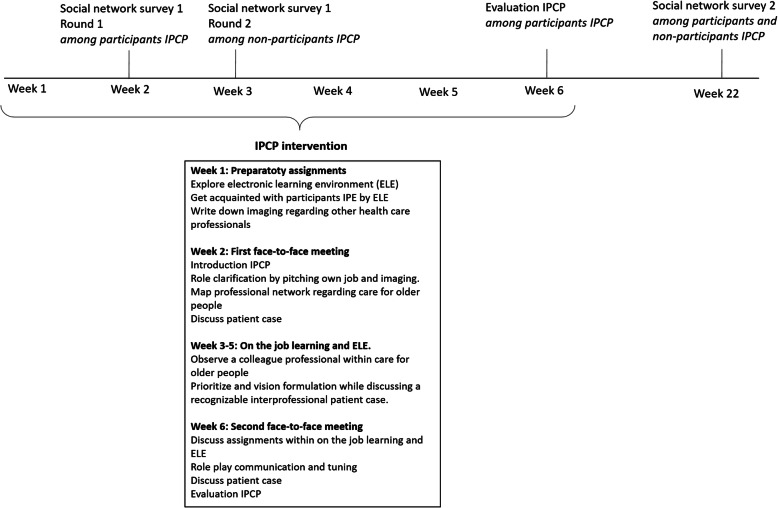
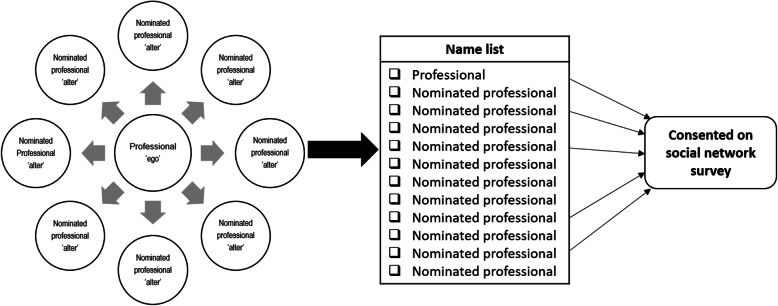
Method: A feasibility study was conducted to determine the acceptability and feasibility of data collection and analysis regarding interprofessional collaboration in network development. A questionnaire was used to measure the learning experience and the acquisition of knowledge and skills regarding the program. Network development was assessed by distributing a social network survey among professionals attending the program as well as professionals not attending the program at baseline and 5.5 months after. Network development was determined by calculating the number, reciprocity, value, and diversity of contacts between professionals using social network analysis.
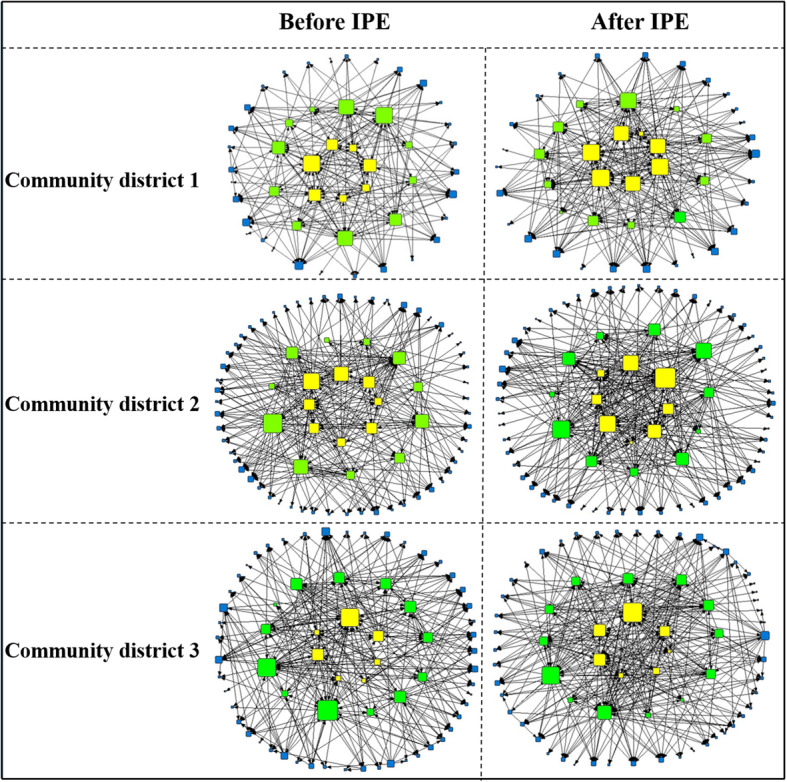
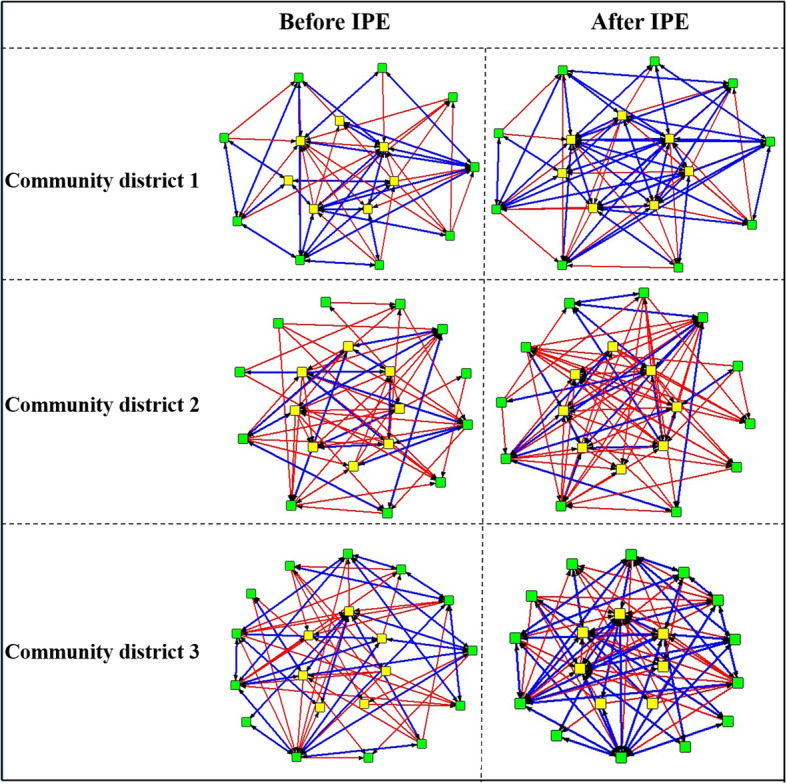
Results: The IPCP program was found to be instructive and the knowledge and skills gained were applicable in practice. Social network analysis was feasible to conduct and revealed a spill-over effect regarding network development. Program participants, as well as non-program participants, had larger, more reciprocal, and more diverse interprofessional networks than they did before the program.
Conclusions: This study showed the feasibility of implementing an IPCP program in terms of acceptability, feasibility of data collection, and social network analysis to measure network development, and indicated potential to increase interprofessional collaboration between primary healthcare professionals. Both program participants and non-program participants developed a larger, more collaborative, and diverse interprofessional network.
Keywords: Interprofessional collaboration; Interprofessional education; Primary care; Social Network Analysis.
Conflict of interest statement
The authors declare that they have no competing interests.
Figures
References
-
- World Health Organization . Framework for action on interprofessional education and collaborative practice. Geneva: World Health Organization; 2010. - PubMed
-
- NIVEL . Zorgregistraties eerste lijn. Chronische ziekten en multimorbiditeit [Chronic diseases and multimorbidity] Utrecht: NIVEL; 2016.
-
- NZa . Monitor Zorg voor Ouderen [Monitoring care for older people] Utrecht: Nederlandse Zorgautoriteit; 2018.
Grants and funding
LinkOut - more resources
Full Text Sources
Other Literature Sources
