


Broadening diversity through creative involvement to identify research priorities
- PMID: 33407929
- PMCID: PMC7787225
- DOI: 10.1186/s40900-020-00244-z
Broadening diversity through creative involvement to identify research priorities
Abstract
Background: Patient and public involvement (PPI) can help with steering and shaping research prioritisation and execution. However, some groups of people may not be encouraged to take part and their voices may be seldom listened to in the production of research. This is important to consider because they may have poorer healthcare experiences. We tried using art as a vehicle for including individuals not necessarily invited to be part of research priority setting.
Methods: We contacted existing groups and organisations to reach people not routinely supported to be part of PPI. We targeted individuals: a) with dementia, b) with a mental and physical health condition, c) of South Asian heritage. We ran a workshop with each group at which individuals shared their experiences of healthcare. A young amateur artist also attended, who produced a piece of artwork afterwards that reflected the research priorities raised. We held a Twitter chat to discuss these pieces of art and the processes involved in their generation.
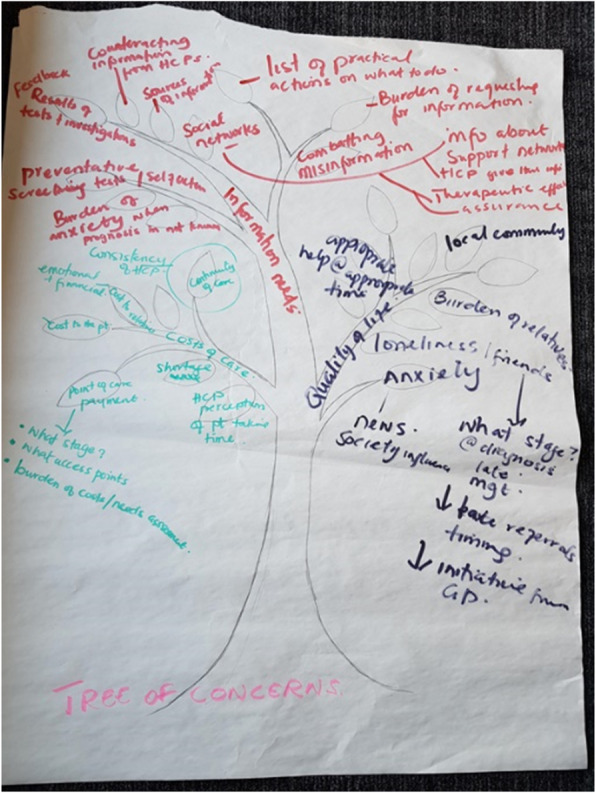
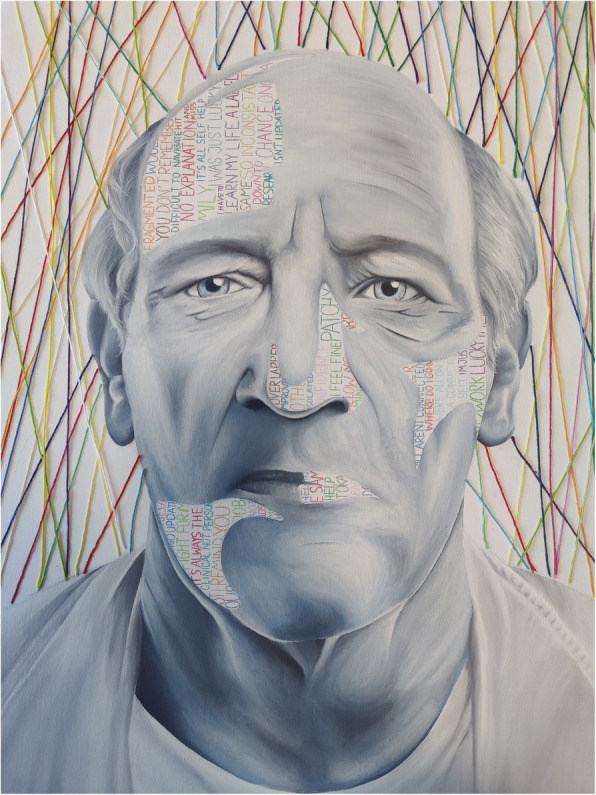
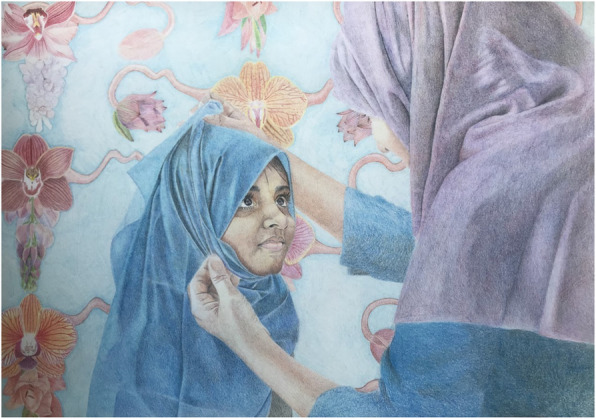
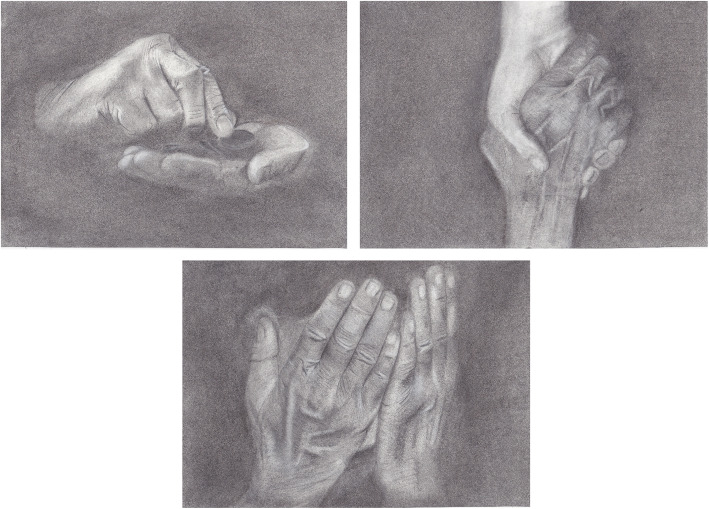
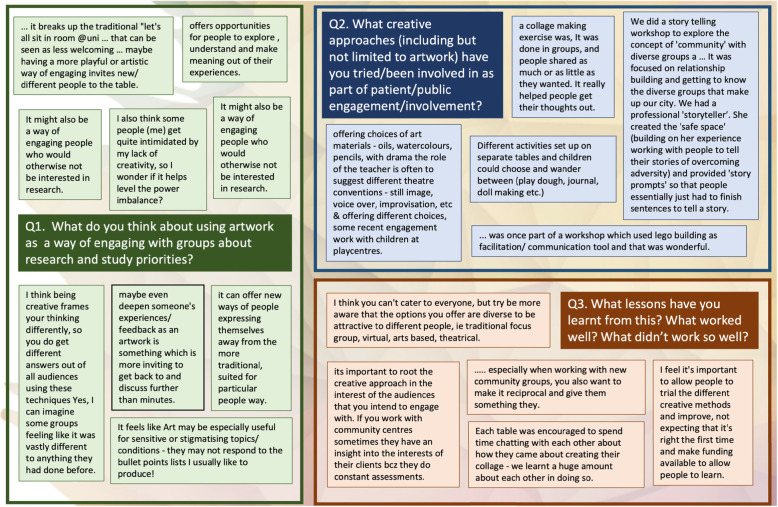
Results: From each workshop, we produced a list of research priorities. These included: a) improving coordination of care for people with dementia, b) information needs and anxiety/guilt around accessing care for people with physical and mental health conditions, c) supporting discussion of women's health issues in South Asian communities. These priorities were reflected in three pieces of art, which can be viewed online. Feedback from those at workshops suggested that the artwork helped them to feel that their voice had been heard and triggered their interest in how research is developed. Those involved in the Twitter chat commented that art was one means through which researchers could connect with a range of groups in a PPI context when preparing and producing a study.
Conclusions: We found the medium of art to be an effective way of including a range of people in research prioritisation setting. This approach could be useful for future PPI, building on what we have learnt from the project described in this paper.
Keywords: Art; Creative approaches; Dementia; Diversity; Mental health; Research prioritisation; South Asian heritage.
Conflict of interest statement
None.
Figures
References
-
- INVOLVE . Strategies for diversity and inclusion in public involvement: supplement to the briefing notes for researchers. 2012.
-
- Russell J, Greenhalgh T, Taylor M. Patient and public involvement in NIHR research 2006–2019: policy intentions, progress and themes. 2016.
-
- NIHR (National Institute for Health Research) Going the extra mile. 2015.
Grants and funding
LinkOut - more resources
Full Text Sources
Other Literature Sources
Miscellaneous
