


Pica, Autism, and Other Disabilities
- PMID: 33408069
- PMCID: PMC9188765
- DOI: 10.1542/peds.2020-0462
Pica, Autism, and Other Disabilities
Abstract
Background and objectives: Pica, the repeated ingestion of nonfood items, can be life-threatening. Although case reports describe pica in children with autism spectrum disorder (ASD) or intellectual disability (ID), there has been little systematic study of pica prevalence. We assessed pica in children 30 to 68 months of age (median = 55.4 months) with and without ASD.
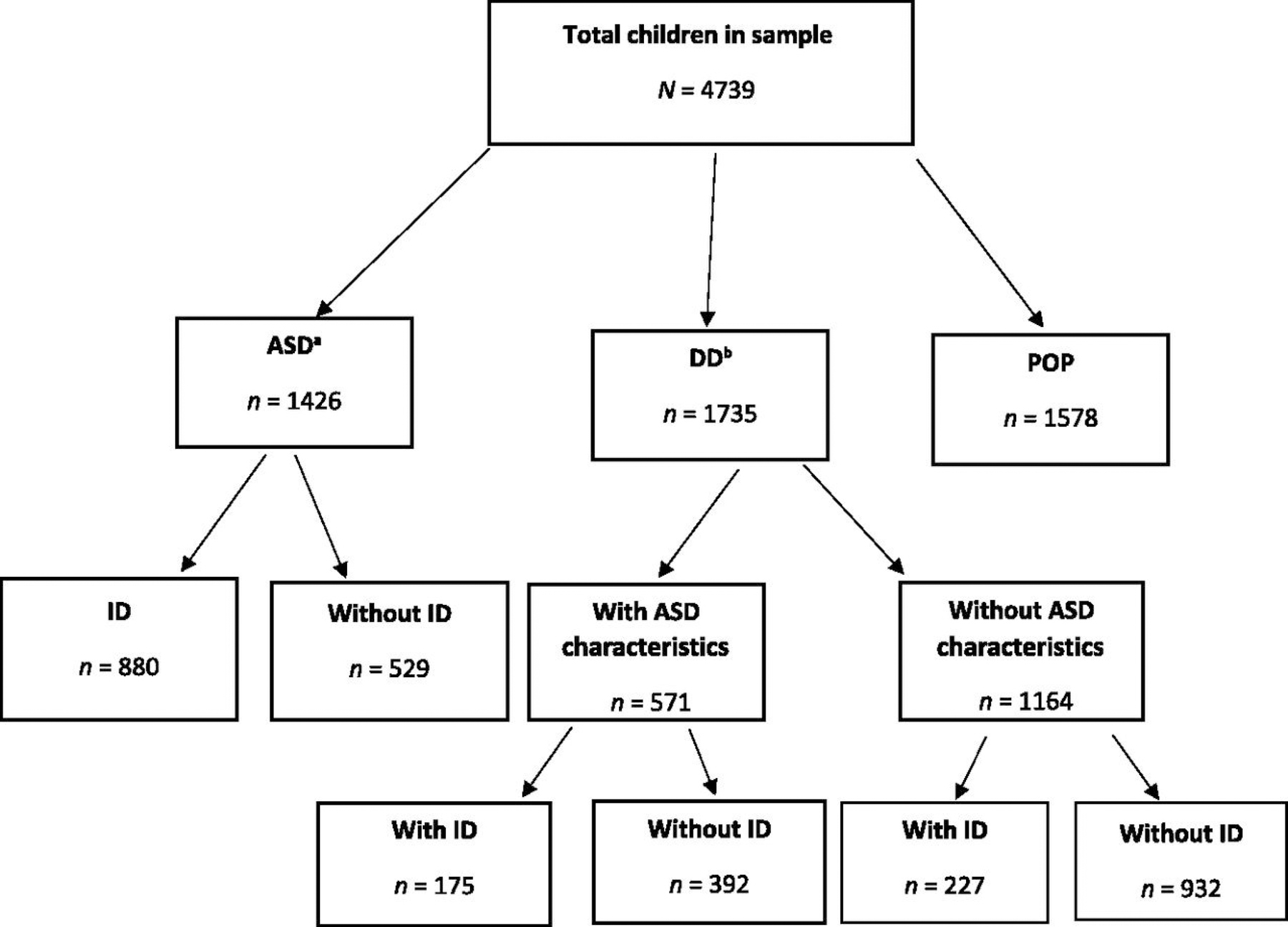
Methods: Our sample from the Study to Explore Early Development, a multisite case-control study, included children with ASD (n = 1426), children with other developmental disabilities (DDs) (n = 1735), and general population-based controls (POPs) (n = 1578). We subdivided the ASD group according to whether children had ID and the DD group according to whether they had ID and/or some ASD characteristics. Standardized developmental assessments and/or questionnaires were used to define final study groups, subgroups, and pica. We examined pica prevalence in each group and compared ASD and DD groups and subgroups to the POP group using prevalence ratios adjusted for sociodemographic factors.
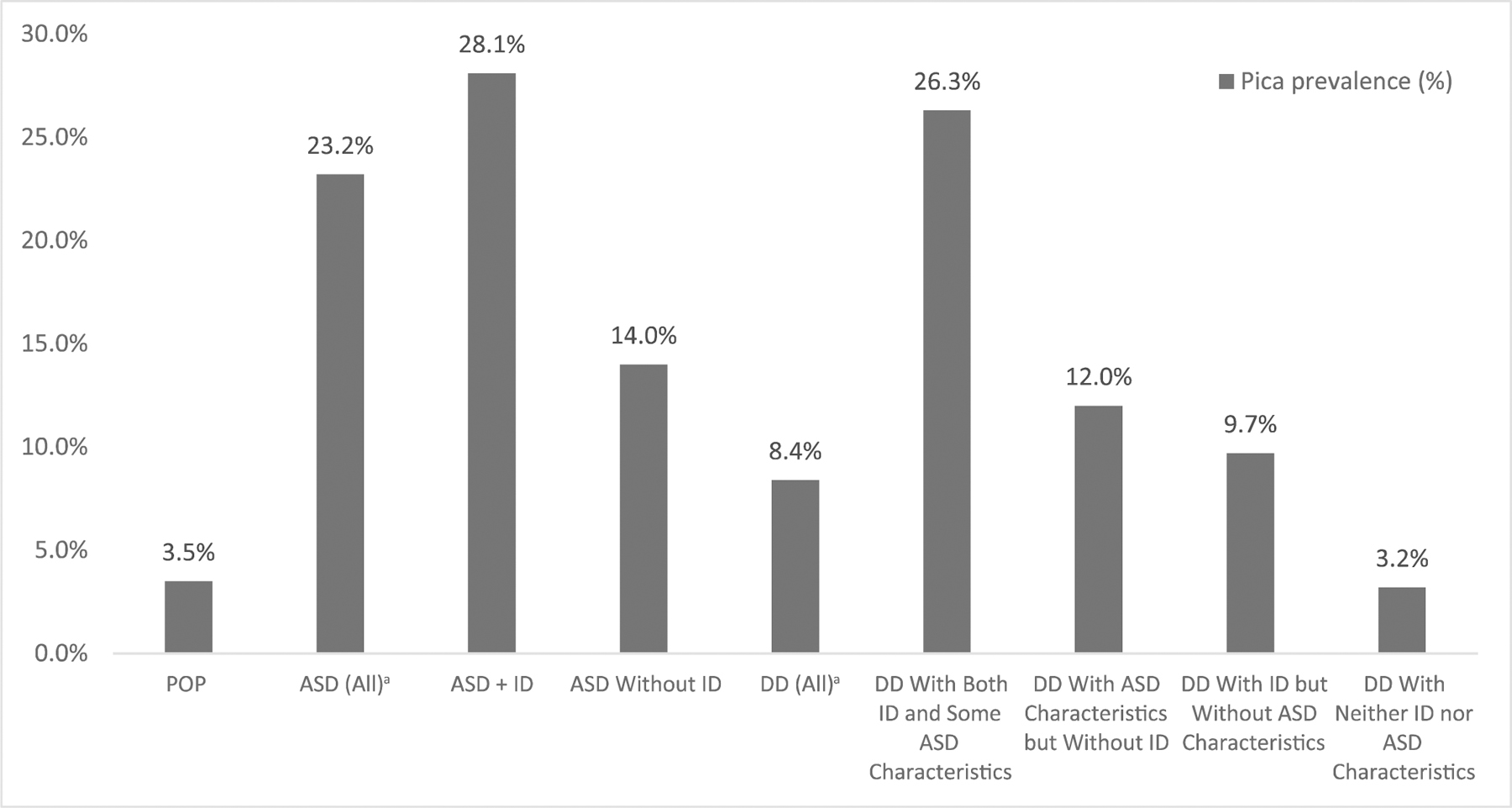
Results: Compared with the prevalence of pica among POPs (3.5%), pica was higher in children with ASD (23.2%) and DD (8.4%), and in the following subgroups: ASD with ID (28.1%), ASD without ID (14.0%), DD with ID (9.7%), DD with ASD characteristics (12.0%), and DD with both ID and ASD characteristics (26.3%); however, pica prevalence was not elevated in children with DD with neither ID nor ASD characteristics (3.2%). Between-group differences remained after adjustment (adjusted prevalence ratio range 1.9-8.0, all P <.05).
Conclusions: Pica may be common in young children with ASD, ASD characteristics, and ID. These findings inform the specialized health care needs of these children.
Copyright © 2021 by the American Academy of Pediatrics.
Conflict of interest statement
POTENTIAL CONFLICT OF INTEREST: The authors have indicated they have no potential conflicts of interest to disclose.
Figures
References
-
- Matson JL, Hattier MA, Belva B, Matson ML. Pica in persons with developmental disabilities: approaches to treatment. Res Dev Disabil 2013;34(9):2564–2571 - PubMed
-
- Ashworth M, Hirdes JP, Martin L. The social and recreational characteristics of adults with intellectual disability and pica living in institutions. Res Dev Disabil 2009;30(3):512–520 - PubMed
-
- Rashid F, Davies L, Iftikhar SY. Magnetised intragastric foreign body collection and autism: an advice for carers and literature review. Autism 2010;14(2):139–145 - PubMed
-
- Rose EA, Porcerelli JH, Neale AV. Pica: common but commonly missed. J Am Board Fam Pract 2000;13(5):353–358 - PubMed
-
- Williams DE, McAdam D. Assessment, behavioral treatment, and prevention of pica: clinical guidelines and recommendations for practitioners. Res Dev Disabil 2012;33(6):2050–2057 - PubMed
Publication types
MeSH terms
Grants and funding
LinkOut - more resources
Full Text Sources
Other Literature Sources
Medical
