Towards an appropriate ethics framework for Health and Demographic Surveillance Systems (HDSS): learning from issues faced in diverse HDSS in sub-Saharan Africa
- PMID: 33408190
- PMCID: PMC7789450
- DOI: 10.1136/bmjgh-2020-004008
Towards an appropriate ethics framework for Health and Demographic Surveillance Systems (HDSS): learning from issues faced in diverse HDSS in sub-Saharan Africa
Abstract
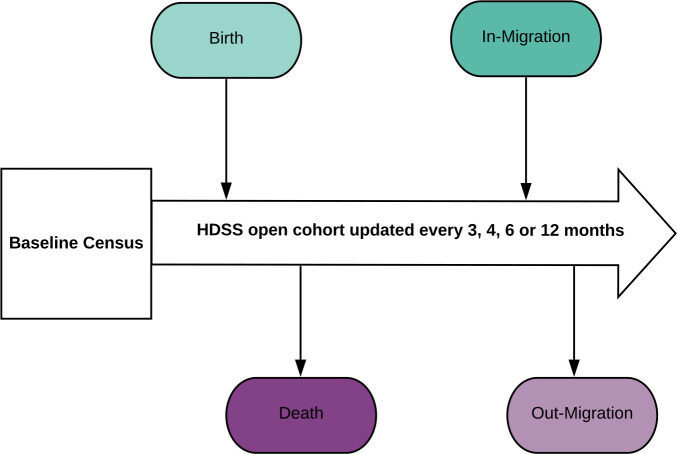
Introduction: Health and Demographic Surveillance Systems (HDSS) collect data on births, deaths and migration from relatively small, geographically defined populations primarily in Africa and Asia. HDSS occupy a grey area between research, healthcare and public health practice and it is unclear how ethics guidance that rely on a research-practice distinction apply to HDSS. This topic has received little attention in the literature. In this paper, based on empirical research across sub-Saharan Africa, we map out key ethical issues for HDSS and assess the relevance of current ethics guidance in relation to these findings.
Methods: We conducted a qualitative study across seven HDSS sites in sub-Saharan Africa, including individual in-depth interviews and informal discussions with 68 research staff, document reviews and non-participant observations of surveillance activities. Qualitative data analysis drew on a framework approach led by a priori and emergent themes, drawing on the wider ethics and social science literature.
Results: There were diverse views on core ethical issues in HDSS, including regarding the strengths and challenges of community engagement, informed consent and data sharing processes. A key emerging issue was unfairness in the overall balance of benefits and burdens for residents and front-line staff when compared with other stakeholders, particularly given the socioeconomic contexts in which HDSS are generally conducted.
Conclusion: We argue that HDSS operate as non-traditional epidemiologic research projects but are often governed using ethics guidance developed for traditional forms of health research. There is a need for specific ethics guidance for HDSS which prioritises considerations around fairness, cost-effectiveness, ancillary care responsibilities, longitudinality and obligations of the global community to HDSS residents.
Keywords: epidemiology; health systems; public health; qualitative study.
© Author(s) (or their employer(s)) 2021. Re-use permitted under CC BY. Published by BMJ.
Conflict of interest statement
Competing interests: None declared.
Figures
References
-
- Greenwell F, Salentine S. Health Information System Strengthening: Standards and Best Practices for Data Sources - MEASURE Evaluation. Chapel Hill, NC, 2018.
-
- Walsham G. Health information systems in developing countries: some reflections on information for action. Inf Technol Dev 2020;26:194–200. 10.1080/02681102.2019.1586632 - DOI
Publication types
MeSH terms
Grants and funding
LinkOut - more resources
Full Text Sources
Other Literature Sources