


Context Is Key: Delineating the Unique Functions of IFNα and IFNβ in Disease
- PMID: 33408718
- PMCID: PMC7779635
- DOI: 10.3389/fimmu.2020.606874
Context Is Key: Delineating the Unique Functions of IFNα and IFNβ in Disease
Abstract
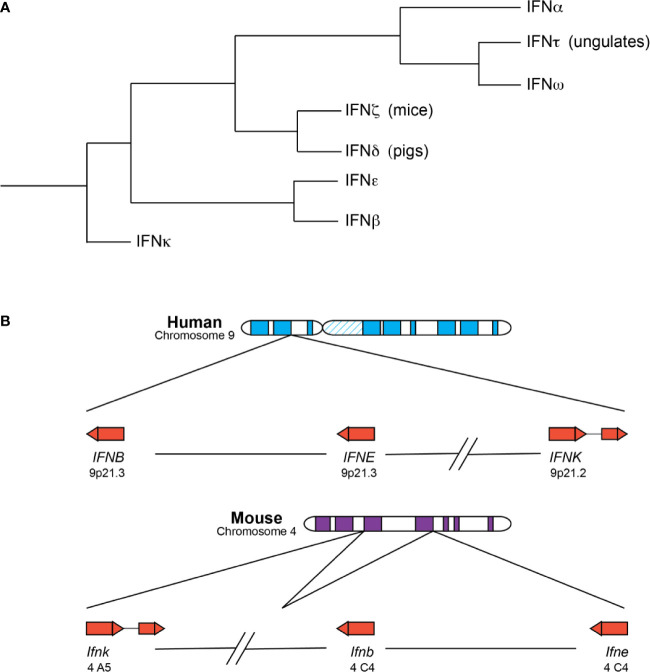
Type I interferons (IFNs) are critical effector cytokines of the immune system and were originally known for their important role in protecting against viral infections; however, they have more recently been shown to play protective or detrimental roles in many disease states. Type I IFNs consist of IFNα, IFNβ, IFNϵ, IFNκ, IFNω, and a few others, and they all signal through a shared receptor to exert a wide range of biological activities, including antiviral, antiproliferative, proapoptotic, and immunomodulatory effects. Though the individual type I IFN subtypes possess overlapping functions, there is growing appreciation that they also have unique properties. In this review, we summarize some of the mechanisms underlying differential expression of and signaling by type I IFNs, and we discuss examples of differential functions of IFNα and IFNβ in models of infectious disease, cancer, and autoimmunity.
Keywords: IFNα subtypes; IFNβ; autoimmunity; cancer; infection; type I interferons.
Copyright © 2020 Fox, Locke and Lenschow.
Conflict of interest statement
The authors declare that the research was conducted in the absence of any commercial or financial relationships that could be construed as a potential conflict of interest
Figures

References
Publication types
MeSH terms
Substances
Grants and funding
LinkOut - more resources
Full Text Sources
Medical
