


Methods for Detecting Mycobacterial Mixed Strain Infections-A Systematic Review
- PMID: 33408740
- PMCID: PMC7779811
- DOI: 10.3389/fgene.2020.600692
Methods for Detecting Mycobacterial Mixed Strain Infections-A Systematic Review
Abstract
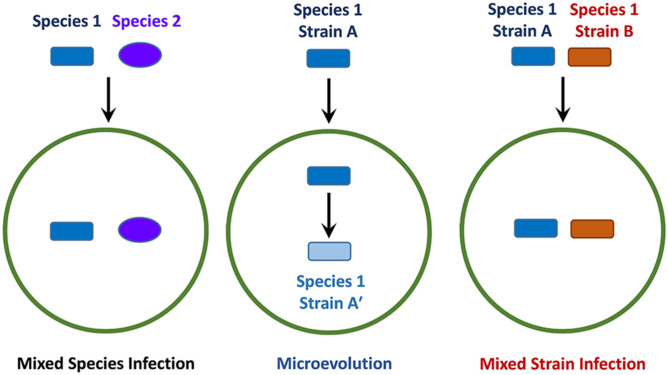
Mixed strain infection (MSI) refers to the concurrent infection of a susceptible host with multiple strains of a single pathogenic species. Known to occur in humans and animals, MSIs deserve special consideration when studying transmission dynamics, evolution, and treatment of mycobacterial diseases, notably tuberculosis in humans and paratuberculosis (or Johne's disease) in ruminants. Therefore, a systematic review was conducted to examine how MSIs are defined in the literature, how widespread the phenomenon is across the host species spectrum, and to document common methods used to detect such infections. Our search strategy identified 121 articles reporting MSIs in both humans and animals, the majority (78.5%) of which involved members of the Mycobacterium tuberculosis complex, while only a few (21.5%) examined non-tuberculous mycobacteria (NTM). In addition, MSIs exist across various host species, but most reports focused on humans due to the extensive amount of work done on tuberculosis. We reviewed the strain typing methods that allowed for MSI detection and found a few that were commonly employed but were associated with specific challenges. Our review notes the need for standardization, as some highly discriminatory methods are not adapted to distinguish between microevolution of one strain and concurrent infection with multiple strains. Further research is also warranted to examine the prevalence of NTM MSIs in both humans and animals. In addition, it is envisioned that the accurate identification and a better understanding of the distribution of MSIs in the future will lead to important information on the epidemiology and pathophysiology of mycobacterial diseases.
Keywords: Mycobacterium; complex; detection; infections; methods; mixed strain; non-tuberculous; tuberculosis.
Copyright © 2020 Byrne, Goudreau, Bissonnette, Shamputa and Tahlan.
Conflict of interest statement
The authors declare that the research was conducted in the absence of any commercial or financial relationships that could be construed as a potential conflict of interest.
Figures

References
-
- Abascal E., Herranz M., Acosta F., Agapito J., Cabibbe A. M., Monteserin J., et al. (2020). Screening of inmates transferred to Spain reveals a Peruvian prison as a reservoir of persistent Mycobacterium tuberculosis MDR strains and mixed infections. Sci. Rep. 10, 1–8. 10.1038/s41598-020-59373-w - DOI - PMC - PubMed
-
- Adams L. V., Kreiswirth B. N., Arbeit R. D., Soini H., Mtei L., Matee M., et al. (2012). Molecular epidemiology of HIV-associated tuberculosis in Dar es Salaam, Tanzania: strain predominance, clustering, and polyclonal disease. J. Clin. Microbiol. 50, 2645–2650. 10.1128/JCM.00624-12 - DOI - PMC - PubMed
Publication types
LinkOut - more resources
Full Text Sources
