Case Reports
. 2020 Dec 3;12(12):e11870.
doi: 10.7759/cureus.11870.

Adamantinoma-Like Ewing Sarcoma of the Parotid Gland: Report of Two Cases and Review of Literature

Affiliations
Case Reports

Adamantinoma-Like Ewing Sarcoma of the Parotid Gland: Report of Two Cases and Review of Literature

Hala Alnuaim et al. Cureus. .

Abstract

Adamantinoma-like Ewing sarcoma (ALES) is a rare variant of Ewing sarcoma. It demonstrates heterogeneous morphologic pattern and complex immunophenotypic profile, with a peculiar combination of epithelial and neuroendocrine differentiation. ALES is rarely reported in the head and neck areas, including the parotid salivary gland. Till now, only 10 cases of ALES have been reported in the salivary glands. Herein, we report two cases of ALES involving the parotid gland, adding some valuable insight to the recently reported cases at this site.

Keywords: adamantinoma; ewing; parotid gland; salivary gland; sarcoma.


Conflict of interest statement

The authors have declared that no competing interests exist.

Figures
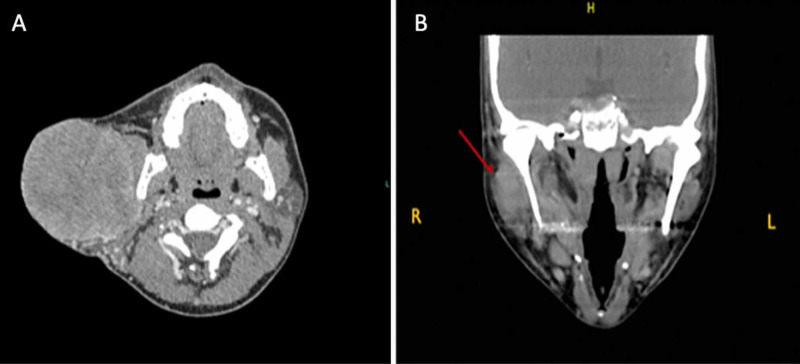
Figure 1
Figure 1. CT head and neck with contrast
(A) First case: CT head and neck with contrast showing right parotid gland mass measuring 8.5 × 8.4 × 8.3 cm with central necrosis and mass effect on sternocleidomastoid muscle. (B) Second case: neck CT scan showing poorly demarcated mass (arrow) occupying superficial lobe of right parotid gland.
Figure 2
Figure 2. H&E of the first case
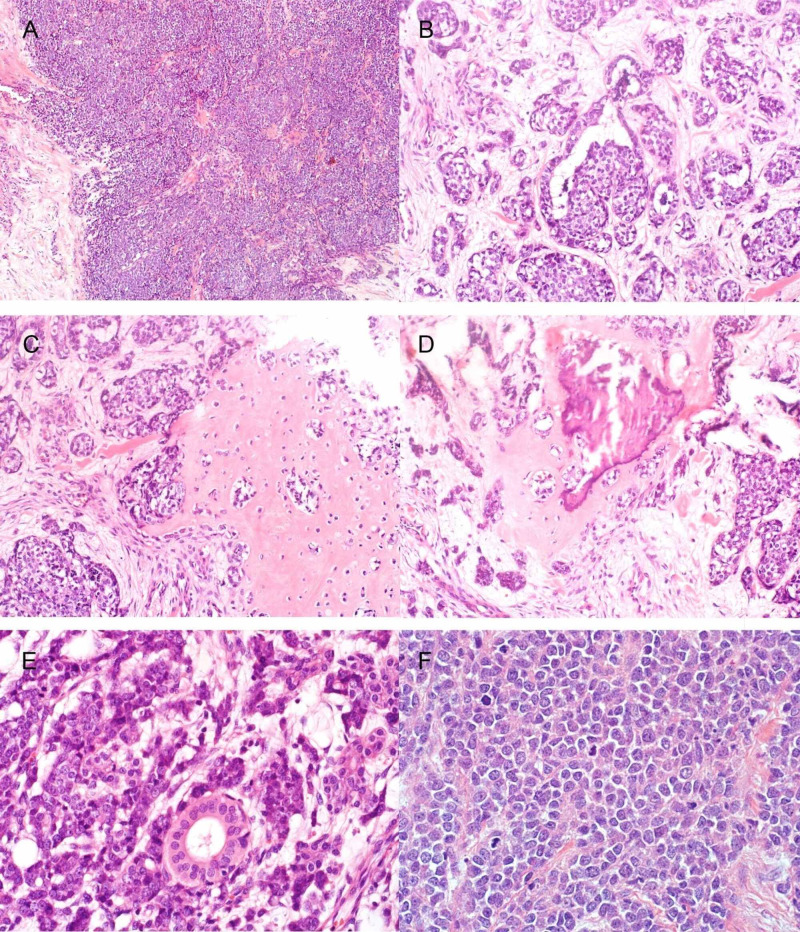
(A) Tumor cells forming solid sheets. (B) Tumor cells arranged in nests. (C) Chondroid differentiation. (D) Chondro-osseous differentiation. (E) Normal duct entrapped within the tumor. (F) Mitosis. H&E, hematoxylin and eosin.
Figure 3
Figure 3. IHC stains of the first case
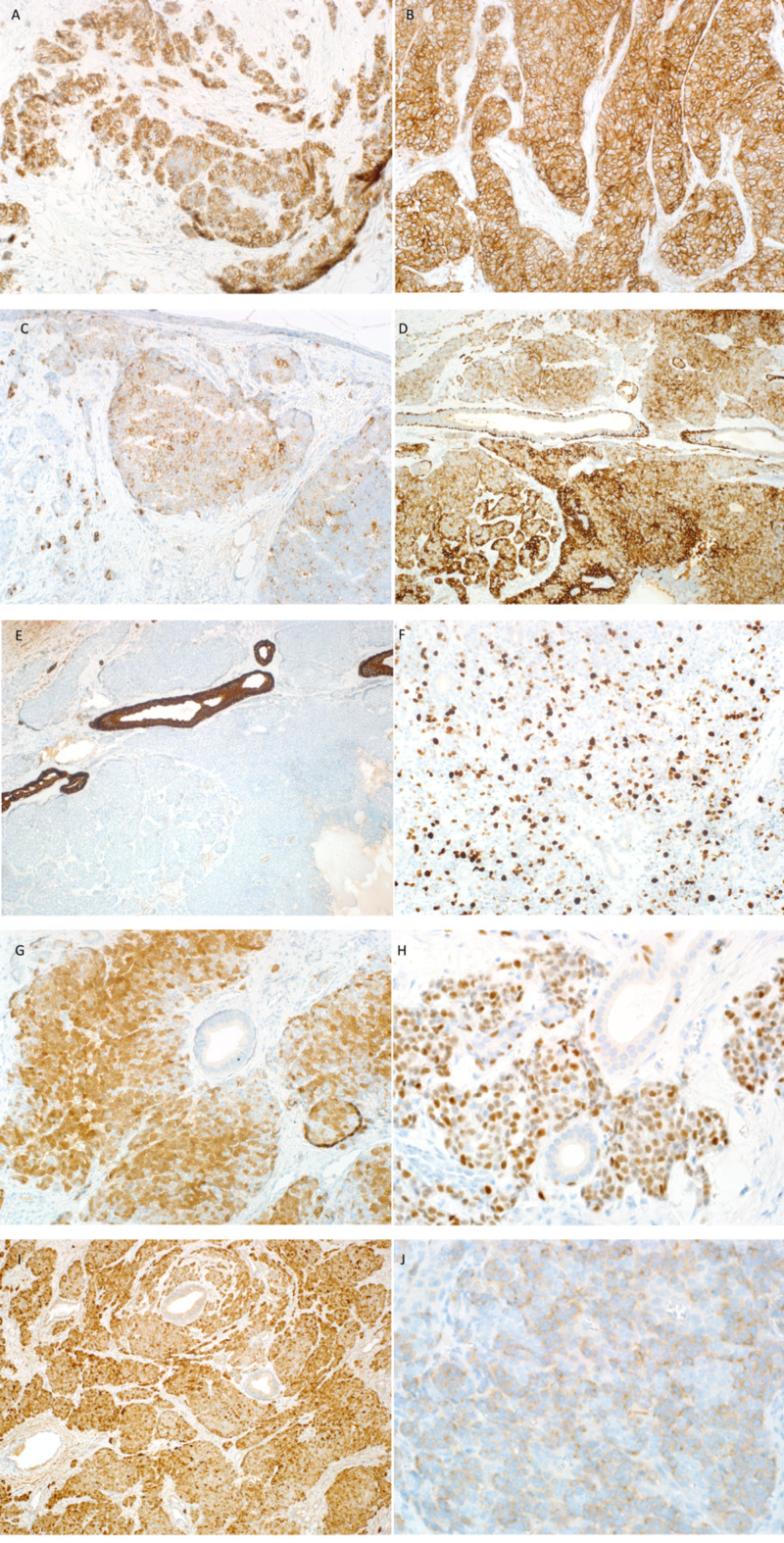
(A) CD56: focally positive. (B) CD99: strong and diffuse membranous positivity in tumor cells. (C) Chromogranin: focally stains positive. (D) CK5/6: highlights myoepithelium of normal duct and stains tumor cells. (E) CK7: negative staining in tumor cells and positive in normal salivary duct. (F) Ki67: positive in more than 20%. (G) P16: nuclear and cytoplasmic positive staining in more than 75% of tumor cells. (H) P63: diffuse positive staining in tumor cells surrounding normal ducts. Some positive staining is also seen in myoepithelial cells. (I) PGP9.5: positive. (J) Synaptophysin: weakly positive. IHC, immunohistochemistry.
Figure 4
Figure 4. H&E of the second case
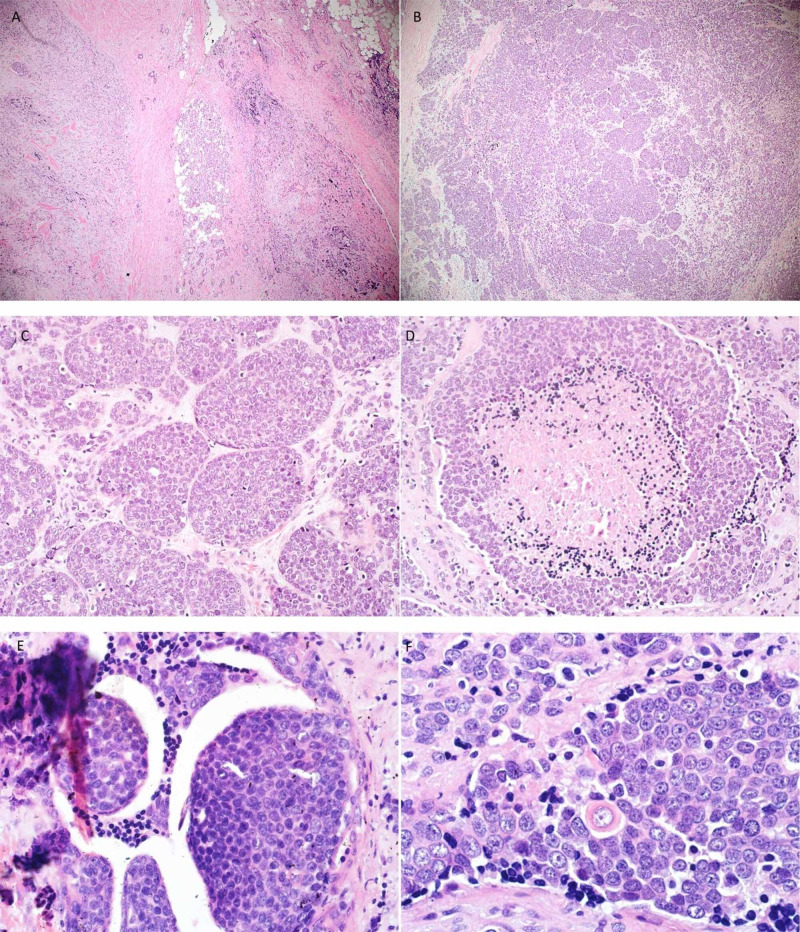
(A) Tumor cells infiltrating salivary gland parenchyma. (B, C) Tumor cells arranged in nests and lobules. (D) Tumor necrosis. (E) Tumor cells extending into benign duct. (F) Very rare cell with squamous differentiation. H&E, hematoxylin and eosin.
Figure 5
Figure 5. IHC stains of the second case
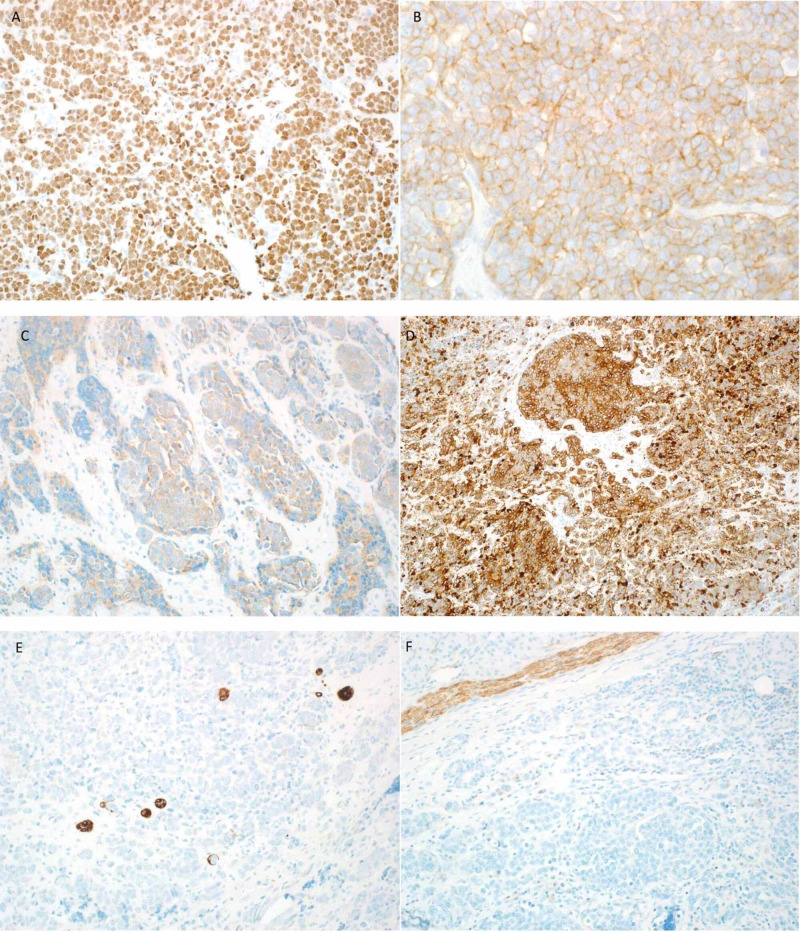
(A) P63: diffuse membranous positivity. (B) CD99: diffuse membranous positivity. (C) Synaptophysin: focally and weakly positive in tumor cells. (D) CK5/6: diffusely positive in tumor cells. (E) CK7: negative in tumor cells and positive in the entrapped ducts. (F) CD56: negative in tumor cells and highlights nerve as internal control. IHC, immunohistochemistry.
Figure 6
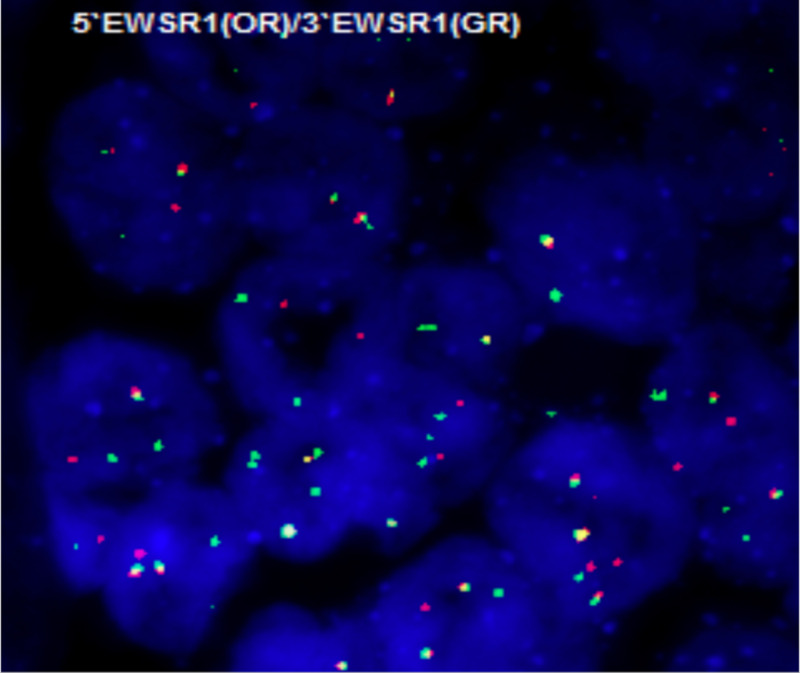
Figure 6. FISH break apart probe showing EWSR1 rearrangement
FISH, fluorescence in-situ hybridization.

References

    1. Ewing sarcoma family of tumours: unusual histological variants and immunophenotypic characteristics. Wu H-T, Govender D. Diagn Histopathol. 2012;18:348–355.
    1. Adamantinoma-like Ewing family tumors of the head and neck: a pitfall in the differential diagnosis of basaloid and myoepithelial carcinomas. Bishop JA, Alaggio R, Zhang L, et al. Am J Surg Pathol. 2015;39:1267–1274. - PMC - PubMed
    1. El-Naggar El-Naggar, AK AK, Chan JKC, Grandis JR, ed ed. WHO classification of head and neck tumours. International Agency for Research on Cancer; 2017.
    1. Morphologic and immunophenotypic diversity in Ewing family tumors: a study of 66 genetically confirmed cases. Folpe AL, Goldblum JR, Rubin BP, et al. Am J Surg Pathol. 2005;29:1025–1033. - PubMed
    1. Adamantinoma-like Ewing sarcoma mimicking basal cell adenocarcinoma of the parotid gland: a case report and review of the literature. Lezcano C, Clarke MR, Zhang L, et al. Head Neck Pathol. 2015;9:280–285. - PMC - PubMed

Publication types

LinkOut - more resources