


Acute kidney injury and aging
- PMID: 33411069
- PMCID: PMC8260619
- DOI: 10.1007/s00467-020-04849-0
Acute kidney injury and aging
Abstract
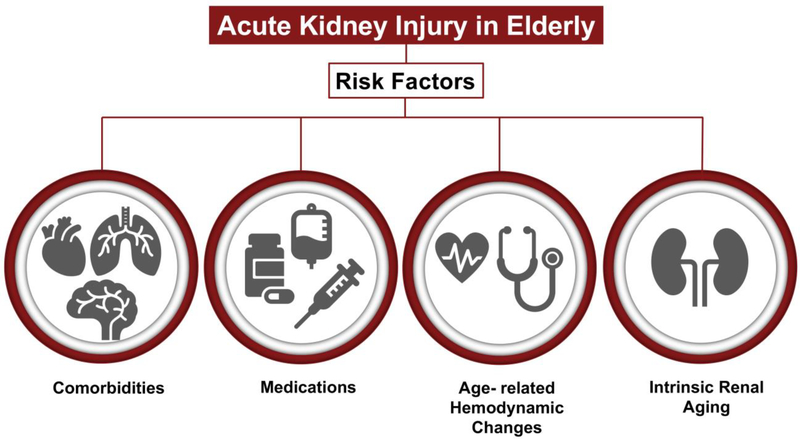
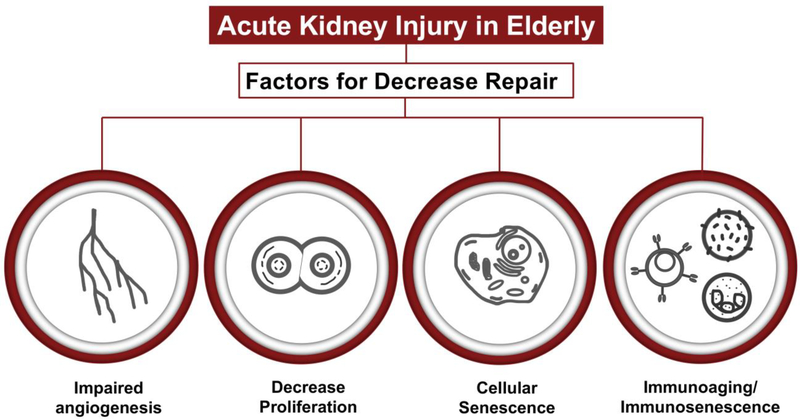
Our aging population is growing and developing treatments for age-related diseases such as Alzheimer's and Parkinson's disease has taken on an increasing urgency and is accompanied by high public awareness. The already high and rising incidence of acute kidney injury (AKI) in the elderly, however, has received relatively little attention despite the potentially fatal outcomes associated with an episode of AKI in this age group. When discussing AKI and aging, one should consider two aspects: first, elderly patients have an increased susceptibility to an AKI episode, and second, they have decreased kidney repair after AKI given the high incidence of progression to chronic kidney disease (CKD). It is unclear if the same factors that drive the increased susceptibility to AKI could be playing a role in the decreased repair capacity or if they are totally different and unrelated. This review will examine current knowledge on the risk factors for the increased susceptibility to AKI in the elderly and will also explore potential aspects that might contribute to a decreased kidney repair response in this age group.
Keywords: Acute kidney injury; Aging; Chronic kidney disease; Elderly; Renal aging; Senescence.
© 2021. IPNA.
Figures
References
-
- Roberts AW, Ogunwole SU, Blakeslee L, Rabe MA (2018) The Population 65 Years and Older in the United States: 2016 American Community Survey Reports. ACS-38 (U.S. Census Bureau, Washington, DC: )
-
- Schmitt R, Melk A (2017) Molecular mechanisms of renal aging. Kidney Int 92:569–579 - PubMed
Publication types
MeSH terms
Grants and funding
LinkOut - more resources
Full Text Sources
Other Literature Sources
Medical
