


Gait features of dystonia in cerebral palsy
- PMID: 33411352
- PMCID: PMC9665896
- DOI: 10.1111/dmcn.14802
Gait features of dystonia in cerebral palsy
Abstract
Aim: To determine the features cited by motor phenotyping experts when identifying dystonia in people with cerebral palsy (CP).
Method: Dystonia identification in CP, particularly when comorbid with spasticity, can be difficult. The dystonia diagnostic criterion standard remains subjective visual identification by expert consensus. For this qualitative study, we conducted an inductive thematic analysis of consensus-building discussions between three pediatric movement disorder physicians as they identified the presence or absence of dystonia in gait videos of 40 participants with spastic CP and periventricular leukomalacia.
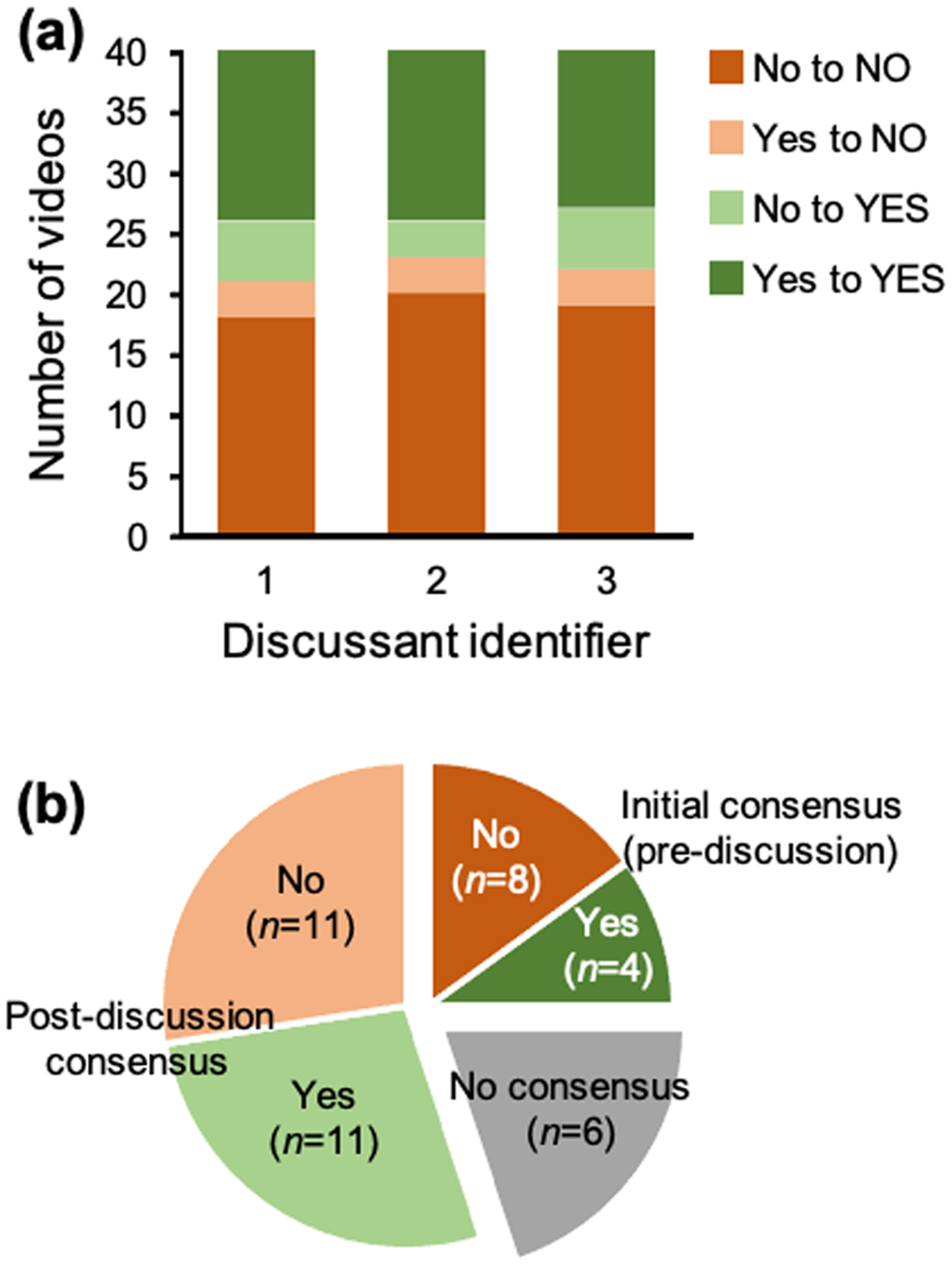
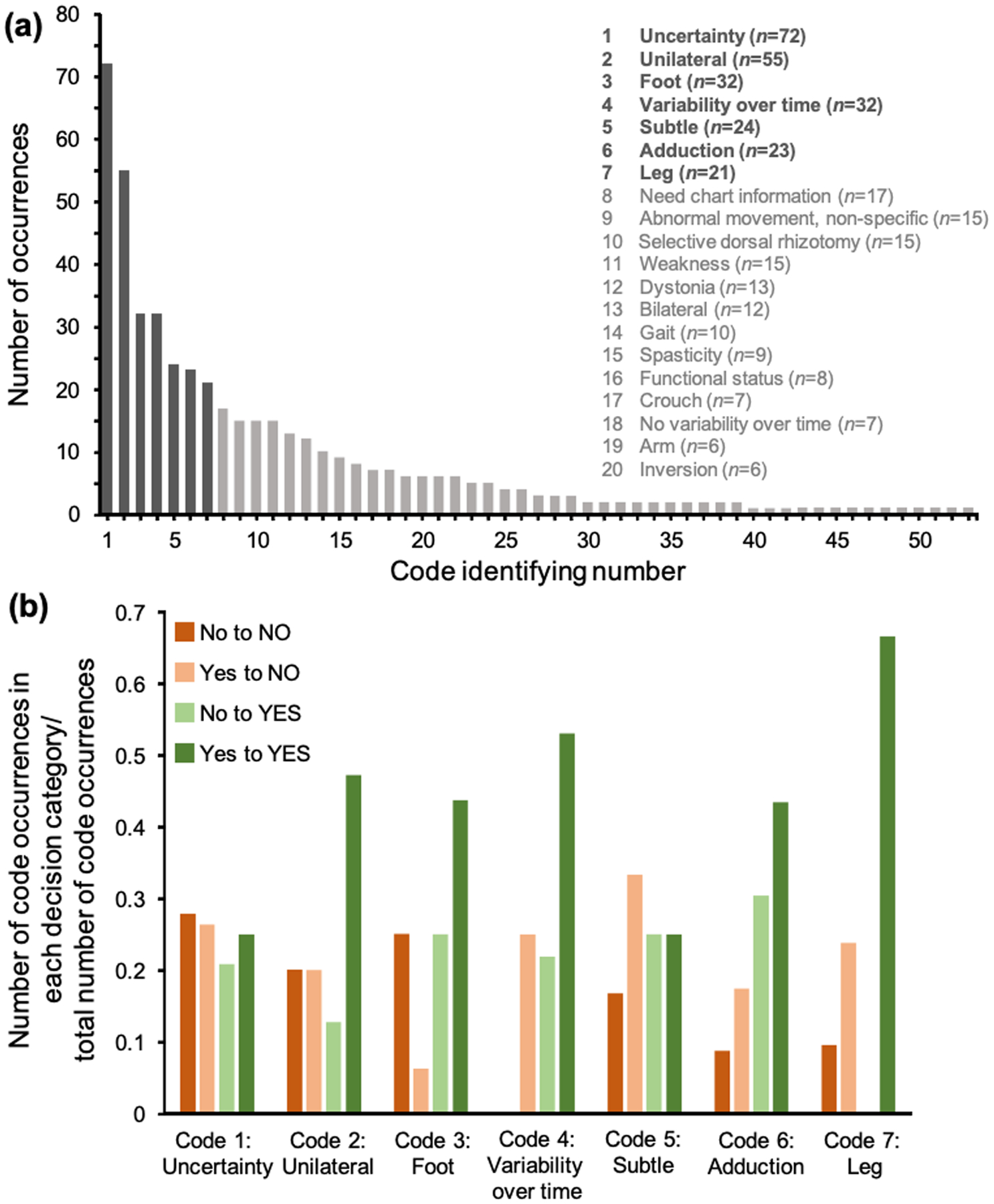
Results: Unanimous consensus about the presence or absence of dystonia was achieved for 34 out of 40 videos. Two main themes were present during consensus-building discussions as videos were evaluated for dystonia: (1) unilateral leg or foot adduction that was variable over time, and (2) difficulty in identifying dystonia. Codes contributing to the first theme were more likely to be cited by a discussant when they felt dystonia was present (as opposed to absent) in a video (χ2 test, p=0.004).
Discussion: These results describe the gait features cited by experts during consensus-building discussion as they identify dystonia in ambulatory people with CP. Qualitative thematic analysis of these discussions could help codify the subjective process of dystonia diagnosis.
© 2021 Mac Keith Press.
Figures
References
-
- Monbaliu E, de Cock P, Ortibus E, et al. Clinical patterns of dystonia and choreoathetosis in participants with dyskinetic cerebral palsy. Dev Med Child Neurol 2016; 58: 138–44. - PubMed
-
- Monbaliu E, Ortibus E, Roelens F, et al. Rating scales for dystonia in cerebral palsy: reliability and validity. Dev Med Child Neurol 2010; 52: 570–5. - PubMed
-
- Monbaliu E, Ortibus E, De Cat J, et al. The Dyskinesia Impairment Scale: a new instrument to measure dystonia and choreoathetosis in dyskinetic cerebral palsy. Dev Med Child Neurol 2012; 54: 278–83. - PubMed
-
- Jethwa A, Mink J, Macarthur C, et al. Development of the Hypertonia Assessment Tool (HAT): a discriminative tool for hypertonia in children. Dev Med Child Neurol 2010; 52: e83–7. - PubMed
Publication types
MeSH terms
Grants and funding
LinkOut - more resources
Full Text Sources
Other Literature Sources
Medical
Miscellaneous
