


Development of a predictive model for integrated medical and long-term care resource consumption based on health behaviour: application of healthcare big data of patients with circulatory diseases
- PMID: 33413377
- PMCID: PMC7792071
- DOI: 10.1186/s12916-020-01874-6
Development of a predictive model for integrated medical and long-term care resource consumption based on health behaviour: application of healthcare big data of patients with circulatory diseases
Abstract
Background: Medical costs and the burden associated with cardiovascular disease are on the rise. Therefore, to improve the overall economy and quality assessment of the healthcare system, we developed a predictive model of integrated healthcare resource consumption (Adherence Score for Healthcare Resource Outcome, ASHRO) that incorporates patient health behaviours, and examined its association with clinical outcomes.
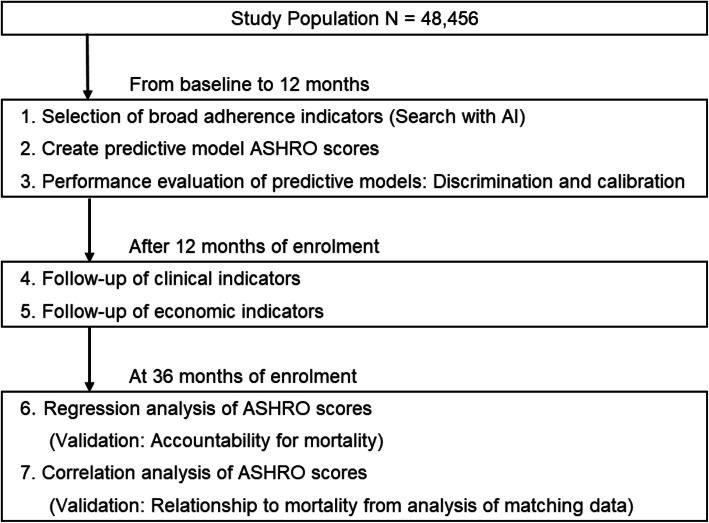
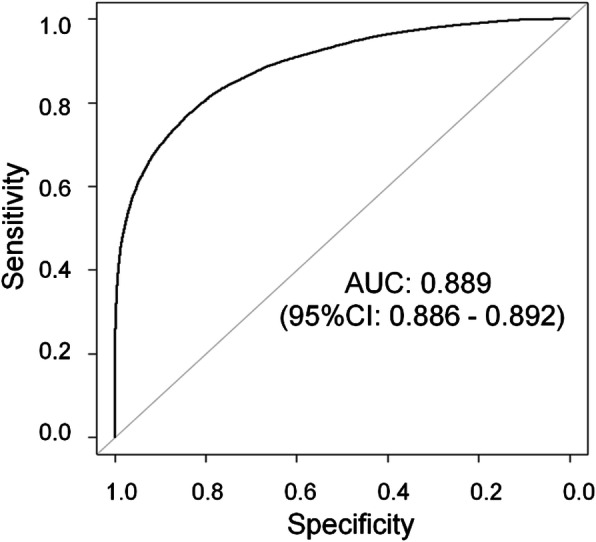
Methods: This study used information from a large-scale database on health insurance claims, long-term care insurance, and health check-ups. Participants comprised patients who received inpatient medical care for diseases of the circulatory system (ICD-10 codes I00-I99). The predictive model used broadly defined composite adherence as the explanatory variable and medical and long-term care costs as the objective variable. Predictive models used random forest learning (AI: artificial intelligence) to adjust for predictors, and multiple regression analysis to construct ASHRO scores. The ability of discrimination and calibration of the prediction model were evaluated using the area under the curve and the Hosmer-Lemeshow test. We compared the overall mortality of the two ASHRO 50% cut-off groups adjusted for clinical risk factors by propensity score matching over a 48-month follow-up period.
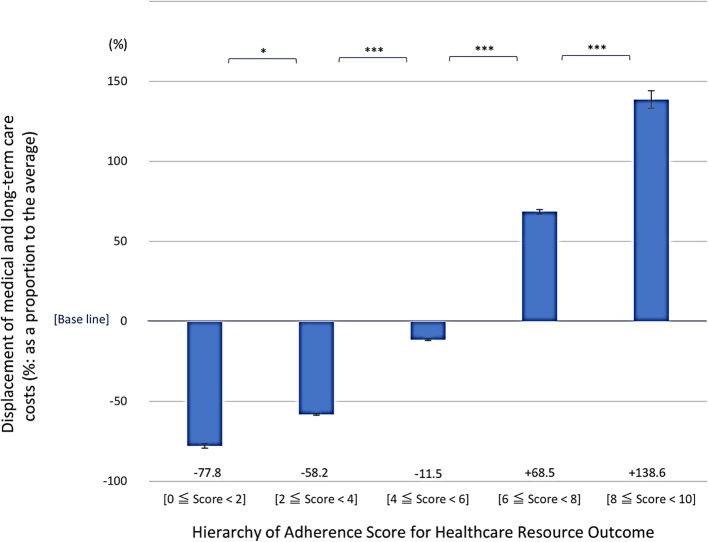
Results: Overall, 48,456 patients were discharged from the hospital with cardiovascular disease (mean age, 68.3 ± 9.9 years; male, 61.9%). The broad adherence score classification, adjusted as an index of the predictive model by machine learning, was an index of eight: secondary prevention, rehabilitation intensity, guidance, proportion of days covered, overlapping outpatient visits/clinical laboratory and physiological tests, medical attendance, and generic drug rate. Multiple regression analysis showed an overall coefficient of determination of 0.313 (p < 0.001). Logistic regression analysis with cut-off values of 50% and 25%/75% for medical and long-term care costs showed that the overall coefficient of determination was statistically significant (p < 0.001). The score of ASHRO was associated with the incidence of all deaths between the two 50% cut-off groups (2% vs. 7%; p < 0.001).
Conclusions: ASHRO accurately predicted future integrated healthcare resource consumption and was associated with clinical outcomes. It can be a valuable tool for evaluating the economic usefulness of individual adherence behaviours and optimising clinical outcomes.
Keywords: Artificial intelligence; Circulatory diseases; Clinical outcome; Health behaviour; Healthcare big data; Medical and long-term care resource consumption.
Conflict of interest statement
T. Takura reports grants from Nihon Medi-Physics Co., Ltd.; Terumo Corporation; and Fujifilm Toyama Chemical Co., Ltd., outside the submitted work.
The other authors declare that they have no competing interests.
Figures

References
-
- Ishihara H, Suzuki M. Japanese guidelines for the management of stroke 2015: overview of the chapter on subarachnoid hemorrhage. Nihon Rinsho. 2016;74:677–680. - PubMed
-
- The Japanese Registry of All Cardiac and Vascular Diseases (JROAD). Annual Rep. 2018. http://www.j-circ.or.jp/jittai_chosa/jittai_chosa2018web.pdf. Accessed 21 Aug 2020.
-
- Takura T. Current trends in medical economics in the circulatory field―socioeconomics background and research issue. Circ Rep. 2019;1:342–346. doi: 10.1253/circrep.CR-19-0031. - DOI - PMC - PubMed
-
- Minematsu K. Stroke and cardiovascular disease control act. Jpn J Thromb Hemost. 2019;30:862–865. doi: 10.2491/jjsth.30.862. - DOI
Publication types
MeSH terms
LinkOut - more resources
Full Text Sources
Other Literature Sources
