


New World screwworm (Cochliomyia hominivorax) myiasis in feral swine of Uruguay: One Health and transboundary disease implications
- PMID: 33413607
- PMCID: PMC7789611
- DOI: 10.1186/s13071-020-04499-z
New World screwworm (Cochliomyia hominivorax) myiasis in feral swine of Uruguay: One Health and transboundary disease implications
Abstract
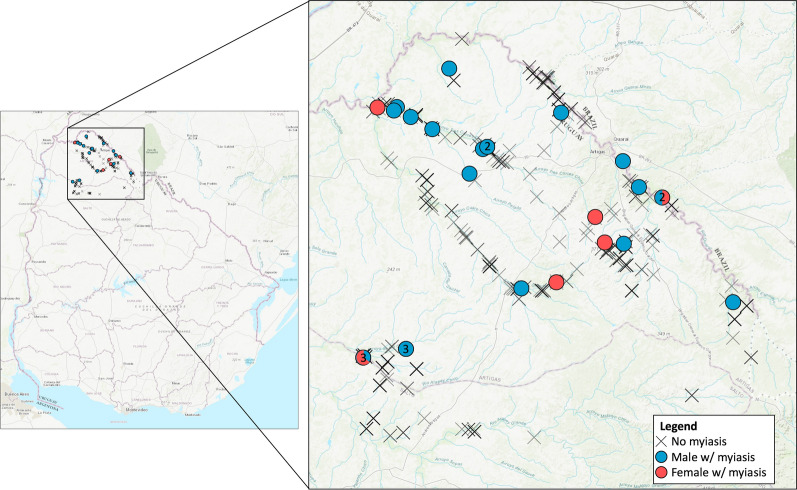
Background: Feral swine (Sus scrofa) are highly invasive and threaten animal and human health in the Americas. The screwworm (Cochliomyia hominivorax) is listed by the World Organization for Animal Health as a notifiable infestation because myiasis cases affect livestock, wildlife, and humans in endemic areas, and outbreaks can have major socioeconomic consequences in regions where the screwworm has been eradicated. However, a knowledge gap exists on screwworm infestation of feral swine in South America, where the screwworm is endemic. Here, we report screwworm infestation of feral swine harvested in Artigas Department (Uruguay), where the Republic of Uruguay shares borders with Brazil and Argentina.
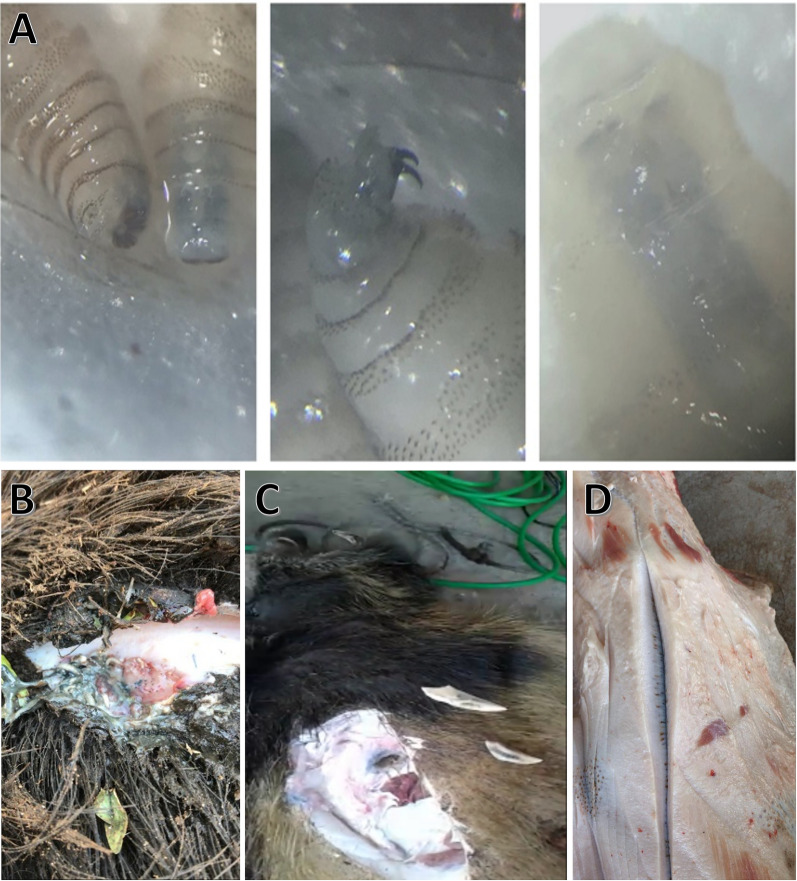
Methods: Myiasis caused by the larvae of screwworm were identified in feral swine with the support and collaboration of members of a local feral swine hunting club over a 3-year period in the Department of Artigas. Harvested feral swine were examined for the presence of lesions where maggots causing the myiasis could be sampled and processed for taxonomic identification. The sites of myiasis on the body of infested feral swine and geospatial data for each case were recorded. The sex and relative size of each feral swine were also recorded. Temperature and precipitation profiles for the region were obtained from public sources.
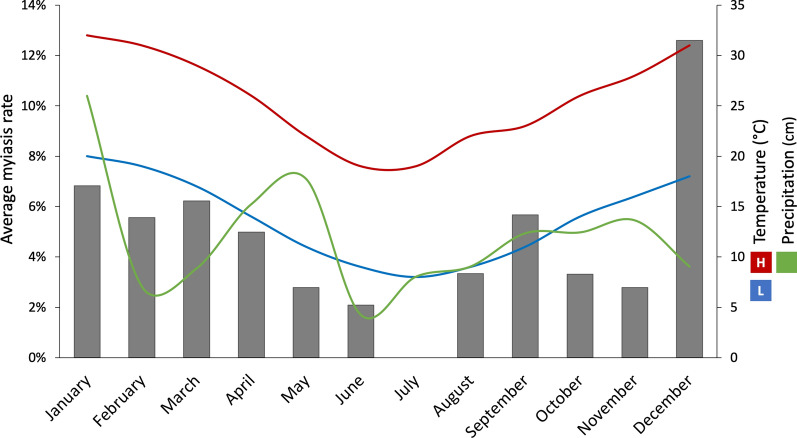
Results: Myiases caused by screwworms were recorded in 27 of 618 the feral swine harvested. Cases detected in males weighing > 40 kg were associated with wounds that, due to their location, were likely caused by aggressive dominance behavior between adult males. The overall prevalence of screwworm infestation in the harvested feral swine was associated with ambient temperature, but not precipitation. Case numbers peaked in the warmer spring and summer months.
Conclusions: This is the first report on myiasis in feral swine caused by screwworm in South America. In contrast to myiasis in cattle, which can reach deep into host tissues, screwworms in feral swine tended to cause superficial infestation. The presence of feral swine in screwworm endemic areas represents a challenge to screwworm management in those areas. Screwworm populations maintained by feral swine may contribute to human cases in rural areas of Uruguay, which highlights the importance of the One Health approach to the study of this invasive host species-ectoparasite interaction.
Keywords: Cochliomyia hominivorax; Feral swine; Invasive species; Myiasis; One Health; Screwworm; Sus scrofa; Transboundary; Zoonosis.
Conflict of interest statement
The authors declare that they have no competing interests.
Figures
References
-
- OIE—World Organization for Animal Health. Screwworm (Old World and New World). OIE Technical Disease Cards. 2013. https://www.oie.int/fileadmin/Home/eng/Animal_Health_in_the_World/docs/p... Accessed 22 July 2020.
-
- Conti L. New World screwworm eradication in south Florida: a One Health success story. One Heal Platf Commun. 2018;3:6.
MeSH terms
Grants and funding
LinkOut - more resources
Full Text Sources
Other Literature Sources
Miscellaneous
