


Inverse Relationship of Maximal Exercise Capacity to Hospitalization Secondary to Coronavirus Disease 2019
- PMID: 33413833
- PMCID: PMC7547590
- DOI: 10.1016/j.mayocp.2020.10.003
Inverse Relationship of Maximal Exercise Capacity to Hospitalization Secondary to Coronavirus Disease 2019
Abstract
Objective: To investigate the relationship between maximal exercise capacity measured before severe acute respiratory syndrome coronavirus 2 (SARS-CoV-2) infection and hospitalization due to coronavirus disease 2019 (COVID-19).
Methods: We identified patients (≥18 years) who completed a clinically indicated exercise stress test between January 1, 2016, and February 29, 2020, and had a test for SARS-CoV-2 (ie, real-time reverse transcriptase polymerase chain reaction test) between February 29, 2020, and May 30, 2020. Maximal exercise capacity was quantified in metabolic equivalents of task (METs). Logistic regression was used to evaluate the likelihood that hospitalization secondary to COVID-19 is related to peak METs, with adjustment for 13 covariates previously identified as associated with higher risk for severe illness from COVID-19.
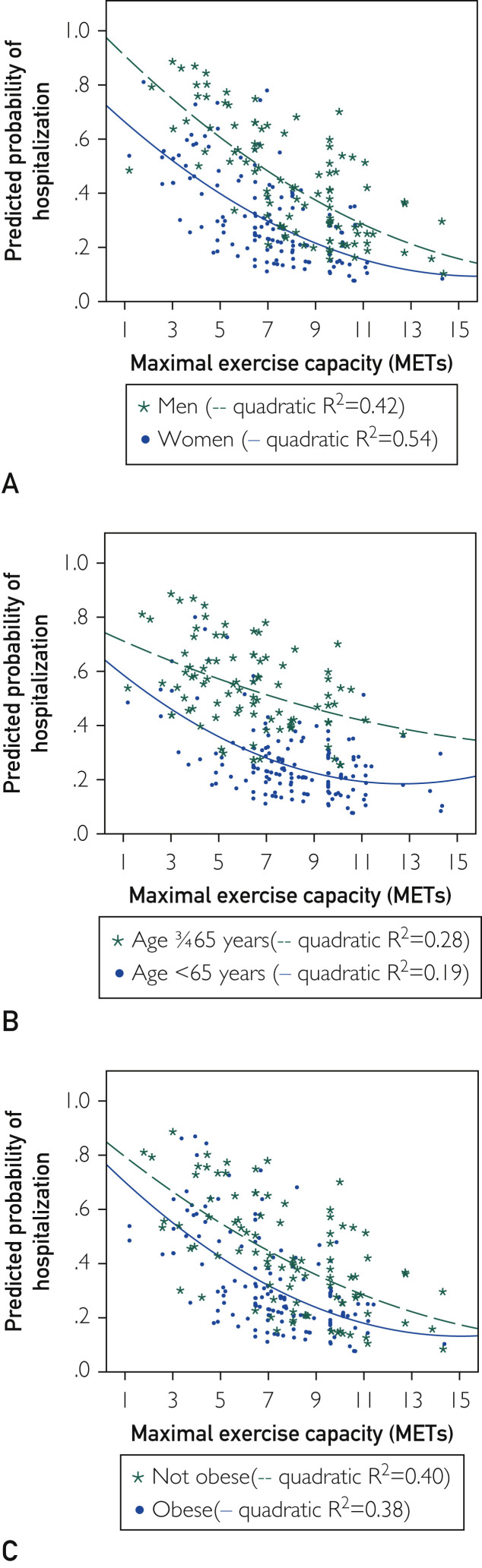
Results: We identified 246 patients (age, 59±12 years; 42% male; 75% black race) who had an exercise test and tested positive for SARS-CoV-2. Among these, 89 (36%) were hospitalized. Peak METs were significantly lower (P<.001) among patients who were hospitalized (6.7±2.8) compared with those not hospitalized (8.0±2.4). Peak METs were inversely associated with the likelihood of hospitalization in unadjusted (odds ratio, 0.83; 95% CI, 0.74-0.92) and adjusted models (odds ratio, 0.87; 95% CI, 0.76-0.99).
Conclusion: Maximal exercise capacity is independently and inversely associated with the likelihood of hospitalization due to COVID-19. These data further support the important relationship between cardiorespiratory fitness and health outcomes. Future studies are needed to determine whether improving maximal exercise capacity is associated with lower risk of complications due to viral infections, such as COVID-19.
Copyright © 2020 Mayo Foundation for Medical Education and Research. Published by Elsevier Inc. All rights reserved.
Figures


Comment in
-
Fit Is It in COVID-19, Future Pandemics, and Overall Healthy Living.Mayo Clin Proc. 2021 Jan;96(1):7-9. doi: 10.1016/j.mayocp.2020.11.013. Epub 2020 Nov 24. Mayo Clin Proc. 2021. PMID: 33413836 Free PMC article. No abstract available.
References
-
- DeOreo P.B. Hemodialysis patient-assessed functional health status predicts continued survival, hospitalization, and dialysis-attendance compliance. Am J Kidney Dis. 1997;30(2):204–212. - PubMed
-
- Fleisher L.A., Fleischmann K.E., Auerbach A.D. 2014 ACC/AHA guideline on perioperative cardiovascular evaluation and management of patients undergoing noncardiac surgery: a report of the American College of Cardiology/American Heart Association Task Force on practice guidelines. J Am Coll Cardiol. 2014;64(22):e77–e137. - PubMed
-
- Keteyian S.J., Brawner C.A., Savage P.D. Peak aerobic capacity predicts prognosis in patients with coronary heart disease. Am Heart J. 2008;156(2):292–300. - PubMed
-
- Older P.O., Levett D.Z.H. Cardiopulmonary exercise testing and surgery. Ann Am Thorac Soc. 2017;14(suppl 1):S74–S83. - PubMed
Publication types
MeSH terms
LinkOut - more resources
Full Text Sources
Other Literature Sources
Medical
Miscellaneous
