


Prevalence of comorbidities and their associated factors in patients with type 2 diabetes at a tertiary care department in Ningbo, China: a cross-sectional study
- PMID: 33414143
- PMCID: PMC7797259
- DOI: 10.1136/bmjopen-2020-040532
Prevalence of comorbidities and their associated factors in patients with type 2 diabetes at a tertiary care department in Ningbo, China: a cross-sectional study
Abstract
Objectives: To determine the prevalence of comorbidities in patients with type 2 diabetes mellitus (T2DM) and identify the factors independently associated with comorbidities in a tertiary care department in Ningbo, China.
Design: A computerised medical records database was used to conduct a cross-sectional study.
Setting: The study was conducted in a tertiary care department in Ningbo, China.
Participants: The study was conducted on adult patients with T2DM, and it included 8 years of data, from 1 January 2012 to 31 December 2019.
The primary outcome measure: Comorbidity was defined as the coexistence of at least one other chronic condition, that is, either a physical non-communicable disease (duration ≥3 months), a mental health condition (duration ≥3 months) or an infectious disease (duration ≥3 months).
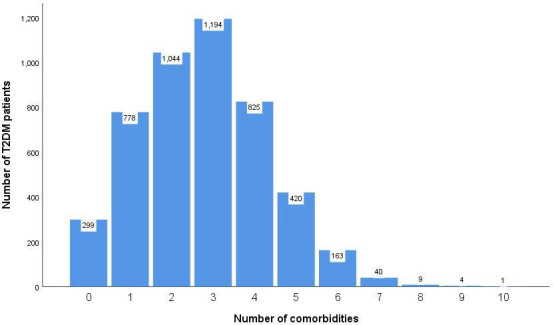
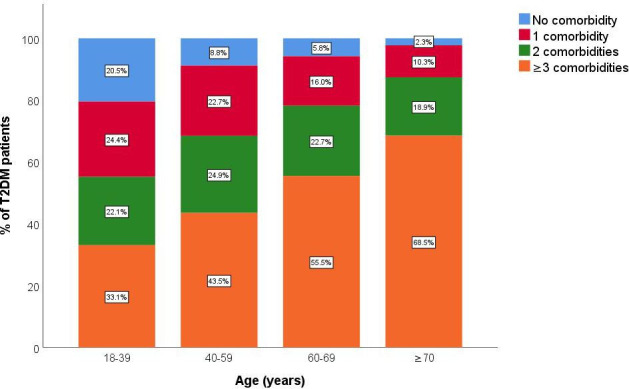
Results: In total, 4777 patients with T2DM satisfied the eligibility criteria. Over 8 years, the prevalence of comorbidities was 93.7%. The odds of comorbidities increased with the age of patients (18 to 39 years: 1; 40 to 59 years: OR 2.80, 95% CI 1.98 to 3.96; 60 to 69 years: OR 4.43, 95% CI 3.04 to 6.44; and ≥70 years: OR 10.97, 95% CI 7.17 to 16.77). The odds were lower in female patients (OR 0.66, 95% CI 0.51 to 0.84), patients residing in rural areas (OR 0.75, 95% CI 0.59 to 0.95) and patients without health insurance (OR 0.62, 95% CI 0.46 to 0.83). The odds were higher in single/divorced/widowed patients compared with those in married patients (OR 1.95, 95% CI 1.21 to 3.12).
Conclusions: A large percentage of patients with T2DM in the tertiary care department in Ningbo, China, had comorbidities, and the factors associated with comorbidities were identified. The findings could be used in developing, evaluating and implementing interventions aimed at improving outcomes in patients with T2DM with comorbidities.
Keywords: general diabetes; health services administration & management; public health.
© Author(s) (or their employer(s)) 2020. Re-use permitted under CC BY-NC. No commercial re-use. See rights and permissions. Published by BMJ.
Conflict of interest statement
Competing interests: None declared.
Figures
References
-
- Ningbo Municipal Statistics Bureau Statistical Bulletin on national economic and social development in Ningbo, China, 2018.
-
- Health and Family Planning Commission of Ningbo Municipality Prevention and treatment of chronic diseases in Ningbo. Available: http://www.cnnb.com.cn/nbzfxwfbh/system/2014/05/22/008068694.shtml [Accessed 25 Apr 2020].
-
- Yao DZ, Sun XH, JH L. Prevalence and risk factors of diabetes in people over 40 years of age in Ningbo City area. Modern Pract Med 2016;28:1343–5.
-
- Li H, Cui J, Gong J, et al. . Diabetes morbidity and mortality of residents in Ningbo, 2010-2014. Chinese Rural Health Service Administration 2016;36:1304–7.
-
- World Health Organization Multimorbidity. Geneva, Switzerland: World Health Organization, 2016.
Publication types
MeSH terms
LinkOut - more resources
Full Text Sources
Other Literature Sources
Medical
