


Prostate apoptosis response-4 and tumor suppression: it's not just about apoptosis anymore
- PMID: 33414404
- PMCID: PMC7790818
- DOI: 10.1038/s41419-020-03292-1
Prostate apoptosis response-4 and tumor suppression: it's not just about apoptosis anymore
Abstract
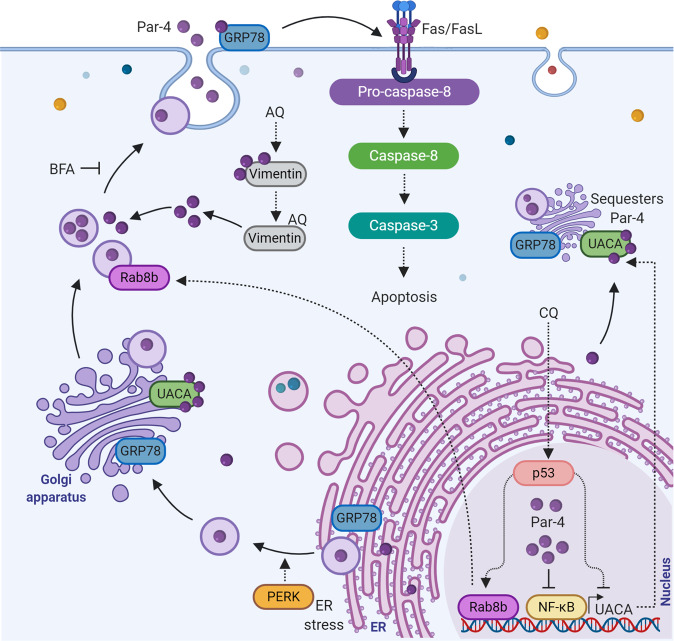
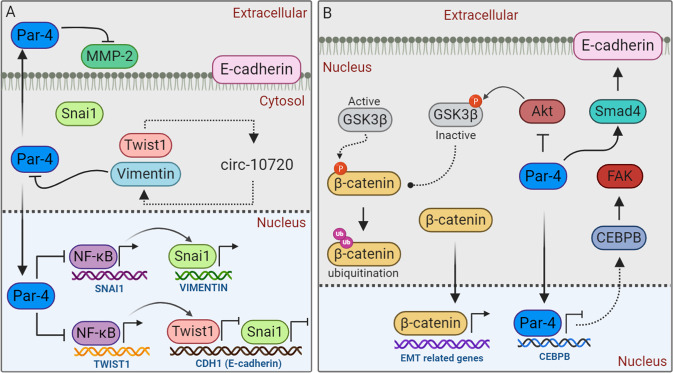
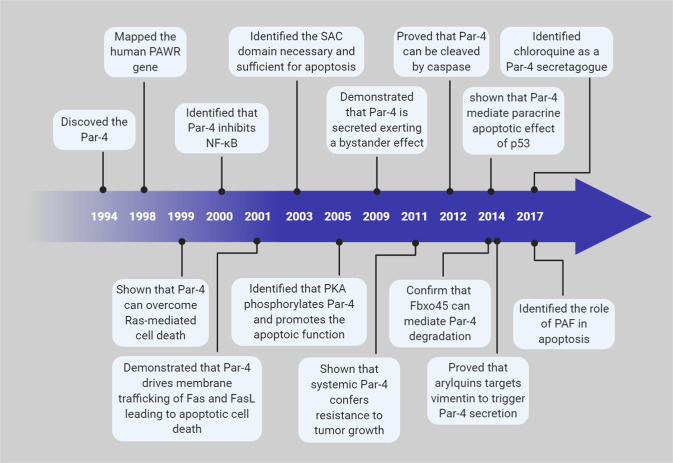
The tumor suppressor prostate apoptosis response-4 (Par-4) has recently turned 'twenty-five'. Beyond its indisputable role as an apoptosis inducer, an increasing and sometimes bewildering, new roles for Par-4 are being reported. These roles include its ability to regulate autophagy, senescence, and metastasis. This growing range of responses to Par-4 is reflected by our increasing understanding of the various mechanisms through which Par-4 can function. In this review, we summarize the existing knowledge on Par-4 tumor suppressive mechanisms, and discuss how the interaction of Par-4 with different regulators influence cell fate. This review also highlights the new secretory pathway that has emerged and the likely discussion on its clinical implications.
Conflict of interest statement
The authors declare that they have no conflict of interest.
Figures
References
-
- Sells SF, et al. Commonality of the gene programs induced by effectors of apoptosis in androgen-dependent and -independent prostate cells. Cell Growth Differ. 1994;5:457–466. - PubMed
-
- Boehrer S, et al. In lymphatic cells par-4 sensitizes to apoptosis by down-regulating bcl-2 and promoting disruption of mitochondrial membrane potential and caspase activation. Cancer Res. 2002;62:1768–1775. - PubMed
Publication types
MeSH terms
Substances
LinkOut - more resources
Full Text Sources
Other Literature Sources
