


Prevalence of Gastrointestinal Parasites in the Frugivorous and the Insectivorous Bats in Southcentral Nepal
- PMID: 33414955
- PMCID: PMC7752302
- DOI: 10.1155/2020/8880033
Prevalence of Gastrointestinal Parasites in the Frugivorous and the Insectivorous Bats in Southcentral Nepal
Abstract
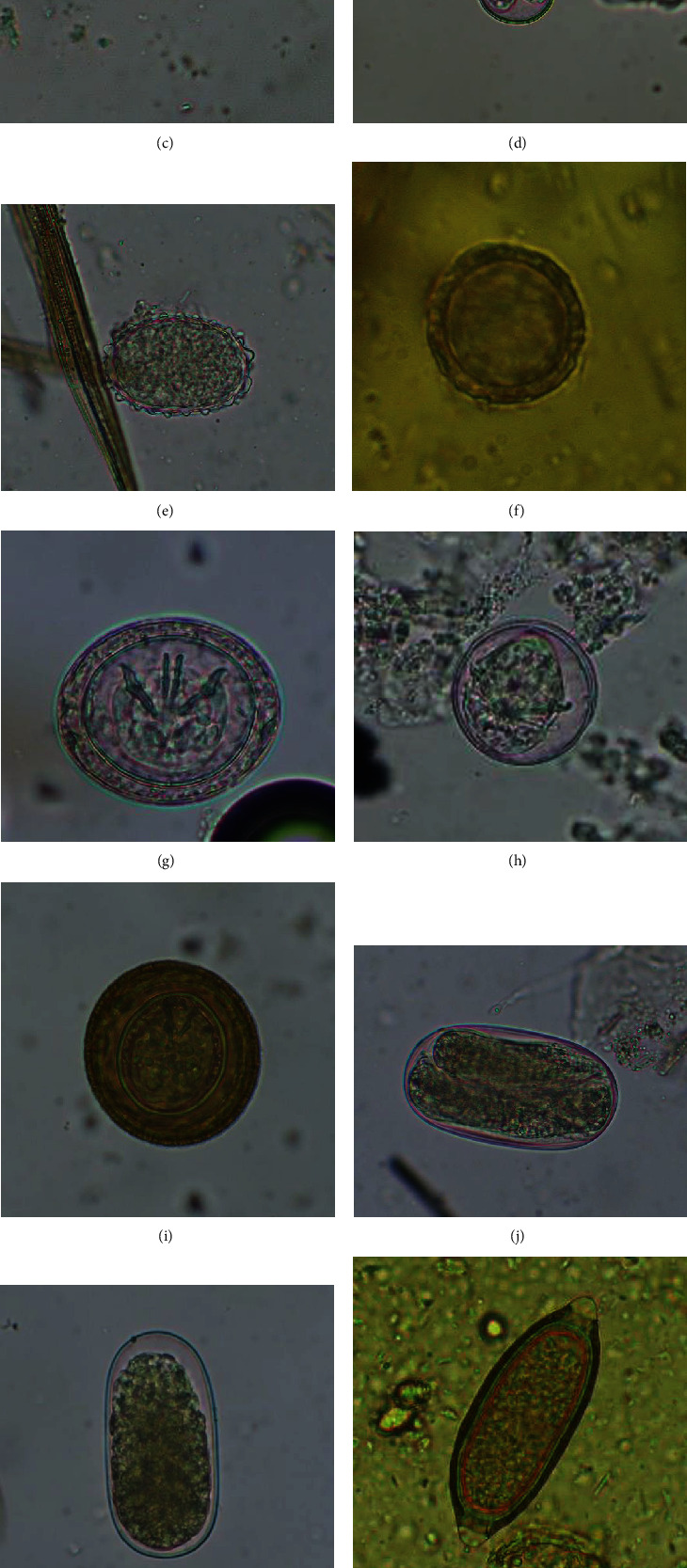
Bats are the only active flying placental mammals and are traditionally classified into mega- and microbats, which are, respectively, herbivorous and insectivorous in feeding habit. Though deforestation, habitat destruction, natural calamities, illegal hunting, and climate changes are the challenging threats for bats, the role of existing gastrointestinal (GI) parasites have not been evaluated yet in Nepal. Thus, the current study aims to determine the prevalence of GI parasites in bats from the Shaktikhor area at the Chitwan district of Southcentral Nepal. From July 2018 to February 2019, a total of 60 fecal samples of bats (30 from frugivorous bats and 30 from the insectivorous bats) were collected. These samples were preserved at 2.5% potassium dichromate solution. The fecal examination was carried out by the direct wet mount, concentrations, acid-fast staining, and sporulation techniques. Overall results showed the prevalence rate of 80% GI parasites. The parasites detected in the insectivorous bats were Ascarid spp., Capillarid sp., Cryptosporidium sp., Eimeria spp., Entamoeba sp., Giardia sp., Hymenolepis spp., Isospora sp., Oxyurid sp., Strongyle, and Strongyloides sp. In contrast, Eimeria sp., Entamoeba sp., and Hymenolepis sp. were detected in the frugivorous bats. Based on a wide diversity of parasite richness and parasitic concurrency measured by the prevalence rates, we suggest that GI parasitism might be a threatening factor in the insectivorous bats in the current study area.
Copyright © 2020 Roshan Babu Adhikari et al.
Conflict of interest statement
The authors declare that they have no conflict of interest.
Figures


References
-
- American Society of Mammalogists, Taxon Summary Statistics. Mammal Diversity Database. November 2019, https://mammaldiversity.org/summary.
-
- Mickleburgh S., Waylen K., Racey P. Bats as bushmeat: a global review. Oryx. 2009;43(2):217–234. doi: 10.1017/S0030605308000938. - DOI
-
- Prothero D. R. The Princeton field guide to prehistoric mammals. Princeton Field Guides. Vol. 112. Princeton University Press; 2016.
LinkOut - more resources
Full Text Sources
Miscellaneous
