


CD4+ T cell exhaustion leads to adoptive transfer therapy failure which can be prevented by immune checkpoint blockade
- PMID: 33414997
- PMCID: PMC7783768
CD4+ T cell exhaustion leads to adoptive transfer therapy failure which can be prevented by immune checkpoint blockade
Abstract
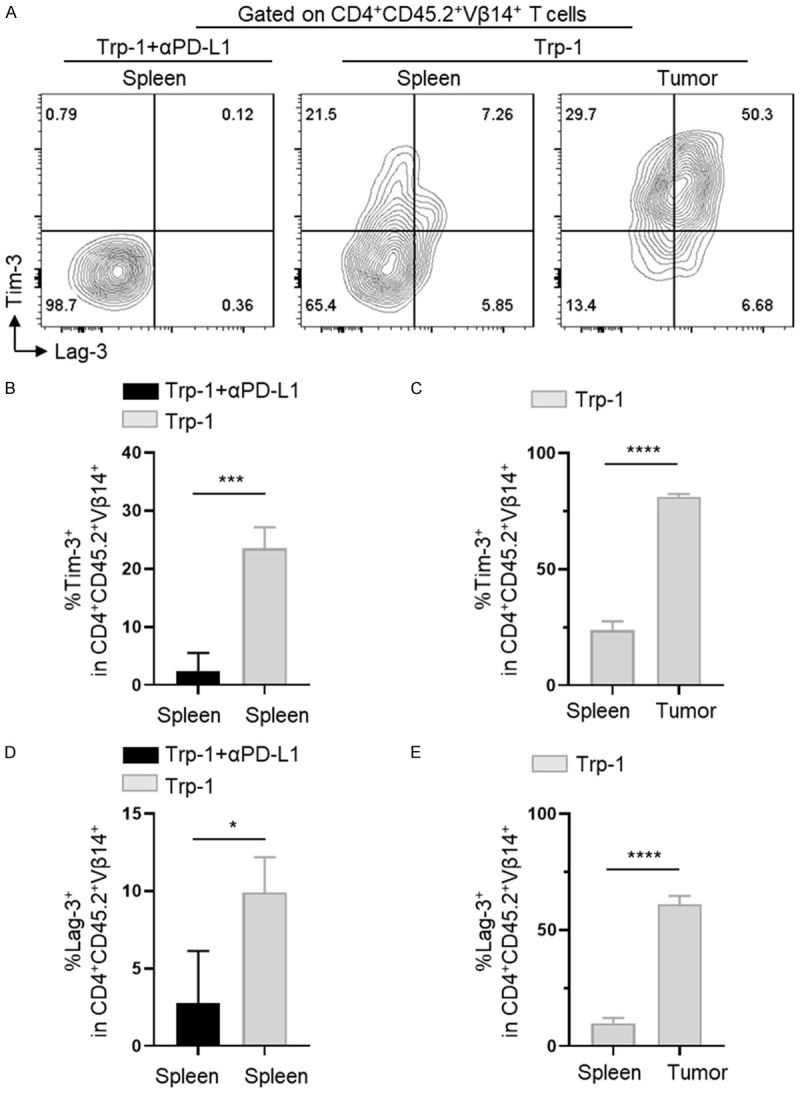
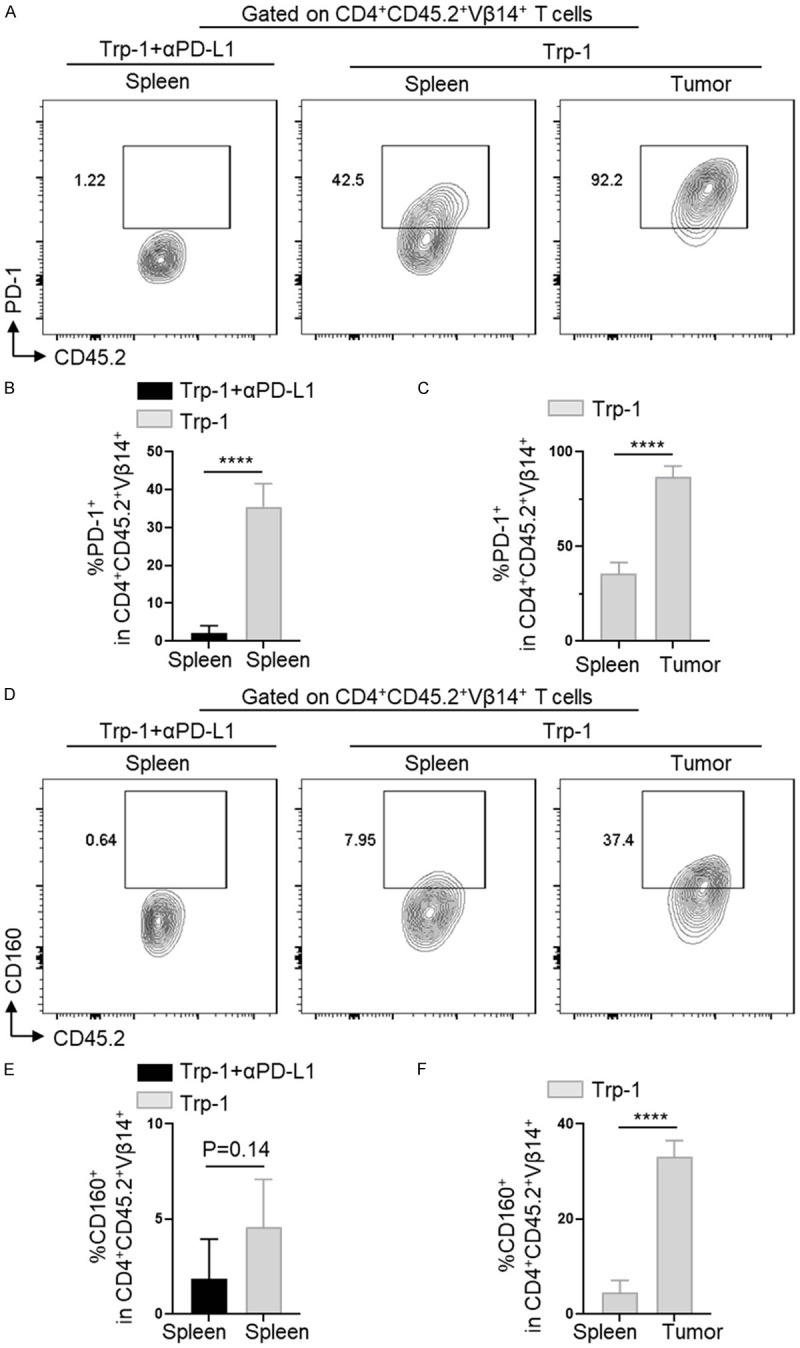
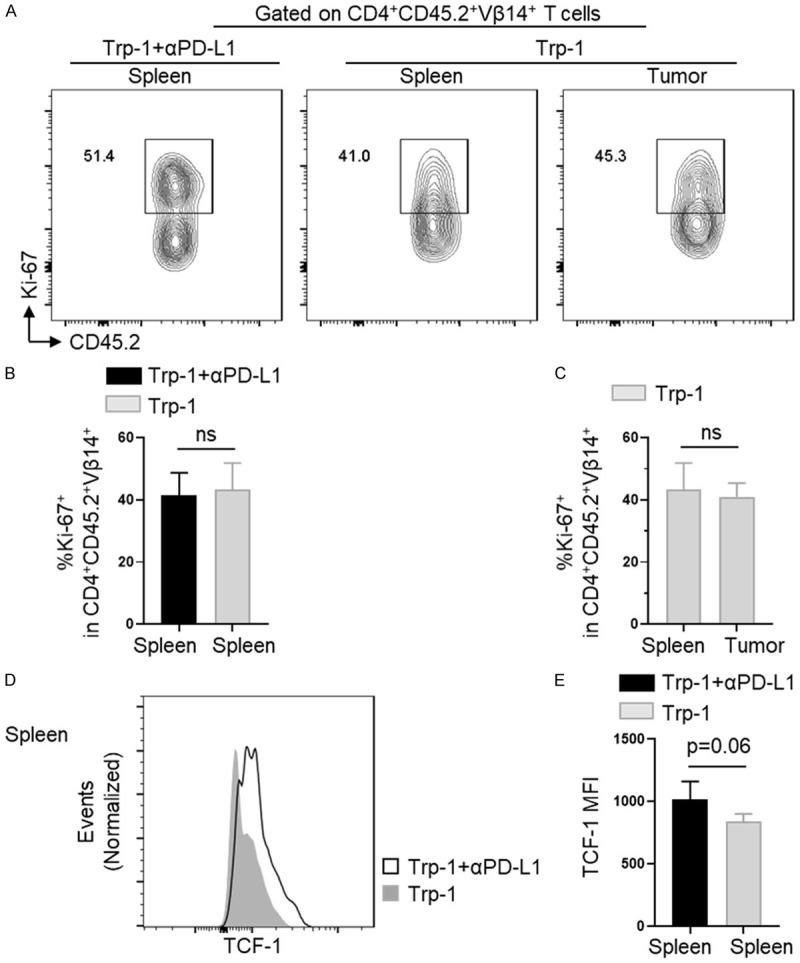
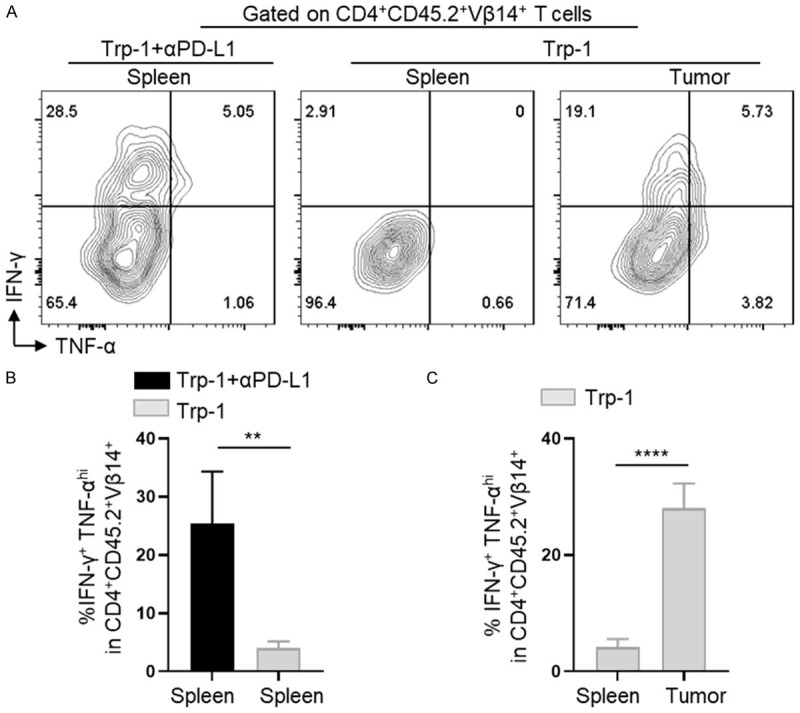
Cytotoxic CD8+ T cell exhaustion is one of the mechanisms underlying the tumor immune escape. The paradigm-shifting immune checkpoint therapy can mitigate CD8+ T lymphocyte exhaustion, reinvigorate the anticancer immunity, and achieve durable tumor regression for some patients. Emerging evidence indicates that CD4+ T lymphocytes also have a critical role in anticancer immunity, either by directly applying cytotoxicity toward cancer cells or as a helper to augment CD8+ T cell cytotoxicity. Whether anticancer CD4+ T lymphocytes undergo exhaustion during immunotherapy of solid tumors remains unknown. Here we report that melanoma antigen TRP-1/gp75-specific CD4+ T lymphocytes exhibit an exhaustion phenotype after being adoptively transferred into mice bearing large subcutaneous melanoma. Exhaustion of these CD4+ T lymphocytes is accompanied with reduced cytokine release and increased expression of inhibitory receptors, resulting in loss of tumor control. Importantly, we demonstrate that PD-L1 immune checkpoint blockade can prevent exhaustion, induce proliferation of the CD4+ T lymphocytes, and consequently prevent tumor recurrence. Therefore, when encountering an excessive amount of tumor antigens, tumor-reactive CD4+ T lymphocytes also enter the exhaustion state, which can be prevented by immune checkpoint blockade. Our results highlight the importance of tumor-specific CD4+ T lymphocytes in antitumor immunity and suggest that the current immune checkpoint blockade therapy may achieve durable anticancer efficacy by rejuvenating both tumor antigen-specific CD8+ T lymphocytes and CD4+ T lymphocytes.
Keywords: CD4+ T cells; adoptive transfer therapy; exhaustion; immune checkpoint blockade.
AJCR Copyright © 2020.
Conflict of interest statement
None.
Figures
References
-
- Sekine T, Perez-Potti A, Nguyen S, Gorin JB, Wu VH, Gostick E, Llewellyn-Lacey S, Hammer Q, Falck-Jones S, Vangeti S, Yu M, Smed-Sörensen A, Gaballa A, Uhlin M, Sandberg JK, Brander C, Nowak P, Goepfert PA, Price DA, Betts MR, Buggert M. TOX is expressed by exhausted and polyfunctional human effector memory CD8(+) T cells. Sci Immunol. 2020;5:eaba7918. - PubMed
-
- Hudson WH, Gensheimer J, Hashimoto M, Wieland A, Valanparambil RM, Li P, Lin JX, Konieczny BT, Im SJ, Freeman GJ, Leonard WJ, Kissick HT, Ahmed R. Proliferating transitory T cells with an effector-like transcriptional signature emerge from PD-1(+) stem-like CD8(+) T cells during chronic infection. Immunity. 2019;51:1043–1058. e1044. - PMC - PubMed
Grants and funding
LinkOut - more resources
Full Text Sources
Research Materials