


Doping practices in international weightlifting: analysis of sanctioned athletes/support personnel from 2008 to 2019 and retesting of samples from the 2008 and 2012 Olympic Games
- PMID: 33415428
- PMCID: PMC7790029
- DOI: 10.1186/s40798-020-00293-4
Doping practices in international weightlifting: analysis of sanctioned athletes/support personnel from 2008 to 2019 and retesting of samples from the 2008 and 2012 Olympic Games
Abstract
Background: The pervasiveness of doping and findings of anti-doping corruption threaten weightlifting's position at the 2024 Olympic Games. Analysing the practices of doping in weightlifters could identify patterns in doping that assist in future detection.
Methods: We analysed publicly available data on sanctioned athletes/support personnel from the International Weightlifting Federation between 2008 and 2019 and announced retrospective Anti-Doping Rule Violations (ADRVs) from the 2008 and 2012 Olympic Games.
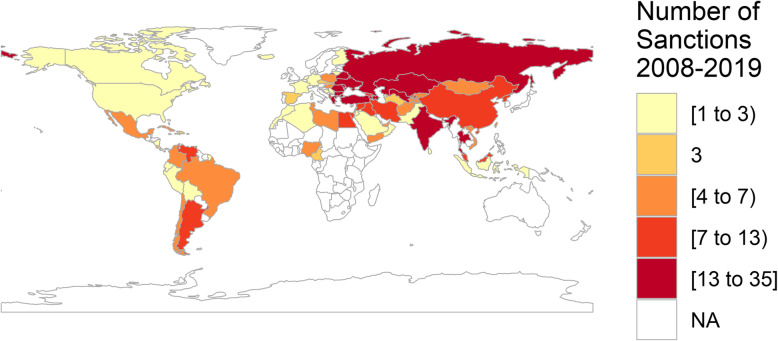
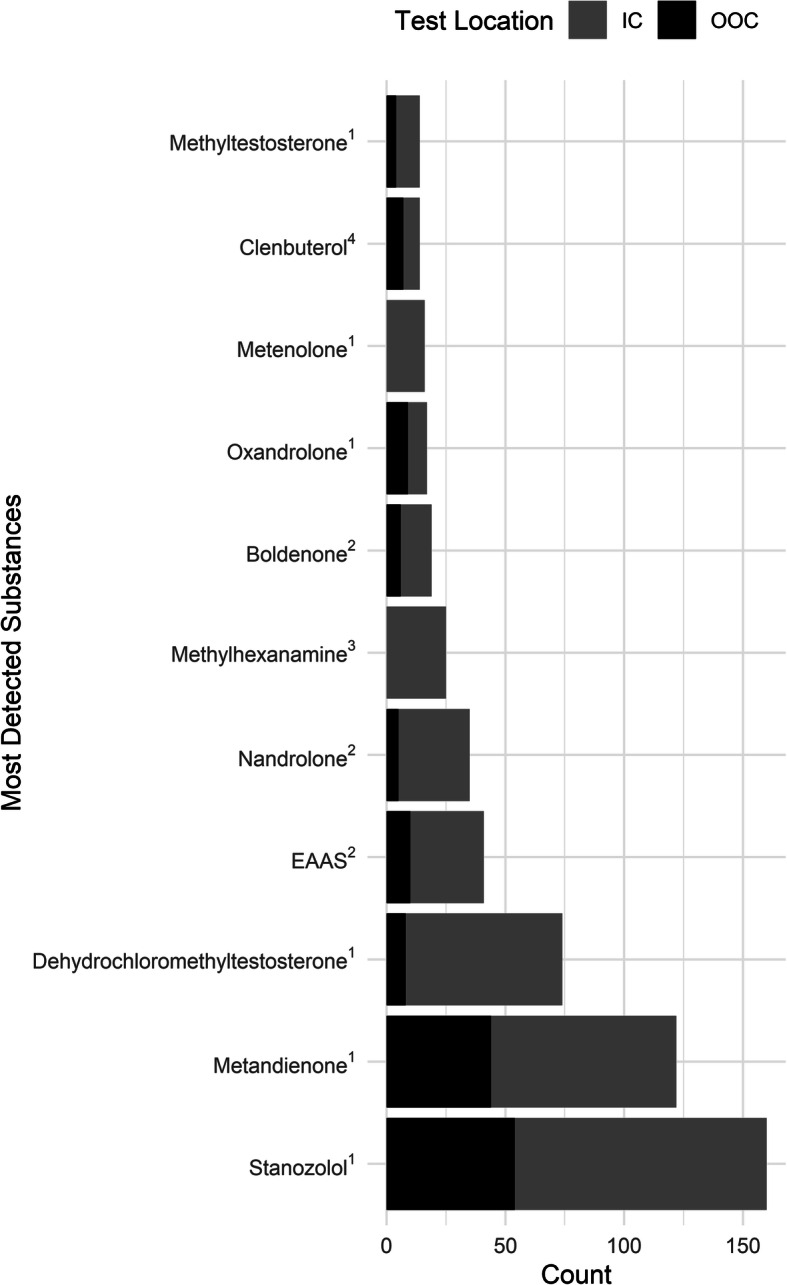
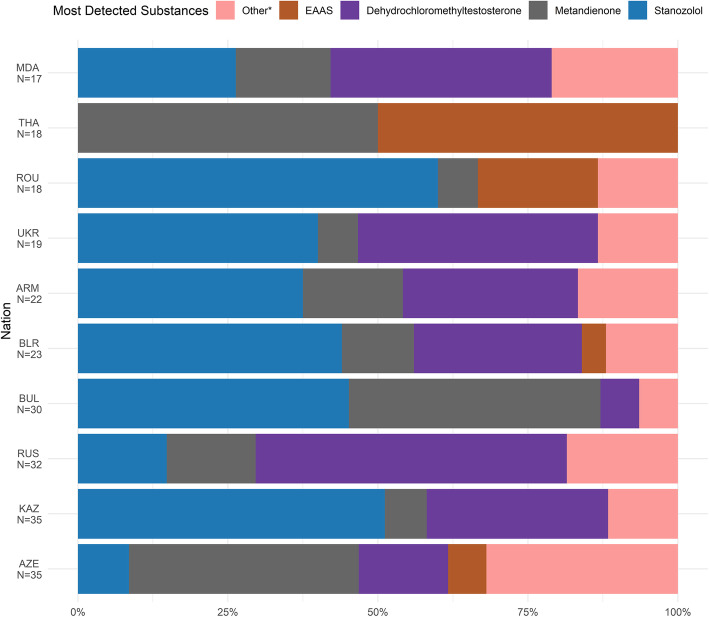
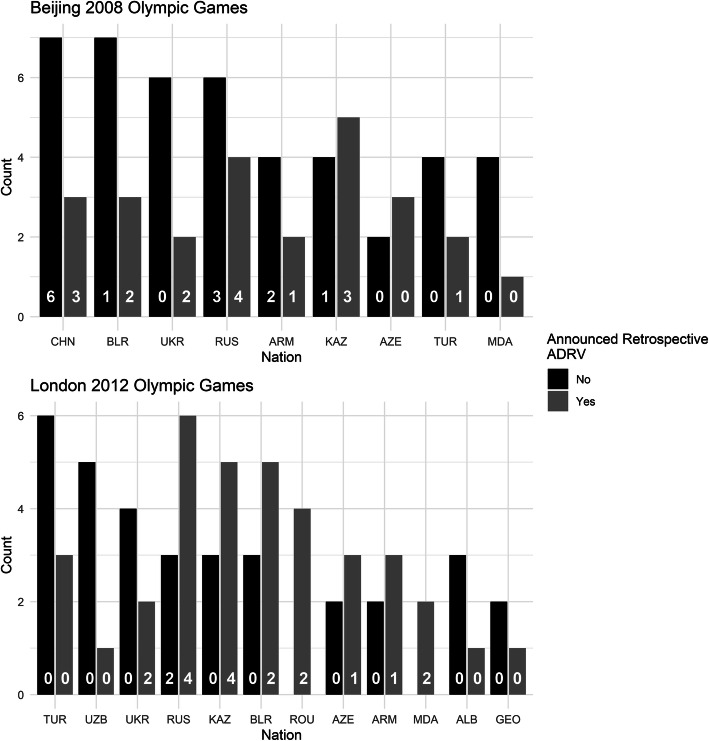
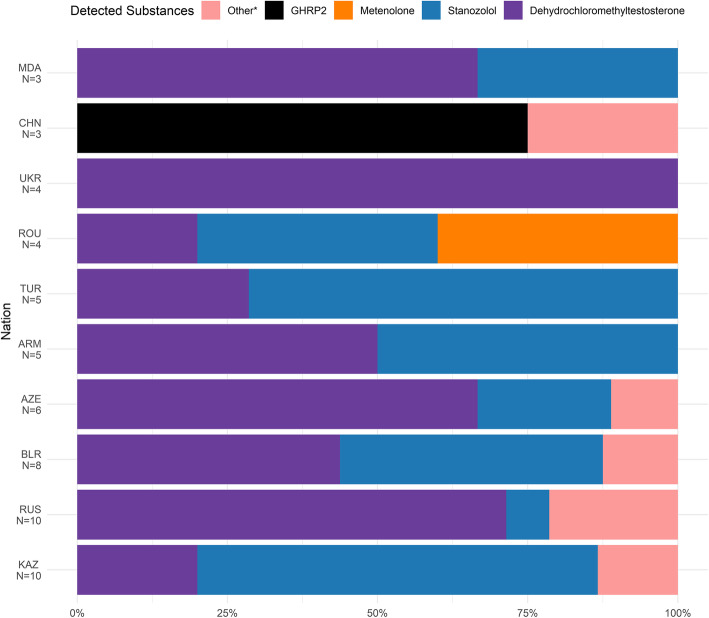
Results: There were 565 sanctions between 2008 and 2019 of which 82% related to the detection of exogenous Anabolic Androgenic Steroid (AAS) metabolites and markers indicating endogenous AAS usage. The detection of exogenous AAS metabolites, markers of endogenous AAS usage and other substance metabolites varied by IWF Continental Federation (p ≤ 0.05) with Europe (74%, 11%, 15%) and Asia (70%, 15%, 15%) showing a higher detection of exogenous AAS compared to Pan America (37%, 30%, 33%) and Africa (50%, 17%, 33%). When looking at the 10 most detected substances, the nations with the highest number of sanctions (range 17-35) all had at least one overrepresented substance that accounted for 38-60% of all detected substances. The targeted re-analysis of samples from the 2008 and 2012 Olympic Games due to the discovery of long-term metabolites for exogenous AAS resulted in 61 weightlifters producing retrospective ADRVs. This includes 34 original medallists (9 gold, 10 silver and 15 bronze), the highest of any sport identified by Olympic Games sample re-testing. The exogenous AAS dehydrochloromethyltestosterone and stanozolol accounted for 83% of detected substances and were present in 95% of these samples.
Conclusion: Based on these findings of regional differences in doping practices, weightlifting would benefit from the targeted testing of certain regions and continuing investment in long-term sample storage as the sensitivity and specificity of detection continues to improve.
Conflict of interest statement
Alexander Kolliari-Turner, Brian Oliver, Giscard Lima, John P. Mills, Guan Wang, Yannis Pitsiladis, and Fergus M Guppy declare that they have no conflicts of interest that are directly relevant to the content of this letter.
Figures
References
-
- Butler N. Weightlifting given December deadline to address doping problems by IOC insidethegames.biz 09 June 2017.
-
- Targeted reanalysis of london and Beijing samples underway ahead of Olympic Games Rio 2016 [press release]. 15 March 2016.
-
- Homewood B. IOC warns weightlifting federation to tackle doping. Reuters. 09 June 2017.
-
- IOC executive board charts the course for future olympic games [press release]. IOC Website, 09 Jun 2017.
LinkOut - more resources
Full Text Sources
Other Literature Sources
