


The distinct roles of myosin IIA and IIB under compression stress in nucleus pulposus cells
- PMID: 33415745
- PMCID: PMC7848961
- DOI: 10.1111/cpr.12987
The distinct roles of myosin IIA and IIB under compression stress in nucleus pulposus cells
Abstract
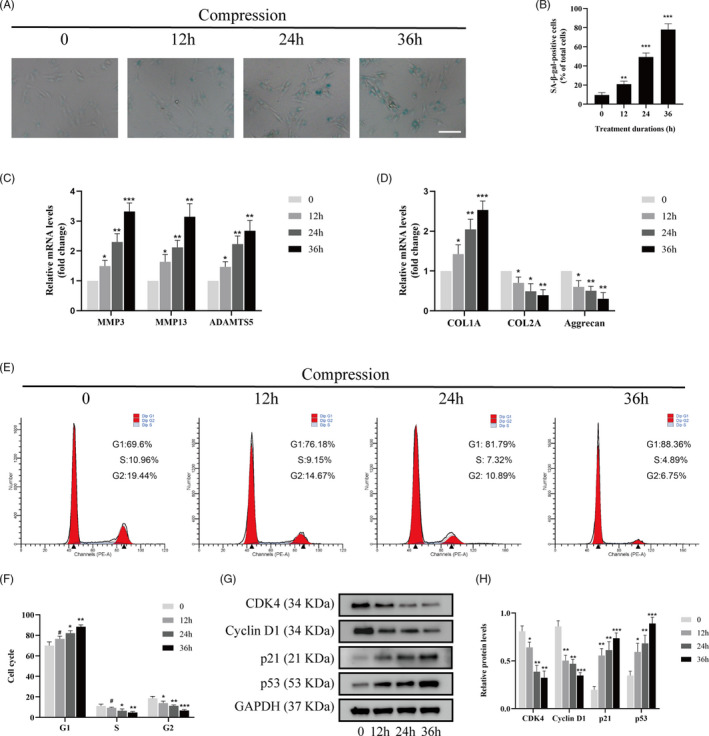
Objectives: Inappropriate or excessive compression applied to intervertebral disc (IVD) contributes substantially to IVD degeneration. The actomyosin system plays a leading role in responding to mechanical stimuli. In the present study, we investigated the roles of myosin II isoforms in the compression stress-induced senescence of nucleus pulposus (NP) cells.
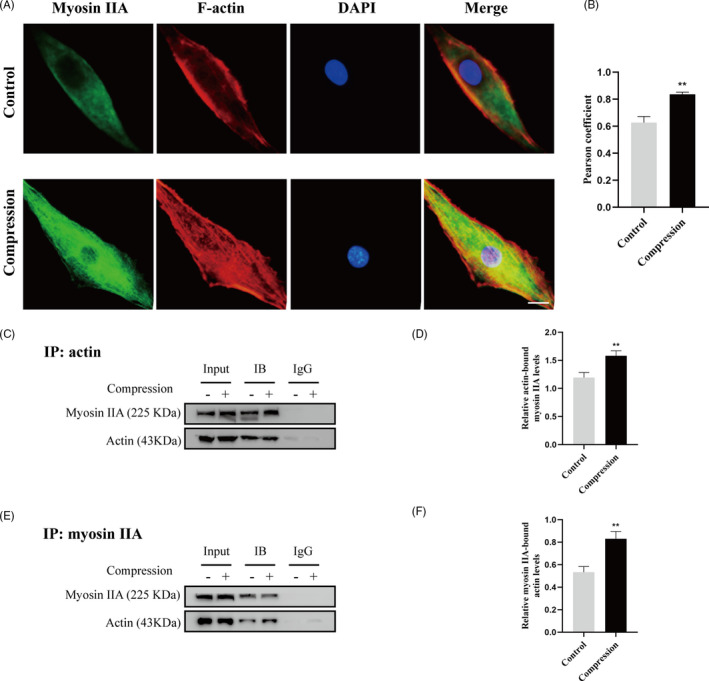
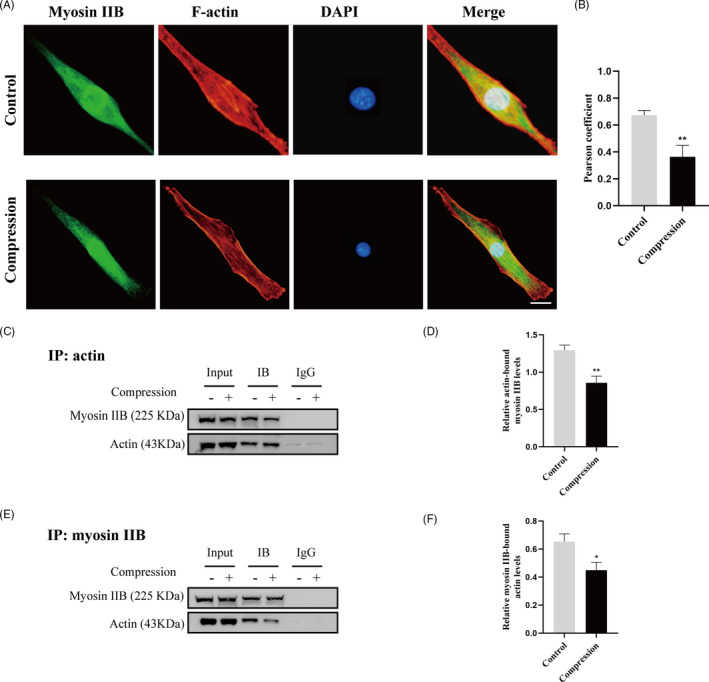
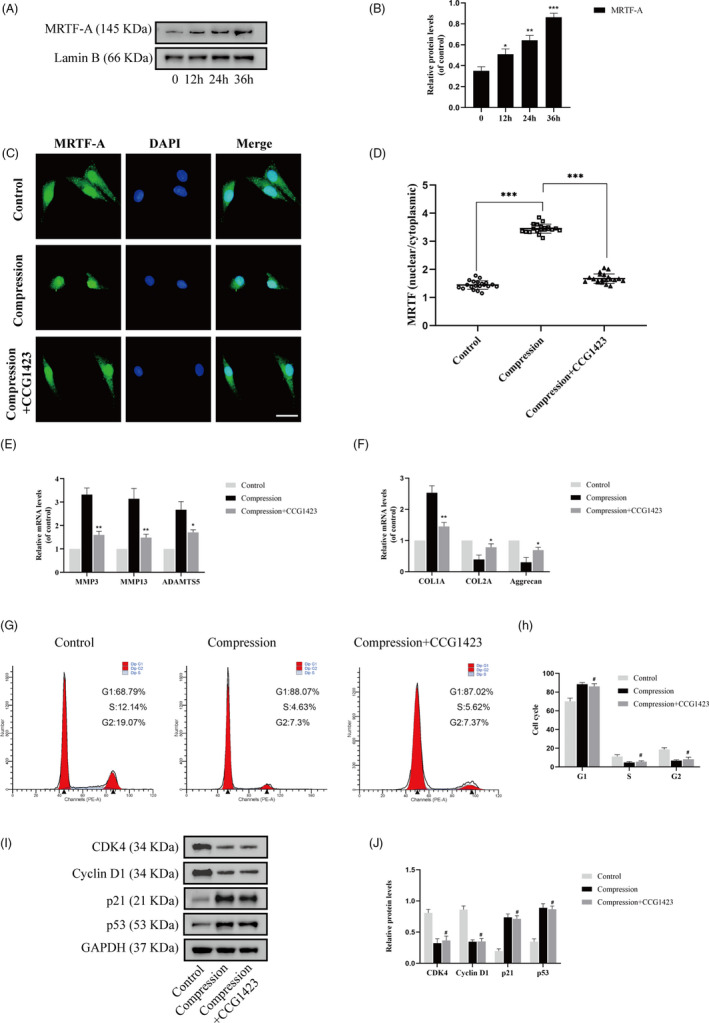
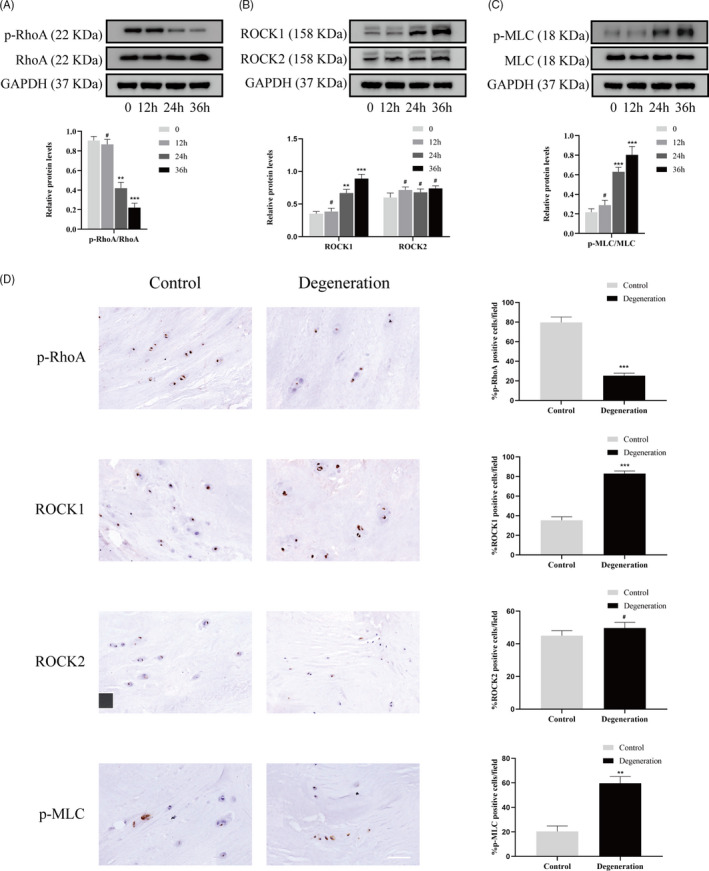
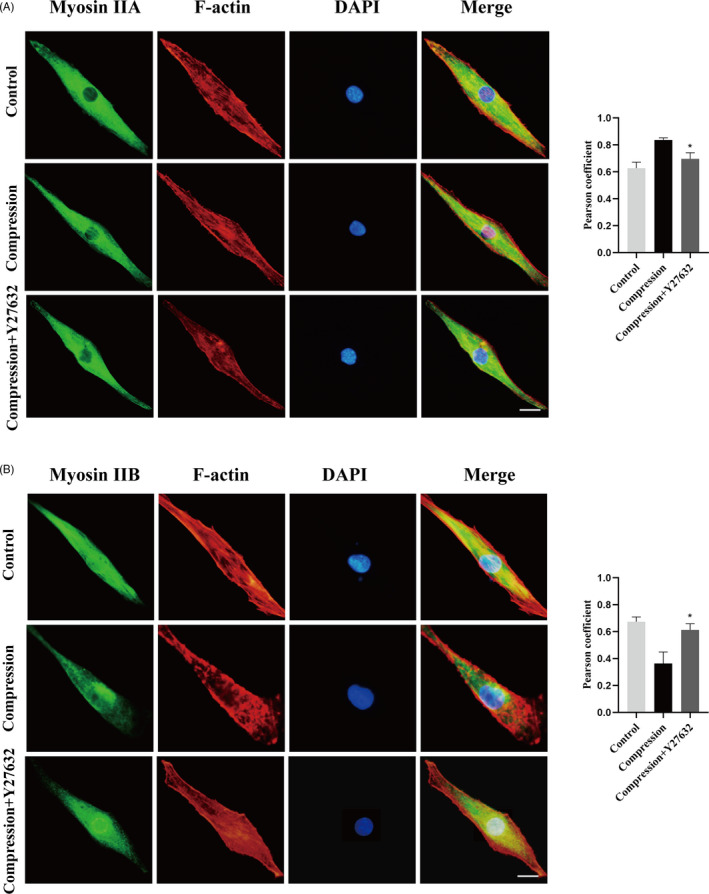
Material and methods: Nucleus pulposus cells were exposed to 1.0 MPa compression for 0, 12, 24 or 36 hours. Immunofluorescence and co-immunoprecipitation analysis were used to measure the interaction of myosin IIA and IIB with actin. Western blot analysis and immunofluorescence staining were used to detect nuclear expression and nuclear localization of MRTF-A. In addition, the expression levels of p-RhoA/RhoA, ROCK1/2 and p-MLC/MLC were measured in human NP cells under compression stress and in degenerative IVD tissues.
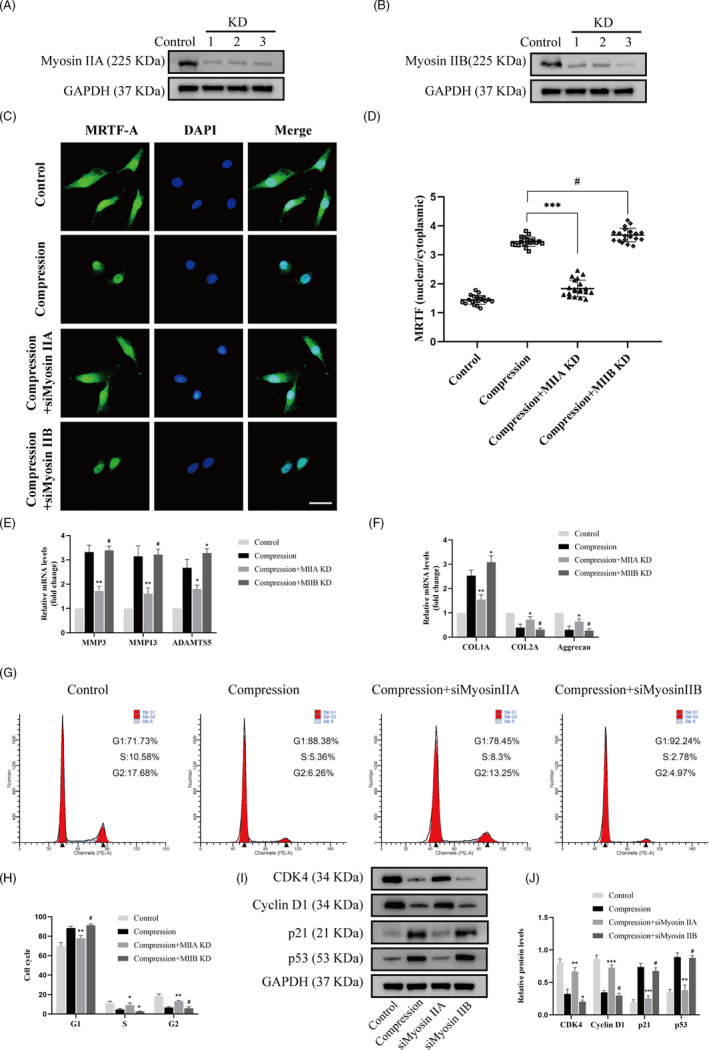
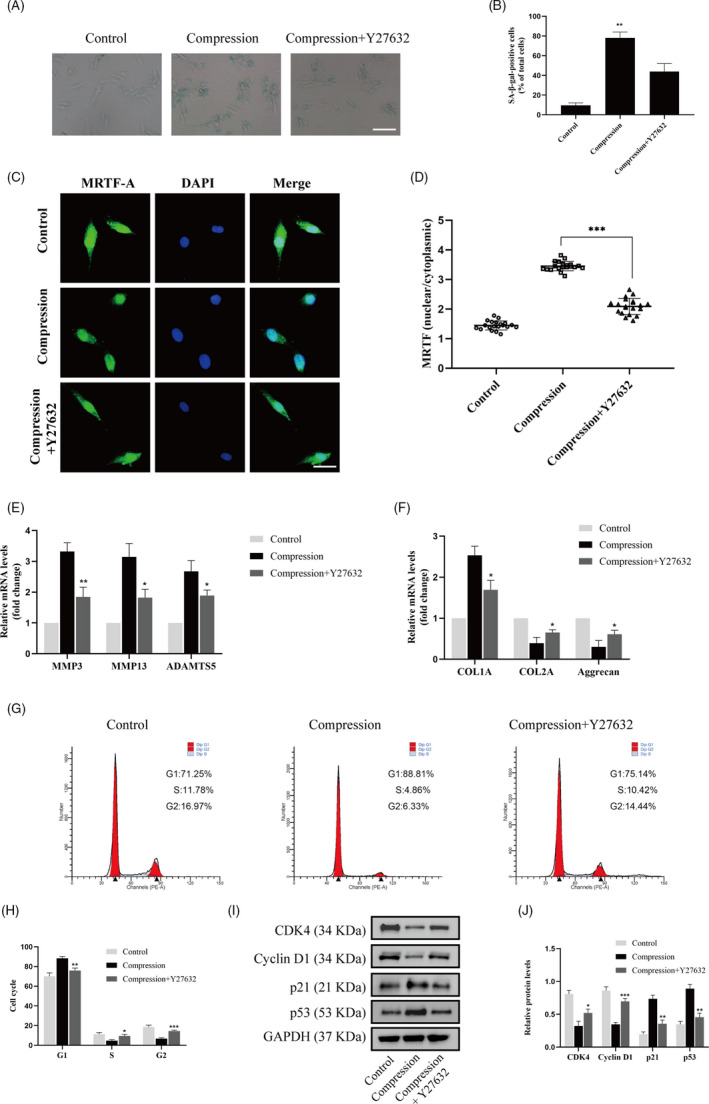
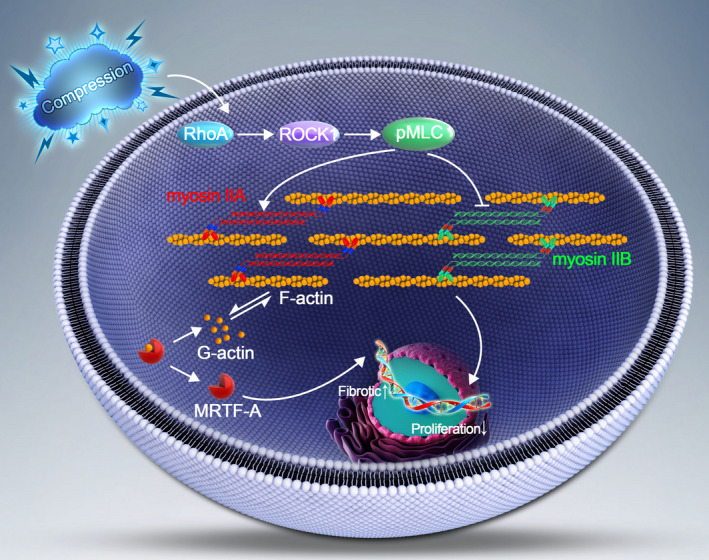
Results: Compression stress increased the interaction of myosin IIA and actin, while the interaction of myosin IIB and actin was reduced. The actomyosin cytoskeleton remodelling was involved in the compression stress-induced fibrotic phenotype mediated by MRTF-A nuclear translocation and inhibition of proliferation in NP cells. Furthermore, RhoA/ROCK1 pathway activation mediated compression stress-induced human NP cells senescence by regulating the interaction of myosin IIA and IIB with actin.
Conclusions: We for the first time investigated the regulation of actomyosin cytoskeleton in human NP cells under compression stress. It provided new insights into the development of therapy for effectively inhibiting IVD degeneration.
Keywords: RhoA/ROCK; actomyosin cytoskeleton; compression stress; intervertebral disc degeneration; myosin II.
© 2021 The Authors. Cell Proliferation Published by John Wiley & Sons Ltd.
Conflict of interest statement
The authors have declared that no competing interest exists.
Figures
References
-
- James SL, Abate D, Abate KH, et al. Global, regional, and national incidence, prevalence, and years lived with disability for 354 diseases and injuries for 195 countries and territories, 1990–2017: a systematic analysis for the Global Burden of Disease Study 2017. Lancet. 2018;392(10159):1789‐1858. - PMC - PubMed
-
- Sakai D, Grad S. Advancing the cellular and molecular therapy for intervertebral disc disease. Adv Drug Deliv Rev. 2015;84:159‐171. - PubMed
-
- Gullbrand SE, Peterson J, Mastropolo R, et al. Low rate loading‐induced convection enhances net transport into the intervertebral disc in vivo. Spine J. 2015;15(5):1028‐1033. - PubMed
-
- Neidlinger‐Wilke C, Galbusera F, Pratsinis H, et al. Mechanical loading of the intervertebral disc: from the macroscopic to the cellular level. Eur Spine J. 2014;23(suppl 3):S333‐343. - PubMed
MeSH terms
Substances
Grants and funding
- 81772401/National Natural Science Foundation of China
- 81904020/National Natural Science Foundation of China
- U1603121/National Natural Science Foundation of China
- 2019kfyXMBZ06/Fundamental Research Funds for the Central Universities
- 2018YFB1105700/National Key Research and Development Program of China
LinkOut - more resources
Full Text Sources
Other Literature Sources
Miscellaneous
