


Meningococcal carriage among Hajj pilgrims, risk factors for carriage and records of vaccination: a study of pilgrims to Mecca
- PMID: 33415766
- PMCID: PMC8049039
- DOI: 10.1111/tmi.13546
Meningococcal carriage among Hajj pilgrims, risk factors for carriage and records of vaccination: a study of pilgrims to Mecca
Abstract
Objective: The Saudi government requires that all pilgrims receive a quadrivalent meningococcal vaccine at least 10 days before the Hajj. We conducted a study to determine the uptake of meningococcal vaccine and antibiotic use. We also investigated risk factors of meningococcal carriage and carriage of Neisseria meningitidis pathogenic serogroups A, C, W and Y.
Methods: A cross-sectional oropharyngeal carriage survey was conducted in 2973 Hajj pilgrims in September 2017. A real-time polymerase chain reaction (rt-PCR) assay was used to identify N. meningitidis from the oropharyngeal swabs. A questionnaire investigated potential risk factors for carriage of N. meningitidis.
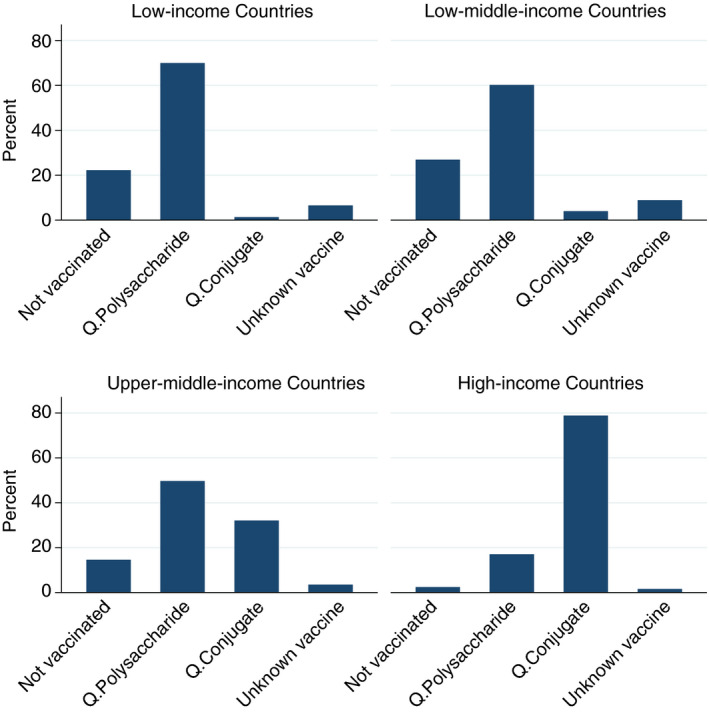
Results: Two thousand two hundred forty nine oropharyngeal swabs were obtained. The overall prevalence of carriage of N. meningitidis was 4.6% (95% CI: 3.4%-6%). Carriage of pathogenic serogroups was not associated significantly with any of the meningococcal risk factors evaluated. 77% of pilgrims were vaccinated but 22.58 % said they were carrying unofficial vaccination cards.
Conclusion: Carriage of serogroups A, C, W and Y was not significantly associated with any of the risk factors investigated. Almost a quarter of pilgrims were unlikely to have been vaccinated, highlighting a need to strengthen compliance with the current policy of vaccination to prevent meningococcal disease outbreaks during and after the Hajj.
Keywords: Neisseria meningitides; Hajj; antibiotic; meningococcal; pharyngeal carriage; vaccination.
© 2021 The Authors Tropical Medicine & International Health Published by John Wiley & Sons Ltd.
Figures
References
-
- Rosenstein NE, Perkins BA, Stephens DS, Popovic T, Hughes JM. Meningococcal disease. N Eng J Med 2001: 344(18): 1378–1388. - PubMed
-
- Pollard AJ. Global epidemiology of meningococcal disease and vaccine efficacy. Pediatr Infect Dis J. 2004: 23(12 Suppl): S274–S279. - PubMed
-
- Stephens DS. Uncloaking the meningococcus: dynamics of carriage and disease. Lancet. 1999: 353(9157): 941–942. - PubMed
-
- Yezli S, Saeed AAB, Assiri AM et al. Prevention of meningococcal disease during the Hajj and Umrah mass gatherings: past and current measures and future prospects. Int J Infect Dis 2016: 47: 71–78. - PubMed
-
- Imam A, Alamoudi M, editors. Mina: the city of tents origination and development. 9° Congresso Città e Territorio Virtuale: Roma, 2, 3 e 4 ottobre 2013; 2014: Università degli Studi Roma Tre.
Publication types
MeSH terms
Substances
Grants and funding
LinkOut - more resources
Full Text Sources
Other Literature Sources
Medical
