


Characterization of the microbiota and chemical properties of pork loins during dry aging
- PMID: 33415844
- PMCID: PMC7914123
- DOI: 10.1002/mbo3.1157
Characterization of the microbiota and chemical properties of pork loins during dry aging
Abstract
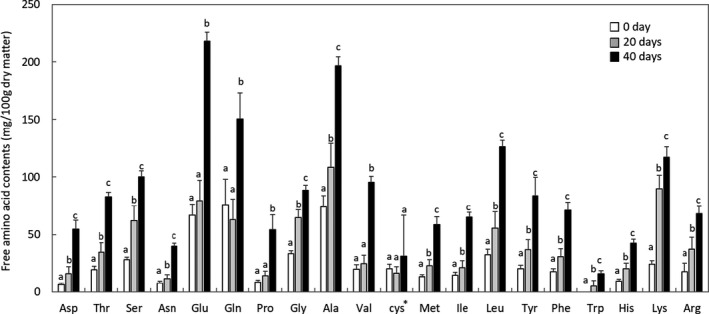
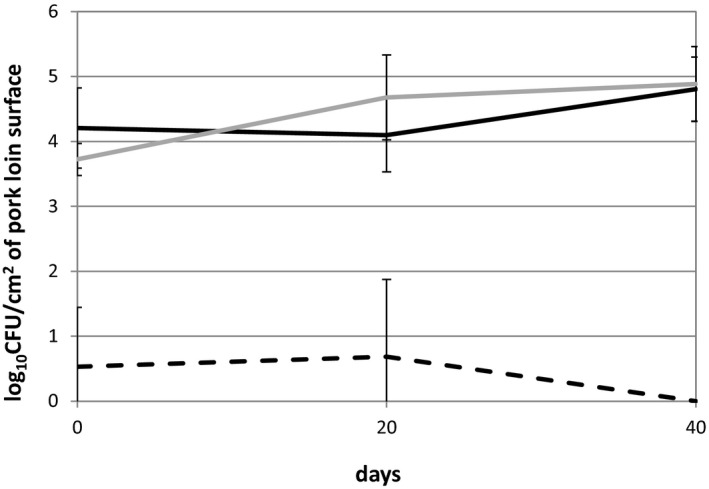
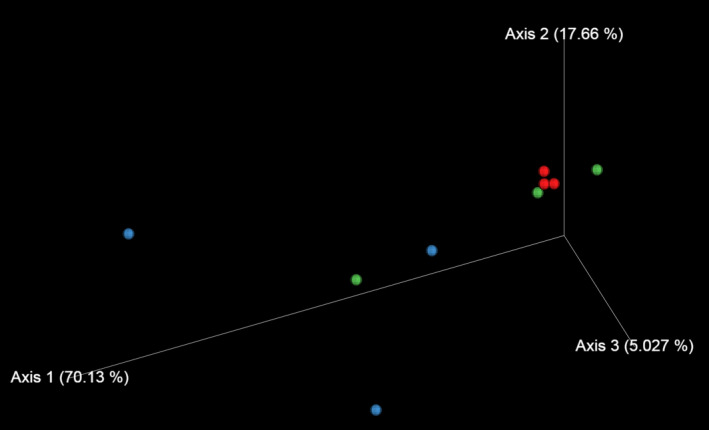
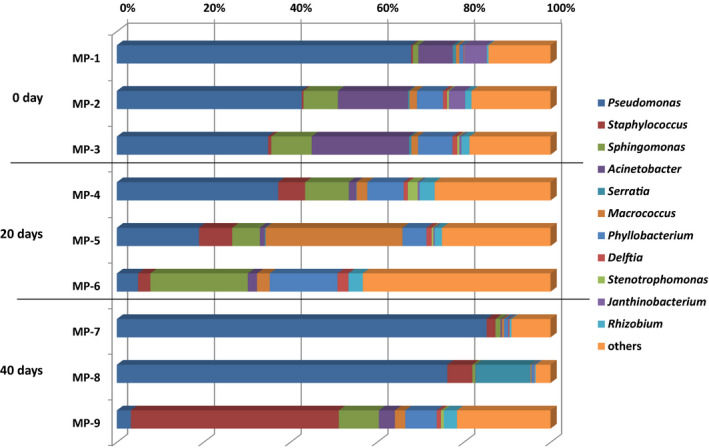
Dry aging (DA) allows for the storage of meat without packaging at 0 to 3°C for several weeks. It enhances the production of pleasant flavors, tenderness, and juiciness in meat. Due to the long storage period and roles of indigenous microbiota in the maturation of several meat products, the microbiota of DA meat is of interest in terms of microbial contributions and food hygiene but has not yet been characterized in detail. This study identified the microbiota of pork loins during DA using culturing and culture-independent meta-16S rRNA gene sequencing and elucidated its characteristics. The amounts of free amino acids and profiles of aroma-active compounds were also monitored by high-performance liquid chromatography and gas chromatography, respectively. The meta-16S rRNA gene sequencing revealed that Pseudomonas spp. generally dominated the microbiota throughout DA; however, the culturing analysis showed marked changes in the species composition during DA. Acinetobacter spp. were the second most dominant bacteria before DA in the culture-independent analysis but became a minor population during DA. The cell numbers of yeasts showed an increased tendency during DA, and Debaryomyces hansenii was the only microorganism isolated from all meat samples throughout DA. Well-known foodborne pathogens were not observed in two microbiota analyses. The amounts of free amino acids were increased by DA, and the number of aroma-active compounds and their flavor dilution values markedly changed during DA. Most microbial isolates showed positive reactions with proteolytic and lipolytic activities, suggesting their contribution to tenderness and aroma production in DA meats.
Keywords: Debaryomyces; Pseudomonas; aroma; dry-aging pork; microbiota; proteolysis.
© 2021 The Authors. MicrobiologyOpen published by John Wiley & Sons Ltd.
Conflict of interest statement
None declared.
Figures
Similar articles
-
Two Debaryomyces hansenii strains as starter cultures for improving the nutritional and sensory quality of dry-cured pork belly.Food Res Int. 2024 May;183:114227. doi: 10.1016/j.foodres.2024.114227. Epub 2024 Mar 13. Food Res Int. 2024. PMID: 38760146
-
Identification of Microorganisms Associated with the Quality Improvement of Dry-Aged Beef Through Microbiome Analysis and DNA Sequencing, and Evaluation of Their Effects on Beef Quality.J Food Sci. 2019 Oct;84(10):2944-2954. doi: 10.1111/1750-3841.14813. Epub 2019 Sep 25. J Food Sci. 2019. PMID: 31553057
-
Effect of Penicillium chrysogenum and Debaryomyces hansenii on the volatile compounds during controlled ripening of pork loins.Int J Food Microbiol. 2003 Aug 1;84(3):327-38. doi: 10.1016/s0168-1605(02)00474-9. Int J Food Microbiol. 2003. PMID: 12810295
-
Microbiota dynamics and volatile compounds in lupine based Moromi fermented at different salt concentrations.Int J Food Microbiol. 2021 Sep 16;354:109316. doi: 10.1016/j.ijfoodmicro.2021.109316. Epub 2021 Jun 30. Int J Food Microbiol. 2021. PMID: 34247020 Review.
-
Shelf life of reduced pork back-fat content sausages as affected by antimicrobial compounds and modified atmosphere packaging.Int J Food Microbiol. 2011 Oct 17;150(1):1-7. doi: 10.1016/j.ijfoodmicro.2011.07.009. Epub 2011 Jul 23. Int J Food Microbiol. 2011. PMID: 21820750 Review.
Cited by
-
Direct Rub Inoculation of Fungal Flora Changes Fatty Acid Composition and Volatile Flavors in Dry-Aged Beef: A Preliminary Study.Animals (Basel). 2022 May 28;12(11):1391. doi: 10.3390/ani12111391. Animals (Basel). 2022. PMID: 35681855 Free PMC article.
-
Resilience of Loin Meat Microbiota and of Resistance Genes to a Chlortetracycline Treatment in Weaned Piglets.Antibiotics (Basel). 2024 Oct 21;13(10):997. doi: 10.3390/antibiotics13100997. Antibiotics (Basel). 2024. PMID: 39452263 Free PMC article.
-
Effect of Dry Aging of Pork on Microbiological Quality and Instrumental Characteristics.Foods. 2024 Sep 25;13(19):3037. doi: 10.3390/foods13193037. Foods. 2024. PMID: 39410073 Free PMC article.
-
Microbial composition and metabolic profiles during machine-controlled intra-factory fermentation of cocoa beans harvested in semitropical area of Japan.Biosci Microbiota Food Health. 2024;43(1):29-42. doi: 10.12938/bmfh.2023-036. Epub 2023 Sep 4. Biosci Microbiota Food Health. 2024. PMID: 38188660 Free PMC article.
-
- Invited Review - Postmortem skeletal muscle metabolism of farm animals approached with metabolomics.Anim Biosci. 2023 Feb;36(2):374-384. doi: 10.5713/ab.22.0370. Epub 2022 Nov 14. Anim Biosci. 2023. PMID: 36397684 Free PMC article.
References
Publication types
MeSH terms
Substances
Supplementary concepts
LinkOut - more resources
Full Text Sources
Other Literature Sources
Miscellaneous
