Identifying drug targets for neurological and psychiatric disease via genetics and the brain transcriptome
- PMID: 33417599
- PMCID: PMC7819609
- DOI: 10.1371/journal.pgen.1009224
Identifying drug targets for neurological and psychiatric disease via genetics and the brain transcriptome
Abstract
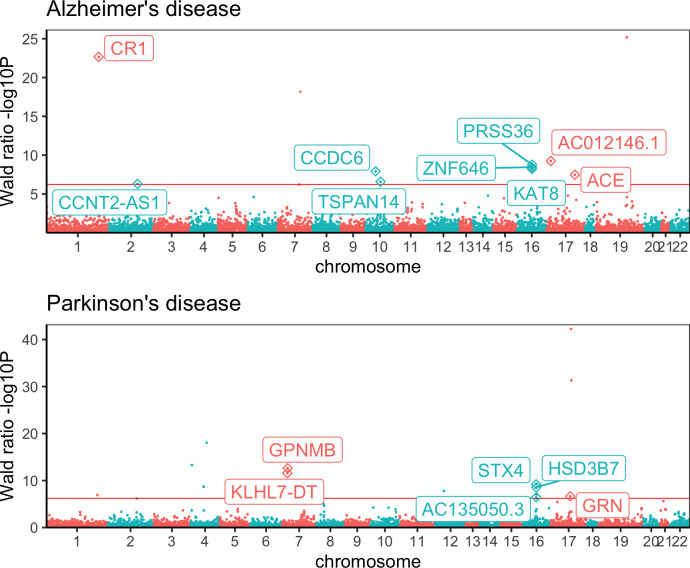
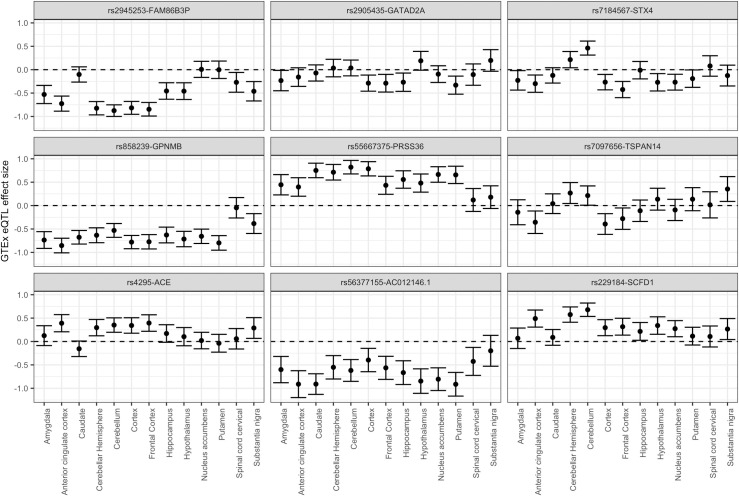
Discovering drugs that efficiently treat brain diseases has been challenging. Genetic variants that modulate the expression of potential drug targets can be utilized to assess the efficacy of therapeutic interventions. We therefore employed Mendelian Randomization (MR) on gene expression measured in brain tissue to identify drug targets involved in neurological and psychiatric diseases. We conducted a two-sample MR using cis-acting brain-derived expression quantitative trait loci (eQTLs) from the Accelerating Medicines Partnership for Alzheimer's Disease consortium (AMP-AD) and the CommonMind Consortium (CMC) meta-analysis study (n = 1,286) as genetic instruments to predict the effects of 7,137 genes on 12 neurological and psychiatric disorders. We conducted Bayesian colocalization analysis on the top MR findings (using P<6x10⁻⁷ as evidence threshold, Bonferroni-corrected for 80,557 MR tests) to confirm sharing of the same causal variants between gene expression and trait in each genomic region. We then intersected the colocalized genes with known monogenic disease genes recorded in Online Mendelian Inheritance in Man (OMIM) and with genes annotated as drug targets in the Open Targets platform to identify promising drug targets. 80 eQTLs showed MR evidence of a causal effect, from which we prioritised 47 genes based on colocalization with the trait. We causally linked the expression of 23 genes with schizophrenia and a single gene each with anorexia, bipolar disorder and major depressive disorder within the psychiatric diseases and 9 genes with Alzheimer's disease, 6 genes with Parkinson's disease, 4 genes with multiple sclerosis and two genes with amyotrophic lateral sclerosis within the neurological diseases we tested. From these we identified five genes (ACE, GPNMB, KCNQ5, RERE and SUOX) as attractive drug targets that may warrant follow-up in functional studies and clinical trials, demonstrating the value of this study design for discovering drug targets in neuropsychiatric diseases.
Conflict of interest statement
JZL, C-YC and HR are employees and shareholders in Biogen. KE is an employee at BioMarin Pharmaceuticals. DAB is employed on a grant funded by Biogen. TRG and GDS received funding from Biogen for the work described here. The other authors have no competing interests to declare.
Figures

References
Publication types
MeSH terms
Grants and funding
LinkOut - more resources
Full Text Sources
Other Literature Sources
Medical
Miscellaneous