


Self-reported symptoms in healthy young adults to predict potential coronavirus disease 2019
- PMID: 33418018
- PMCID: PMC7837233
- DOI: 10.1016/j.cmi.2020.12.028
Self-reported symptoms in healthy young adults to predict potential coronavirus disease 2019
Abstract
Objective: To assess the utility of self-reported symptoms in identifying positive coronavirus disease 2019 (COVID-19) cases among predominantly healthy young adults in a military setting.
Methods: A questionnaire regarding COVID-19 symptoms and exposure history was administered to all individuals contacting the Israeli Defence Forces Corona call-centre, before PCR testing. Surveyed symptoms included cough, fever, sore throat, rhinorrhoea, loss of taste or smell, chest pain and gastrointestinal symptoms. Factors were compared between positive and negative cases based on confirmatory test results, and positive likelihood ratios (LR) were calculated. Results were stratified by sex, body mass index, previous medical history and dates of questioning, and a multivariable analysis for association with positive test was conducted.
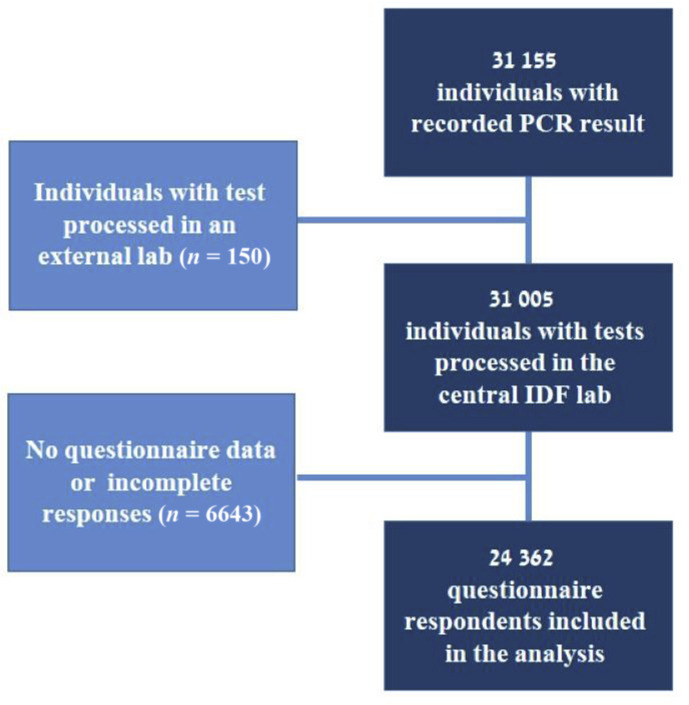
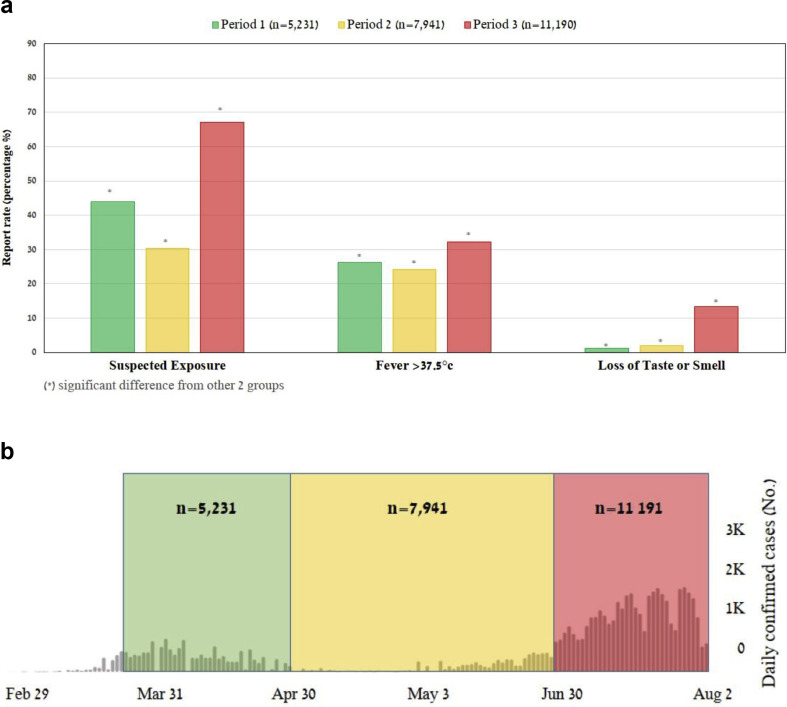
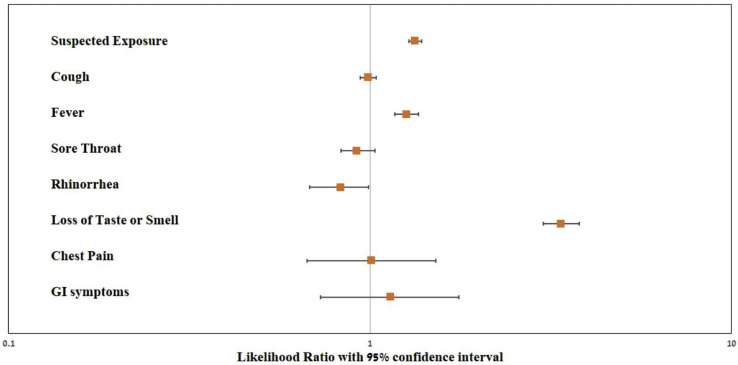
Results: Of 24 362 respondents, 59.1% were men with a median age of 20.5 years (interquartile range 19.6-22.4 years). Significant positive LRs were associated with loss of taste or smell (LR 3.38, 95% CI 3.01-3.79), suspected exposure (LR 1.33, 95% CI 1.28-1.39) and fever (LR 1.26, 95% CI 1.17-1.36). Those factors were also associated with positive PCR result in a multivariable analysis (OR 3.51, 95% CI 3.04-4.06; OR 1.86, 95% CI 1.65-2.09; and OR 1.34, 95% CI 1.19-1.51, respectively). Reports of loss of taste or smell increased gradually over time and were significantly more frequent during the late period of the study (63/5231, 1.21%; 156/7941, 1.96%; and 1505/11 190, 13.45%: p < 0.001).
Conclusion: Loss of taste or smell, report of a suspicious exposure and fever (>37.5°C) were consistently associated with positive LRs for a positive SARS-CoV-2 PCR test result, in a population of predominantly young and healthy adults.
Keywords: Coronavirus disease 2019; Coronavirus disease 2019 confirmatory test shortage; Coronavirus disease 2019 in young adults; Coronavirus disease 2019 self-reported symptoms; Coronavirus disease 2019 symptoms; Coronavirus disease 2019 testing; Coronavirus disease 2019 testing criteria; Utility of self-reported symptoms.
Copyright © 2021 European Society of Clinical Microbiology and Infectious Diseases. Published by Elsevier Ltd. All rights reserved.
Figures
References
-
- World Health Organization . WHO Dir Gen Speeches; Geneva: 2020. WHO Director-General’s opening remarks at the media briefing on COVID-19 – 11 March 2020. 4.
-
- World Health Organization . WHO; Geneva: 2020. WHO coronavirus disease dashboard.
MeSH terms
LinkOut - more resources
Full Text Sources
Other Literature Sources
Medical
Miscellaneous
