


Recent trends in analytical and digital techniques for the detection of the SARS-Cov-2
- PMID: 33418105
- PMCID: PMC7768211
- DOI: 10.1016/j.bpc.2020.106538
Recent trends in analytical and digital techniques for the detection of the SARS-Cov-2
Abstract
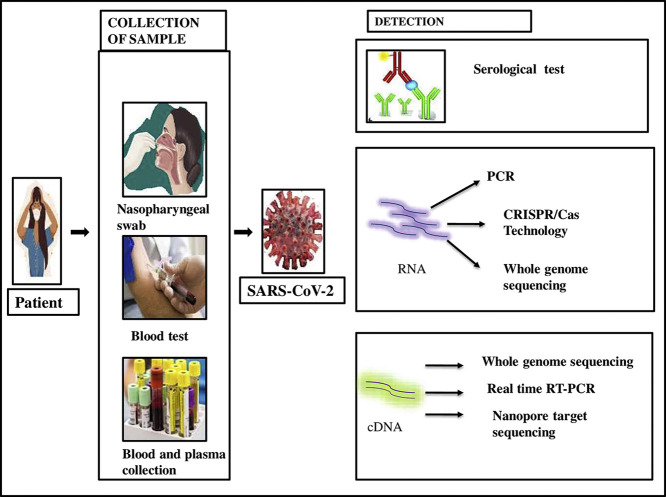
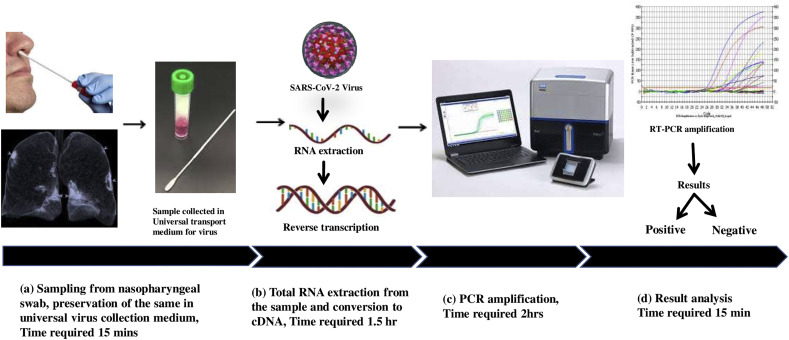
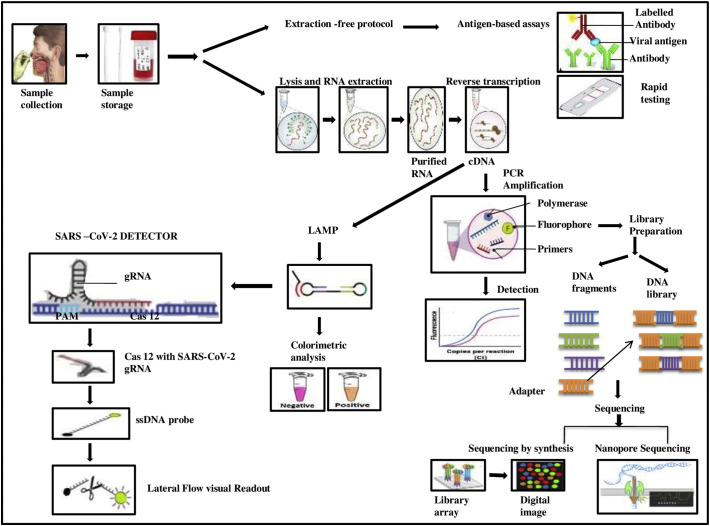
The current global outbreak of COVID-19 due to SARS-CoV-2 is an unprecedented humanitarian crisis. Considering the gravity of its impact there is an immediate need to develop a detection technique that is sensitive, specific, fast, and affordable for the clinical diagnosis of the disease. Real time Polymerase Chain Reaction (RT-PCR)-based detection platforms are contemplated to be the gold standard to detect viral RNA. However, that may be susceptible to errors, and there is a risk of obtaining false results, which ultimately compromises the strategy of efficient disease management. Several modern techniques exhibiting assured results with enhanced sensitivity and specificity against the SARS-CoV-2 associated viral components or immune response against it have been developed and may be implemented. The review deals with the conventional RT-PCR detection techniques and compares them to other detection platforms viz., biosensor based detection of antigens, fluorescent or colorimetric detection systems including CRISPR-Cas 13 based SHERLOCK kit, CRISPR Cas-9 based FELUDA test kit, CRISPR DETECTR kit, Next Generation Sequencing or microarray-based kits. These modern techniques are great as a point of care detection methods but should be followed by RT PCR based detection for the confirmation of COVID-19 status.
Keywords: Biosensors; CRISPR-Cas; Immunosensor; Microarray; Next-generation sequencing; Nucleic-acid amplification; RT-PCR; SARS-CoV-2; Serological test.
Copyright © 2021 Elsevier B.V. All rights reserved.
Conflict of interest statement
The authors declare no competing interest.
Figures
References
-
- Gorbalenya A.E., Baker S.C., Baric R.S., Groot R.J.D., Drosten C., Gulyaeva A.A., Gulyaeva B.L., Penzar D. Severe acute respiratory syndrome-related coronavirus: The species and its viruses–a statement of the Coronavirus Study Group. bioRxiv. 2020 doi: 10.1101/2020.02.07.937862. - DOI
-
- S.J. Fong, N. Dey and J. Chaki, An introduction to COVID-19, artificial intelligence for coronavirus outbreak. (2021) 1-22. Springer briefs in applied sciences and technology. Springer, Singapore.doi: 10.1007/978-981-15-5936-5_1. - DOI
-
- Lu R., Zhao X., Li J., Niu P., Yang B., Wu H., Wang W., Song H.…Tan W. Genomic characterisation and epidemiology of 2019 novel coronavirus: implications for virus origins and receptor binding. The Lancet. 2020;395(10224):565–574. doi: 10.1016/S0140-6736(20)30251-8. ISSN 0140-6736. - DOI - PMC - PubMed
Publication types
MeSH terms
Substances
LinkOut - more resources
Full Text Sources
Other Literature Sources
Medical
Miscellaneous
