


Inflammatory and hematologic markers as predictors of severe outcomes in COVID-19 infection: A systematic review and meta-analysis
- PMID: 33418211
- PMCID: PMC7831442
- DOI: 10.1016/j.ajem.2020.12.076
Inflammatory and hematologic markers as predictors of severe outcomes in COVID-19 infection: A systematic review and meta-analysis
Abstract
Background: Laboratory testing is commonly performed in patients with COVID-19. Each of the laboratory parameters has potential value for risk stratification and prediction of COVID-19 outcomes. This systematic review and meta-analysis aimed to evaluate the difference between these parameters in severe and nonsevere disease and to provide the optimal cutoff value for predicting severe disease.
Method: We performed a systematic literature search through electronic databases. The variables of interest were serum procalcitonin, albumin, C-reactive protein (CRP), D-dimer, and lactate dehydrogenase (LDH) levels in each group of severity outcomes from COVID-19.
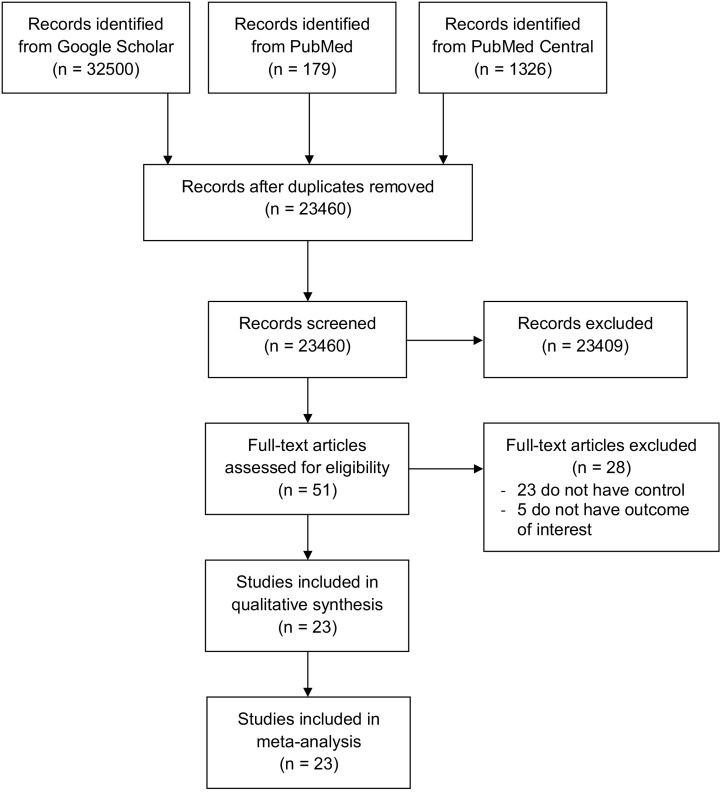
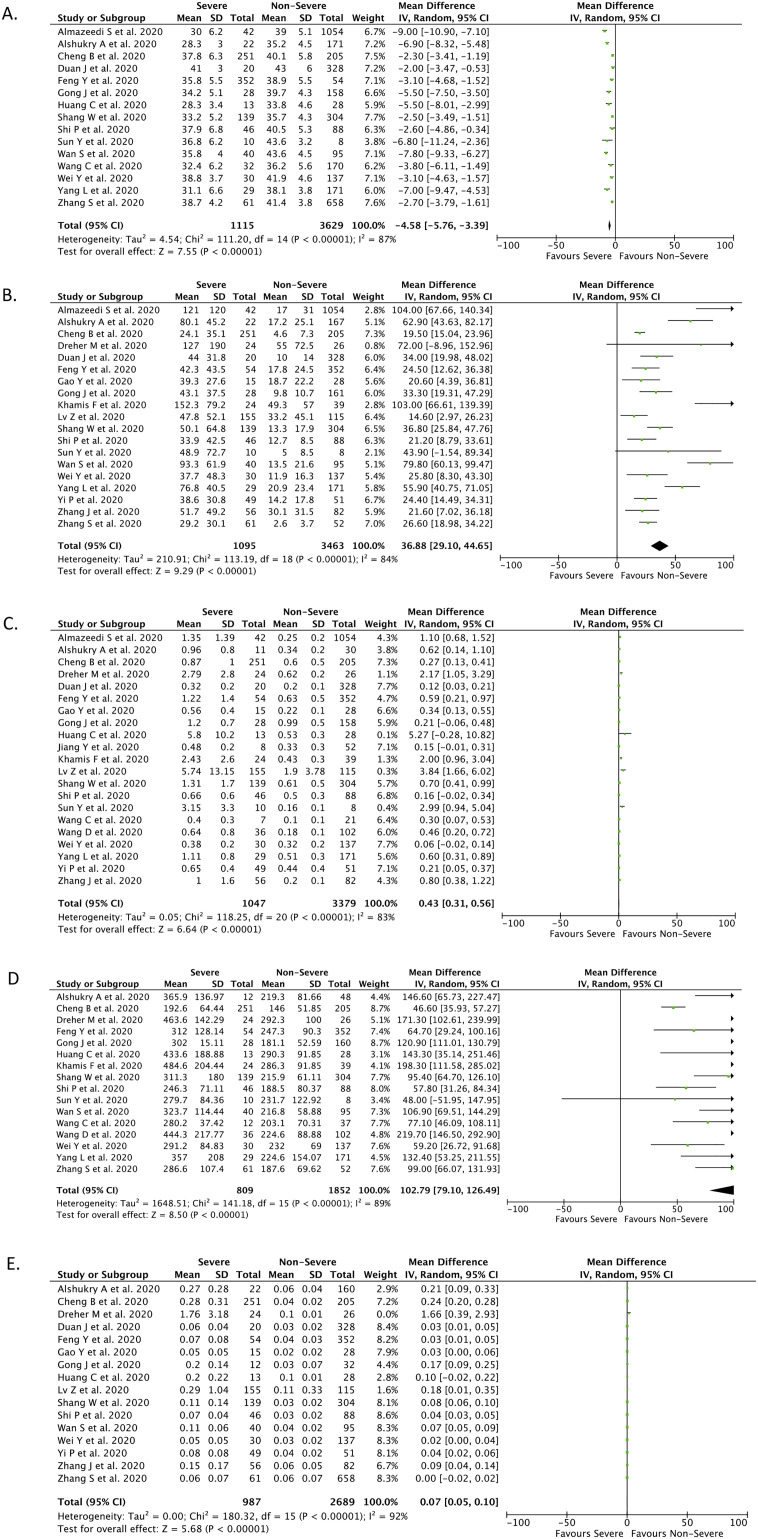
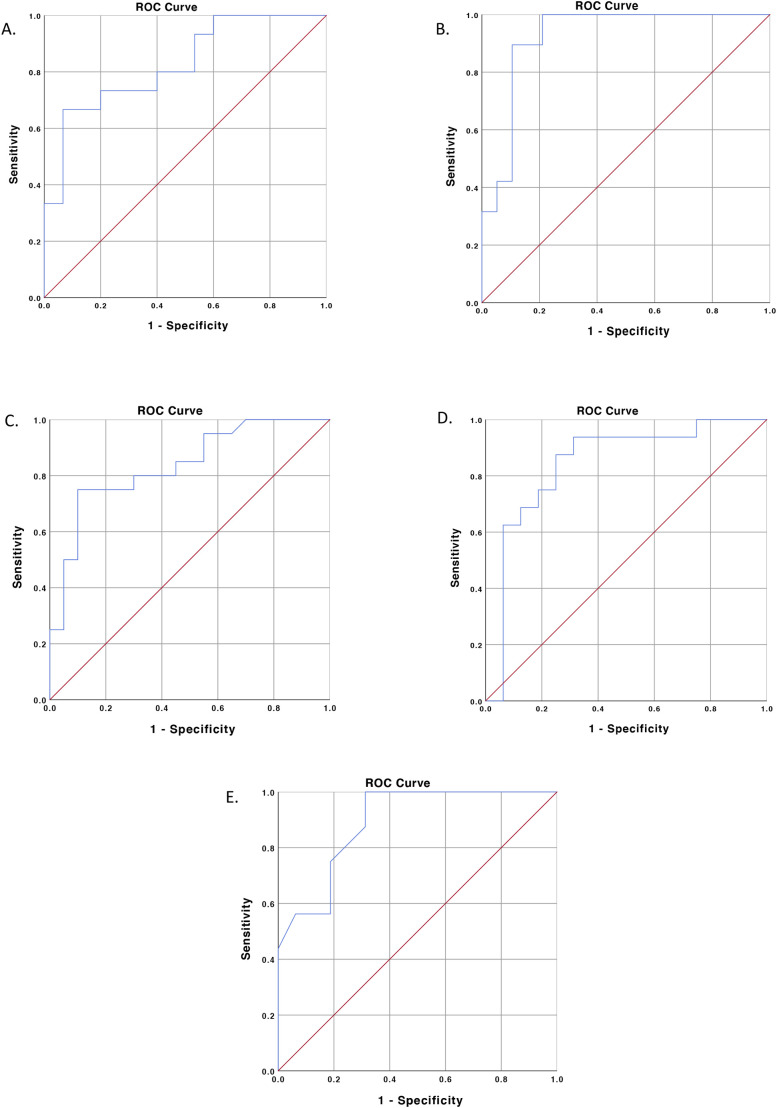
Results: There were a total of 4848 patients from 23 studies. Our meta-analysis suggest that patients with severe COVID-19 infections have higher procalcitonin, (mean difference 0.07; 95% CI 0.05-0.10; p < 0.00001), CRP (mean difference 36.88; 95% CI 29.10-44.65; p < 0.00001), D-Dimer (mean difference 0.43; 95% CI 0.31-0.56; p < 0.00001), and LDH (mean difference 102.79; 95% CI 79.10-126.49; p < 0.00001) but lower levels of albumin (mean difference -4.58; 95% CI -5.76 to -3.39; p < 0.00001) than those with nonsevere COVID-19 infections. The cutoff values for the parameters were 0.065 ng/mL for procalcitonin, 38.85 g/L for albumin, 33.55 mg/L for CRP, 0.635 μ/L for D-dimer, and 263.5 U/L for LDH, each with high sensitivity and specificity.
Conclusion: This meta-analysis suggests elevated procalcitonin, CRP, D-dimer, and LDH and decreased albumin can be used for predicting severe outcomes in COVID-19.
Keywords: Biomarker; COVID-19; Coronavirus; Laboratory; SARS-CoV-2.
Copyright © 2020 Elsevier Inc. All rights reserved.
Conflict of interest statement
Declaration of Competing Interest The authors declare no conflict of interest regarding this article.
Figures
Comment in
-
Deriving cut-off values through meta-analysis of individual studies.Am J Emerg Med. 2022 Feb;52:237-238. doi: 10.1016/j.ajem.2021.03.077. Epub 2021 Mar 31. Am J Emerg Med. 2022. PMID: 33863560 Free PMC article. No abstract available.
-
Deriving cut-off values for continuous predictors of severe outcomes in COVID-19 through meta-analysis of individual studies.Am J Emerg Med. 2021 Dec;50:799. doi: 10.1016/j.ajem.2021.03.029. Epub 2021 Mar 14. Am J Emerg Med. 2021. PMID: 33958246 Free PMC article. No abstract available.
References
-
- World Health Organization . World Health Organization; 2020. World Health Organization. Statement on the second meeting of the international health regulations (2005) emergency committee regarding the outbreak of novel coronavirus (2019-nCoV)https://www.who.int/news-room/detail/30-01-2020-statement-on-the-second-... Available from:
-
- World Health Organization . World Health Organization; 2020. Coronavirus disease 2019 (COVID-19) situation report −138.https://www.who.int/docs/default-source/coronaviruse/situation-reports/2... Available from:
-
- World Health Organization . World Health Organization; 2020. Clinical management of severe acute respiratory infection when novel coronavirus (nCoV) infection is suspected: interim guidance, 25 January 2020.https://apps.who.int/iris/handle/10665/330854 Available from:
Publication types
MeSH terms
Substances
LinkOut - more resources
Full Text Sources
Other Literature Sources
Medical
Research Materials
Miscellaneous
