


Green Synthesis of Chromium Oxide Nanoparticles for Antibacterial, Antioxidant Anticancer, and Biocompatibility Activities
- PMID: 33419098
- PMCID: PMC7825427
- DOI: 10.3390/ijms22020502
Green Synthesis of Chromium Oxide Nanoparticles for Antibacterial, Antioxidant Anticancer, and Biocompatibility Activities
Abstract
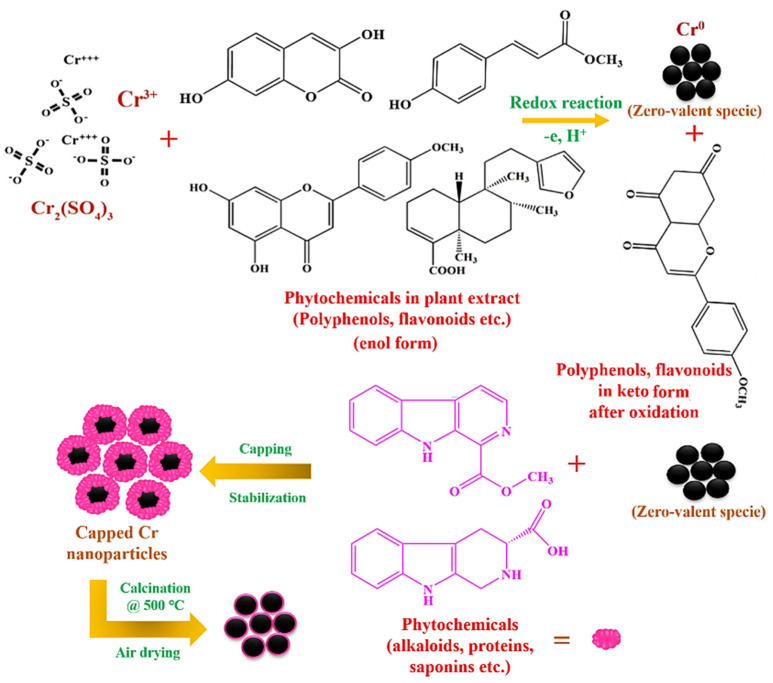
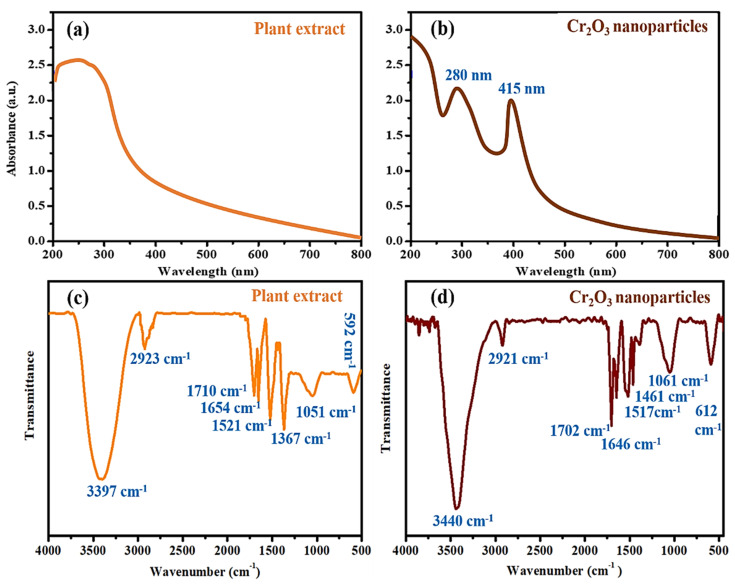
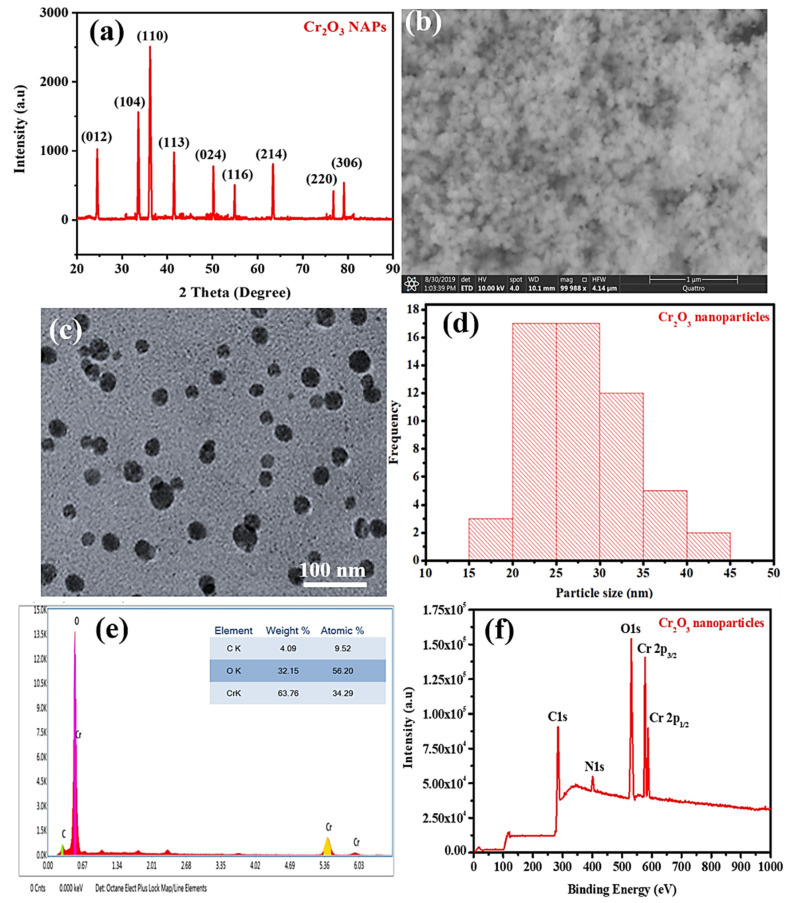
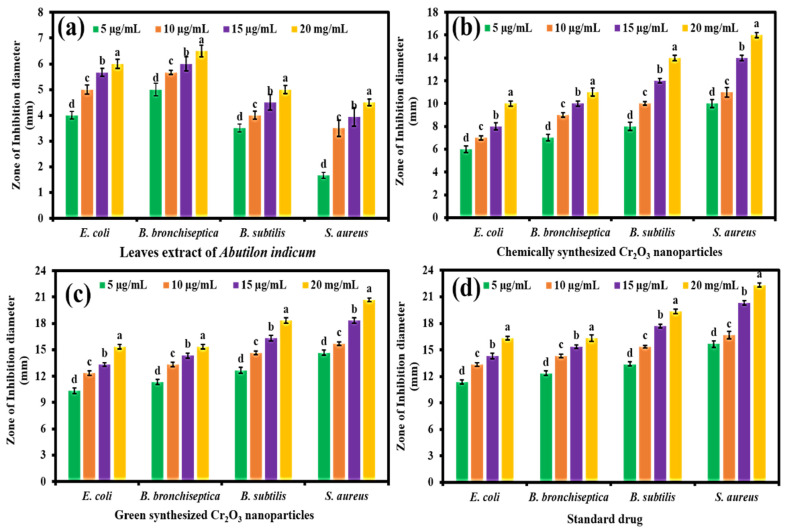
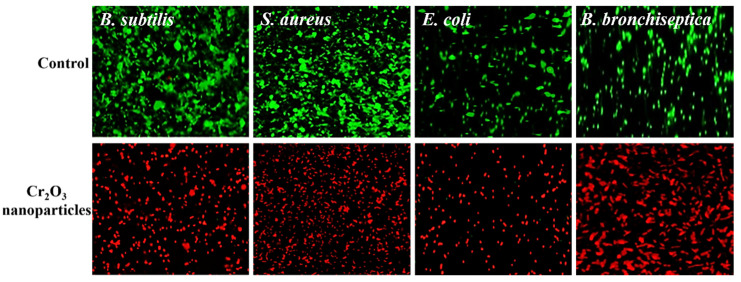
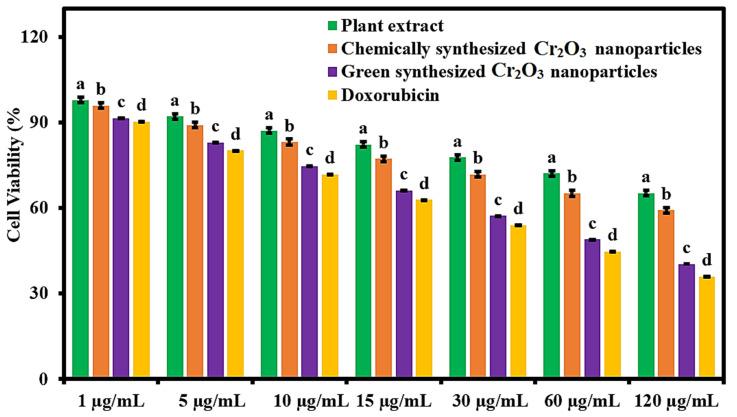
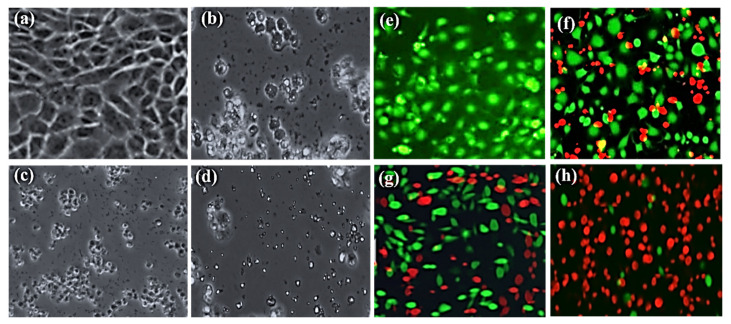
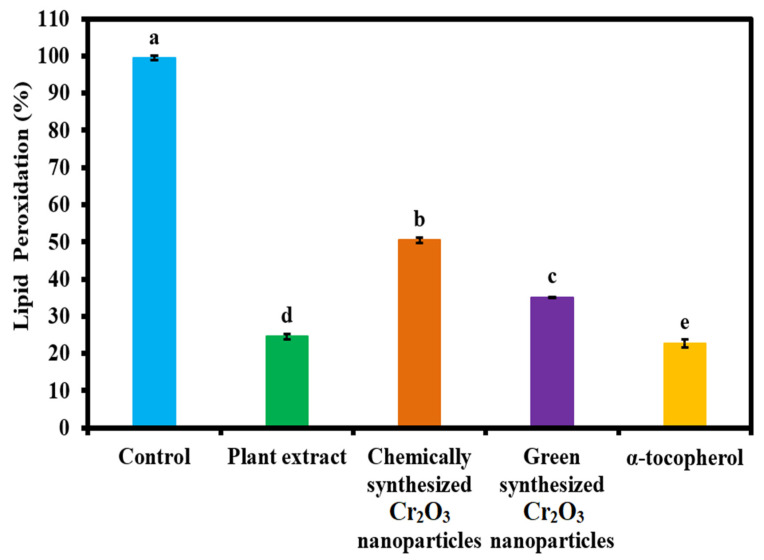
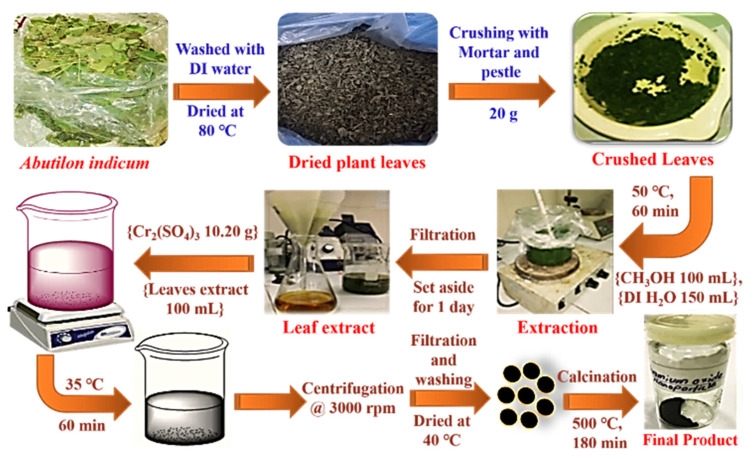
This study deals with the green synthesis of chromium oxide (Cr2O3) nanoparticles using a leaf extract of Abutilon indicum (L.) Sweet as a reducing and capping agent. Different characterization techniques were used to characterize the synthesized nanoparticles such as X-ray diffraction (XRD), Scanning electron microscope (SEM), Transmission electron microscope (TEM), Energy-dispersive X-ray (EDX), Fourier transform infrared (FTIR), X-ray photoelectron spectroscopy (XPS), and ultraviolet-visible (UV-VIS) spectroscopy. The X-ray diffraction technique confirmed the purity and crystallinity of the Cr2O3 nanoparticles. The average size of the nanoparticles ranged from 17 to 42 nm. The antibacterial activity of the green synthesized nanoparticles was evaluated against four different bacterial strains, E. coli, S. aureus, B. bronchiseptica, and B. subtilis using agar well diffusion and a live/dead staining assay. The anticancer activities were determined against Michigan Cancer Foundation-7 (MCF-7) cancer cells using MTT and a live/dead staining assay. Antioxidant activity was investigated in the linoleic acid system. Moreover, the cytobiocompatibility was analyzed against the Vero cell lines using MTT and a live/dead staining assay. The results demonstrated that the green synthesized Cr2O3 nanoparticles exhibited superior antibacterial activity in terms of zones of inhibition (ZOIs) against Gram-positive and Gram-negative bacteria compared to plant extracts and chemically synthesized Cr2O3 nanoparticles (commercial), but comparable to the standard drug (Leflox). The green synthesized Cr2O3 nanoparticles exhibited significant anticancer and antioxidant activities against MCF-7 cancerous cells and the linoleic acid system, respectively, compared to chemically synthesized Cr2O3 nanoparticles. Moreover, cytobiocompatibility analysis displayed that they presented excellent biocompatibility with Vero cell lines than that of chemically synthesized Cr2O3 nanoparticles. These results suggest that the green synthesized Cr2O3 nanoparticles' enhanced biological activities might be attributed to a synergetic effect. Hence, green synthesized Cr2O3 nanoparticles could prove to be promising candidates for future biomedical applications.
Keywords: Abutilon indicum (L.) Sweet; Cr2O3; antibacterial; anticancer; antioxidant; biocompatibility; green synthesis.
Conflict of interest statement
The authors declare no conflict of interest.
Figures

References
-
- Rao T.V.M., Zahidi E.M., Sayari A. Ethane dehydrogenation over pore-expanded mesoporous silica-supported chromium oxide: 2. Catalytic properties and nature of active sites. J. Mol. Catal. A Chem. 2009;301:159–165. doi: 10.1016/j.molcata.2008.12.027. - DOI
-
- Patah A., Takasaki A., Szmyd J.S. Influence of multiple oxide (Cr2O3/Nb2O5) addition on the sorption kinetics of MgH2. Int. J. Hydrog. Energy. 2009;34:3032–3037. doi: 10.1016/j.ijhydene.2009.01.086. - DOI
-
- Rakesh S., Ananda S., Gowda N.M.M. Synthesis of Chromium(III) Oxide Nanoparticles by Electrochemical Method and Mukia Maderaspatana Plant Extract, Characterization, KMnO4 Decomposition and Antibacterial Study. Mod. Res. Catal. 2013;2:127–135. doi: 10.4236/mrc.2013.24018. - DOI
MeSH terms
Substances
Grants and funding
LinkOut - more resources
Full Text Sources
Other Literature Sources
Medical
