


Oxycodone versus other opioid analgesics after laparoscopic surgery: a meta-analysis
- PMID: 33422129
- PMCID: PMC7796650
- DOI: 10.1186/s40001-020-00463-w
Oxycodone versus other opioid analgesics after laparoscopic surgery: a meta-analysis
Erratum in
-
Correction to: Oxycodone versus other opioid analgesics after laparoscopic surgery: a meta-analysis.Eur J Med Res. 2021 Feb 5;26(1):16. doi: 10.1186/s40001-021-00486-x. Eur J Med Res. 2021. PMID: 33546763 Free PMC article. No abstract available.
Abstract
Background: Intravenous opioids are administered for the management of visceral pain after laparoscopic surgery. Whether oxycodone has advantages over other opioids in the treatment of visceral pain is not yet clear.
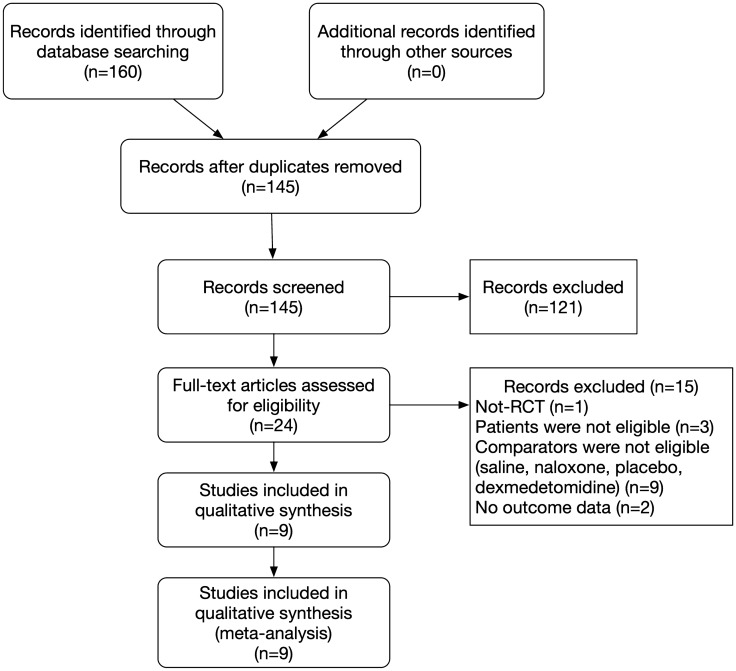
Methods: In this study, the analgesic efficiency and adverse events of oxycodone and other opioids, including alfentanil, sufentanil, fentanyl, and morphine, in treating post-laparoscopic surgery visceral pain were evaluated. This review was conducted according to the methodological standards described in the Cochrane Handbook for Systematic Reviews of Interventions and the Preferred Reporting Items for Systematic Reviews and Meta-analysis statement. The PubMed, Embase, and Cochrane databases were searched in December 2019.
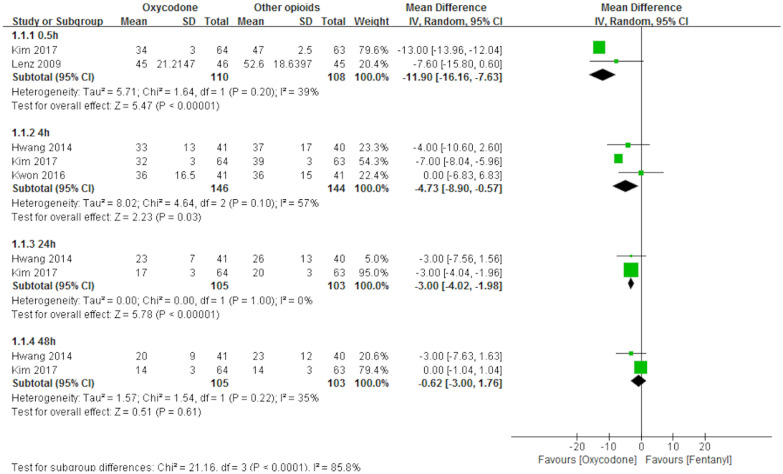
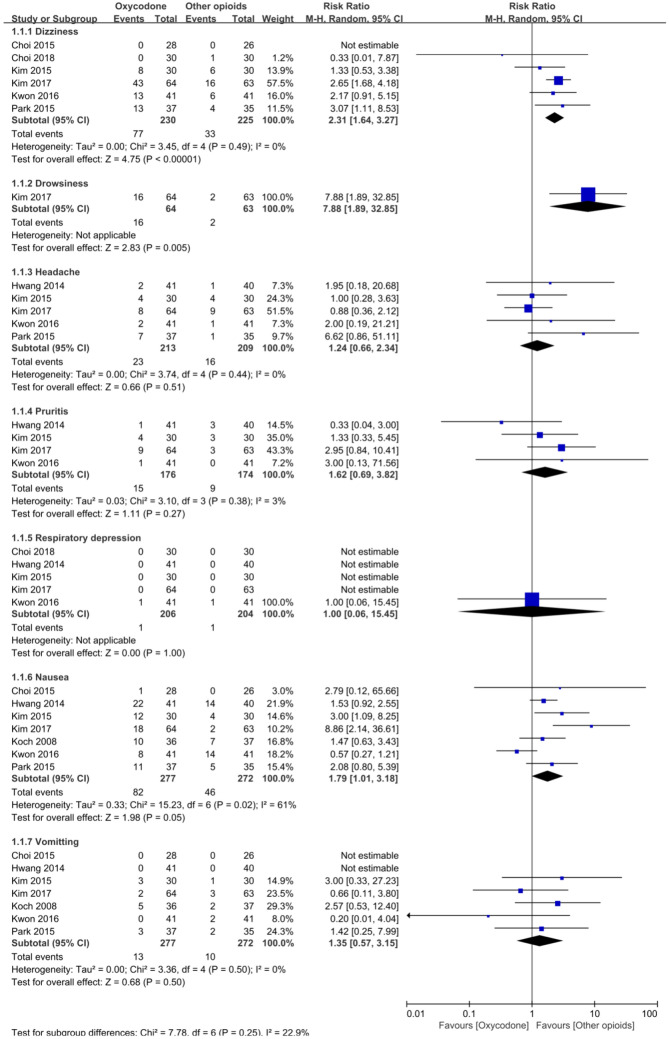
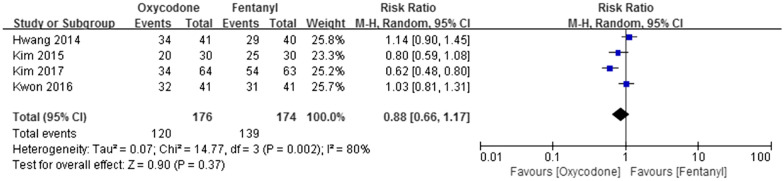
Results: Ten studies were included in this review. The sample size was 695 participants. The results showed that compared with morphine and fentanyl, oxycodone had a more potent analgesic efficacy on the first day after laparoscopic surgery, especially during the first 0.5 h. There was no significant difference in sedation between the two groups. Compared to morphine and fentanyl, oxycodone was more likely to lead to dizziness and drowsiness. Overall, patient satisfaction did not differ significantly between oxycodone and other opioids.
Conclusions: Oxycodone is superior to other analgesics within 24 h after laparoscopic surgery, but its adverse effects should be carefully considered.
Keywords: Laparoscopic surgery; Meta-analysis; Oxycodone; Postoperative visceral pain.
Conflict of interest statement
No conflicts of interest exist regarding the submission of this manuscript.
Figures

References
-
- Choi EK, Kwon N, Park SJ. Comparison of the effects of oxycodone versus fentanyl on airway reflex to tracheal extubation and postoperative pain during anesthesia recovery after laparoscopic cholecystectomy: a double-blind, randomized clinical consort study. Medicine (Baltimore). 2018;97(13):e0156. doi: 10.1097/MD.0000000000010156. - DOI - PMC - PubMed
-
- Choi YJ, Park SW, Kwon HJ, Choi JM, Lee YM. Efficacy of early intravenous bolus oxycodone or fentanyl in emergence from general anaesthesia and postoperative analgesia following laparoscopic cholecystectomy: a randomized trial. J Int Med Res. 2015;43:809–818. doi: 10.1177/0300060515594194. - DOI - PubMed
-
- Golubovic S, Golubovic V, Cindric-Stancin M, Tokmadzic VS. Intraperitoneal analgesia for laparoscopic cholecystectomy: bupivacaine versus bupivacaine with tramadol. Collegium Antropologicum. 2009;33:299–302. - PubMed
Publication types
MeSH terms
Substances
Grants and funding
LinkOut - more resources
Full Text Sources
Other Literature Sources
Medical
