. 2021 Jan 11:10:e60613.
doi: 10.7554/eLife.60613.

A survey of early-career researchers in Australia

Affiliations

A survey of early-career researchers in Australia

Katherine Christian et al. Elife. .

Abstract

Early-career researchers (ECRs) make up a large portion of the academic workforce and their experiences often reflect the wider culture of the research system. Here we surveyed 658 ECRs working in Australia to better understand the needs and challenges faced by this community. Although most respondents indicated a 'love of science', many also expressed an intention to leave their research position. The responses highlight how job insecurity, workplace culture, mentorship and 'questionable research practices' are impacting the job satisfaction of ECRs and potentially compromising science in Australia. We also make recommendations for addressing some of these concerns.

Keywords: ECR; career development; job security; none; postdocs; research culture; scientific integrity.


Conflict of interest statement

KC, CJ, JL, WW, MD No competing interests declared

Figures
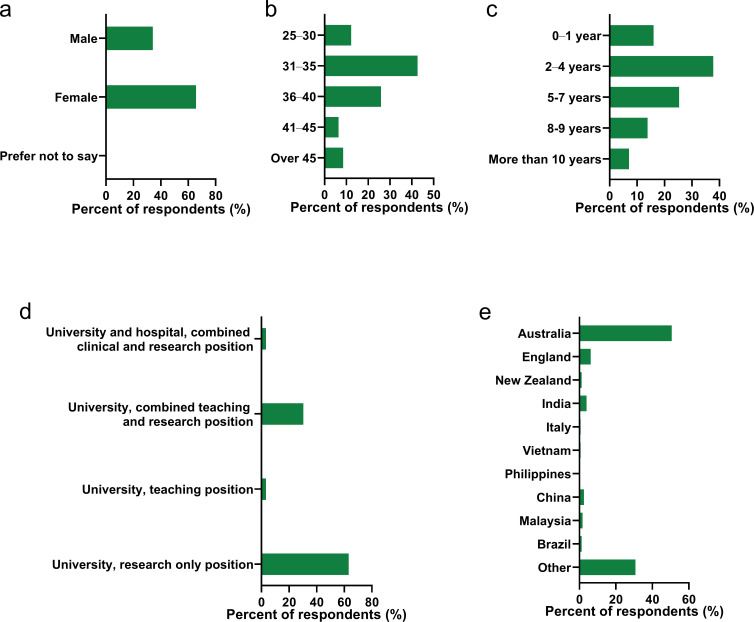
Figure 1.
Figure 1.. Demographic data of survey respondents.
(a) Gender of respondent n = 658. (b) Age of respondent n = 660. (c) Years since completion of PhD n = 833 (ineligible respondents subsequently terminated). (d) Nature of employment n = 638 (does not include ‘other’). (e) Country of birth n = 658.
Figure 2.
Figure 2.. Why respondents stay in research.
Word cloud of the responses to survey question number 76 (Why do they stay in science?). The analysis tool NVivo v12 for Mac was used to count the frequency of words in the answers. Of the 334 answers, 108 mentioned love, 16 mentioned passionate and 11 mentioned passion (see Figure 2—source data 1).
Figure 3.
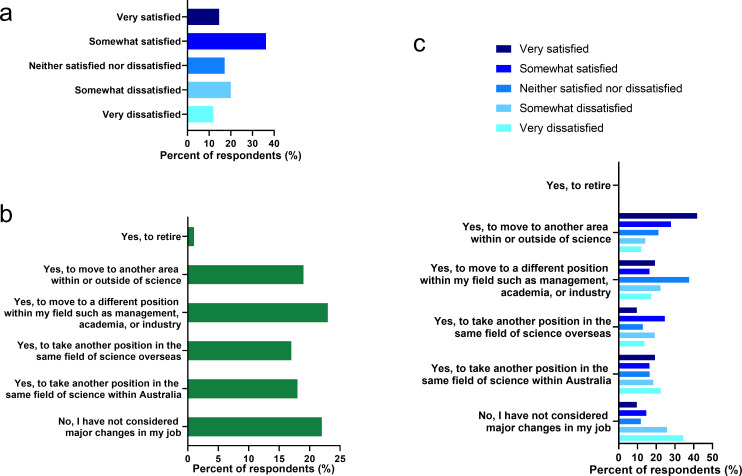
Figure 3.. Job satisfaction does not influence the decision to make a major career change.
(a) Respondents were asked to rate their overall satisfaction with their current work (Question 31–4 in survey, n = 566). (b) Respondents were asked if within the last five years they had considered any major career or position changes, and what these might be (Question 61 in survey, n = 470). (c) For those considering a major career or position change in the previous 5 years, we stratified responses from respondents based on satisfaction with their current position (n = 470).
Figure 3—figure supplement 1.
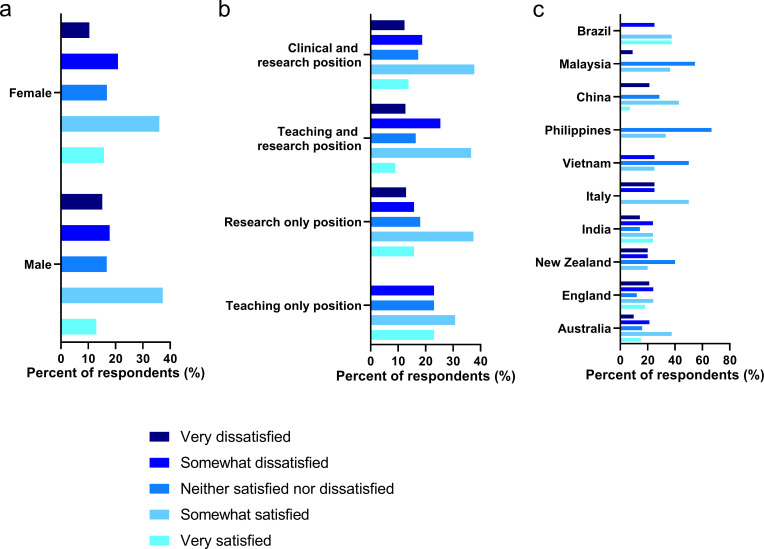
Figure 3—figure supplement 1.. Satisfaction with workplace culture stratified by gender and country of birth.
(a) Influence of gender on satisfaction (n = 559). (b) Influence of appointment or position on satisfaction (n = 479). (c) Influence of country of birth on job satisfaction (n = 390).
Figure 4.
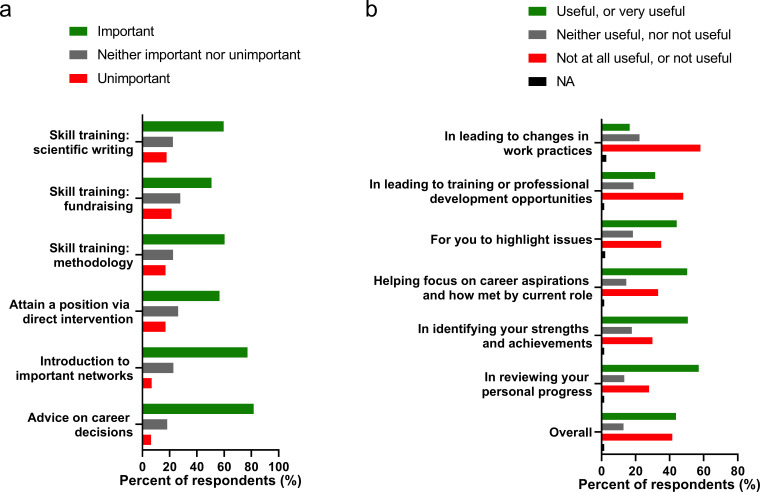
Figure 4.. Aspects of mentoring that are the most and least important to ECRs.
(a) We asked respondents to indicate how much value they placed on different aspects of mentoring from more senior colleagues (n = 481 respondents). (b) We asked respondents who had participated in staff performance reviews to indicate which aspects of the review process they valued (n = 322 respondents who received a review).
Figure 5.
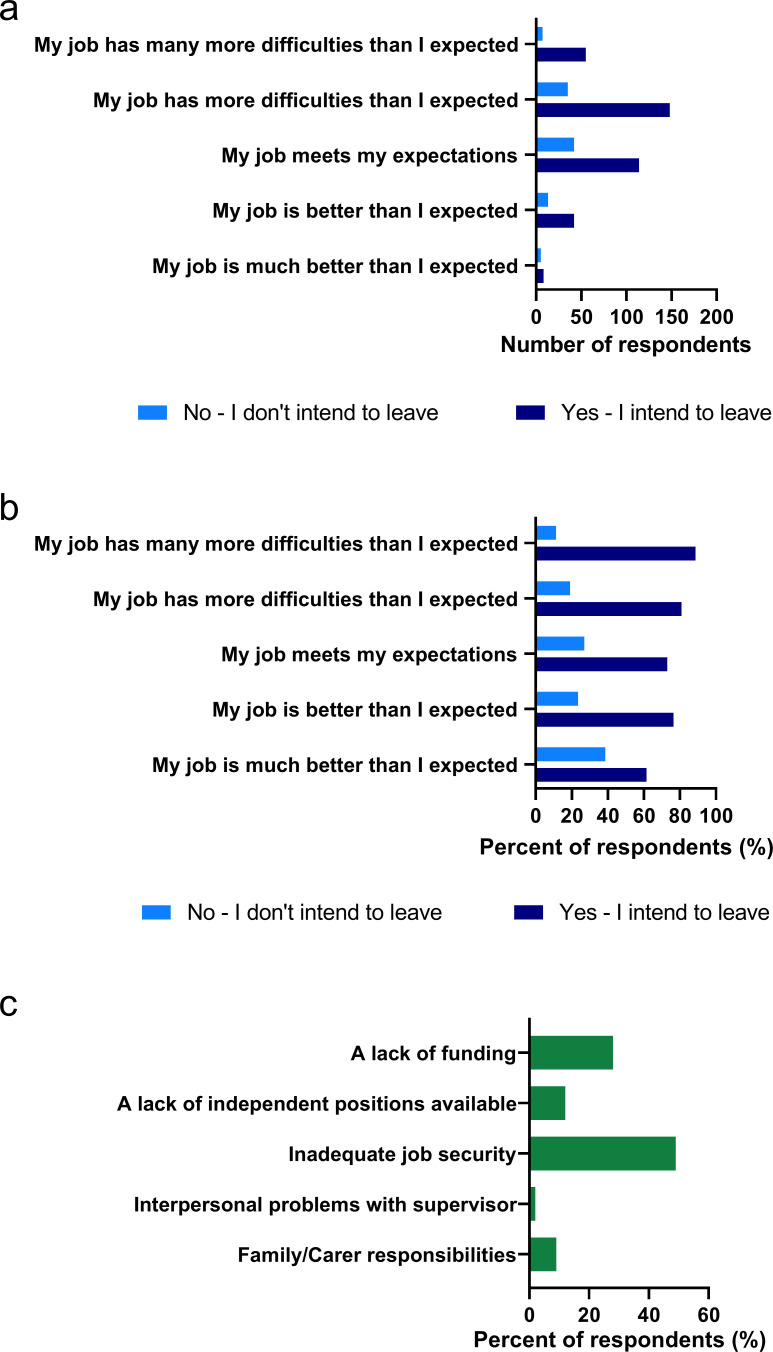
Figure 5.. ECRs expectations of their current position and their intention to leave.
Answer to survey Question 73, ‘How does your job as an early-career researcher meet your original expectations?’ (n = 469), and respondents’ intention to leave or remain in their position. (a) Data shown as raw number of respondents. (b) Data shown as percentage of each group of respondents. Note correlation between job expectation and intention to leave (n = 469, regression analysis, p=0.0234). (c) These data outline likely reasons for why ECRs would consider leaving a career in research (Question 67 in survey, n = 425, note that 38 answered other and are not accounted for in this graph).

References

    1. Abbott A. Stress, anxiety, harassment: huge survey reveals pressures of scientists' working lives. Nature. 2020;577:460–461. doi: 10.1038/d41586-020-00101-9. - DOI - PubMed
    1. Adam D. Science funders gamble on grant lotteries. Nature. 2019;575:574–575. doi: 10.1038/d41586-019-03572-7. - DOI - PubMed
    1. ASMR The Australian Society for Medical Research (ASMR) [December 12, 2020];2020 https://asmr.org.au
    1. Australian Academy of Science About the EMCR forum. [December 21, 2020];2020 https://www.science.org.au/supporting-science/early-and-mid-career-resea...
    1. Australian Research Council The state of Australian university research 2018–19, ERA National Report. [December 21, 2020];2019 https://www.arc.gov.au/excellence-research-australia/era-reports

Publication types

MeSH terms