


Taxonomic significance of leaves in family Aizoaceae
- PMID: 33424334
- PMCID: PMC7783629
- DOI: 10.1016/j.sjbs.2020.10.036
Taxonomic significance of leaves in family Aizoaceae
Abstract
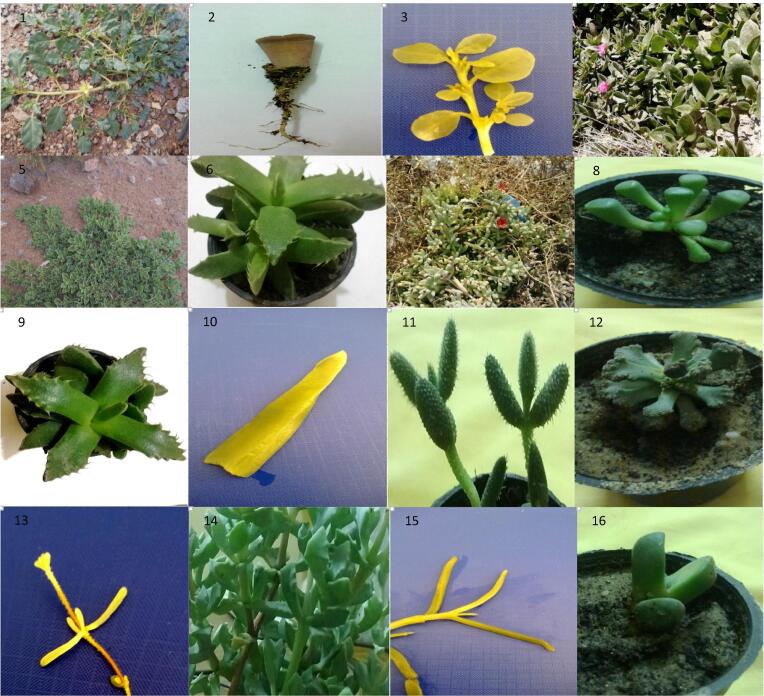
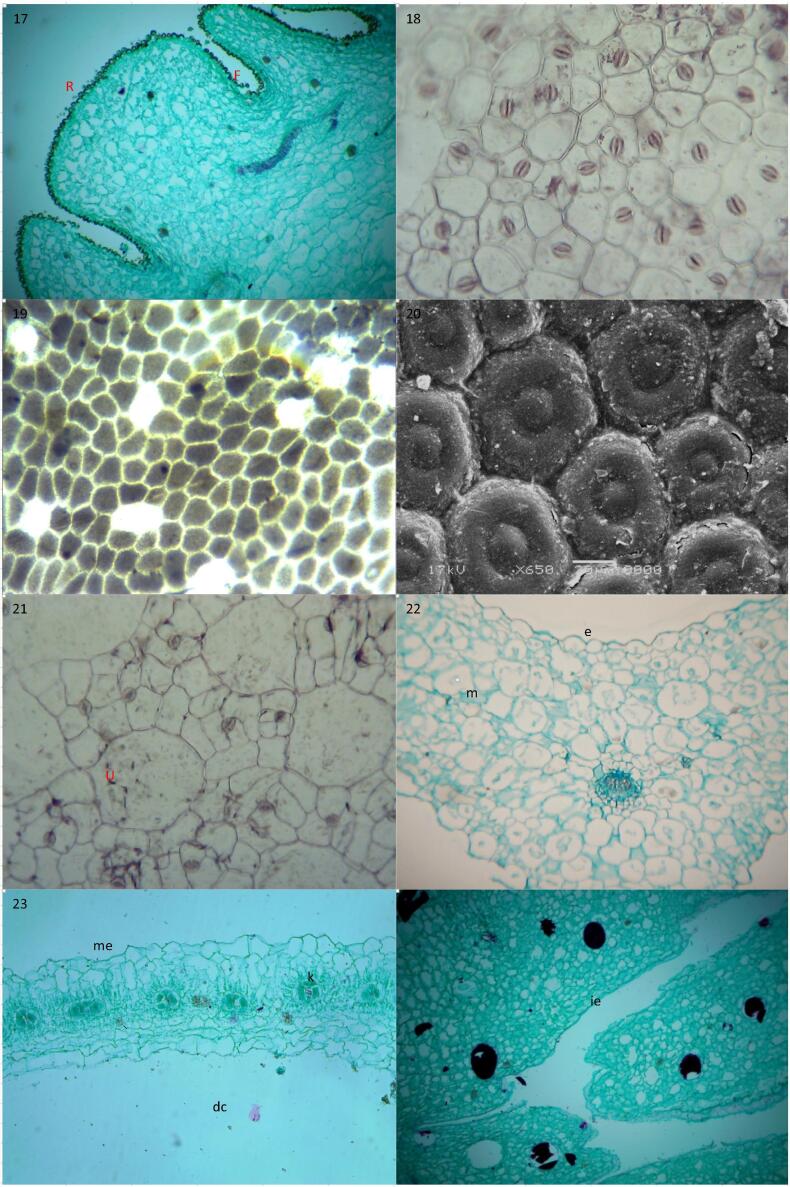
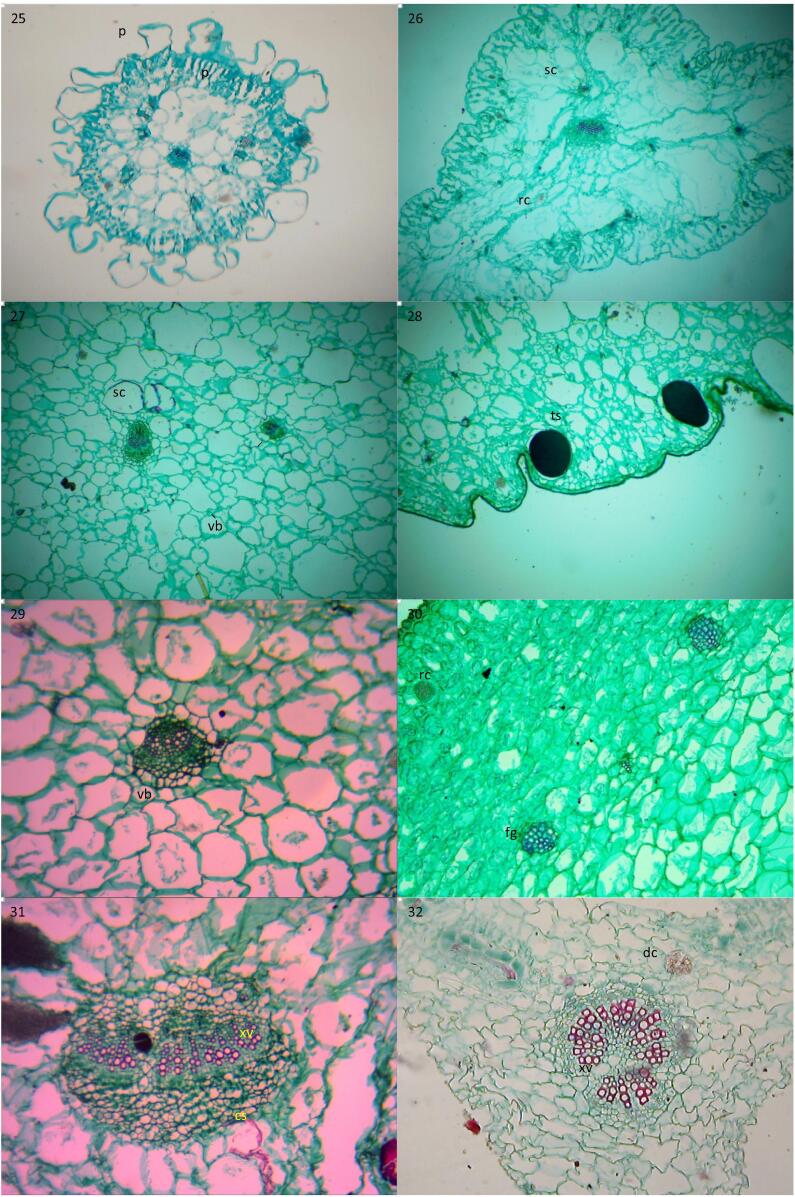
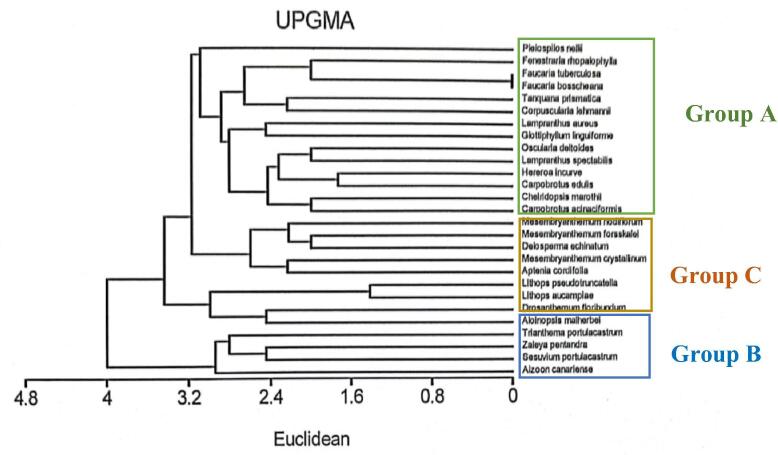
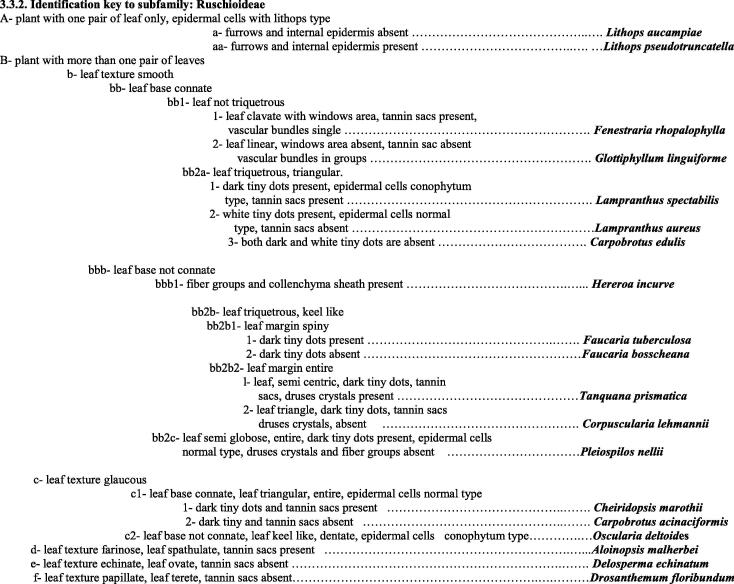
Aizoaceae is one of the most important and widespread succulent plant families in both tropical/subtropical regions and arid zones. In this study, 27 species were collected from various floristic regions in Egypt, Kingdom of Saudi Arabia and cactus farms (Kalupia - Egypt). The morphological characteristics of every taxon were recorded. The important morphological features included: the number of leaves per plant; leaf types; leaf position (cauline or radical; the latter indicates leaves arising from, or near, the roots); leaf arrangement; petiolate or sessile leaves; leaf sheath present or absent; leaf shape; leaf margin; leaf tip; presence of leaf 'window area'; leaf texture; and presence of white or dark miniscule dots (white miniscule dots from calcium carbonate and dark miniscule dots from tannin sacs). The investigated anatomical features were as follows: shape of the transverse section; the type of epidermal cells; the presence of large epidermal cells (bladder cells); presence of papilla and simple hairs; presence of tannin sacs; shapes of calcium oxalate crystals; shape of the xylem vessels; and the presence of Kranz unit (the unit that constitutes the vascular bundle/s, parenchyma sheath, and surrounding mesophyll) or collenchyma sheath. All data were recorded in a data matrix (as either text or numerical data), which was used to construct the identification key and phylogeny tree using a multi-variate statistical package. The results of our analysis may open the possibility of using the morphological and anatomical features of leaves to distinguish between the subfamilies, genera, and species of Aizoaceae.
Keywords: Aizoaceae; Leaf anatomy; Leaf morphology; Numerical analyses; Plant taxonomy.
© 2020 The Author(s).
Conflict of interest statement
The authors declare that they have no known competing financial interests or personal relationships that could have appeared to influence the work reported in this paper.
Figures



References
-
- Abd El-Ghani M., Salama F., Salem B., Al-Hadidy A., Abdel-Aleem M. Phytogeography of the Eastern desert flora of Egypt. Wulfenia. 2017;24:79–120.
-
- Ahmed A.D. Tanta university; Egypt: 2010. Current situation of the flora and vegetation of the western Mediterranean desert of Egypt. Ph.D. thesis Faculty of science.
-
- APG (Angiosperm phylogeny group). 1998. An ordinal classification for the Families of flowering plants. Ann. Missouri Botan. Garden 85, 531–553.
-
- Bentham G., Hooker J.D. Reeve & Co; London: 1867. Genera Plantarum, I: 851–859.
-
- Bessey C. The phylogenetic taxonomy of flowering plants. Annals of the Missouri Botanical Garden. 1915;2:109–164.
LinkOut - more resources
Full Text Sources
Other Literature Sources
