


Vitamin D Supplementation Ameliorates Metabolic Dysfunction in Patients with PCOS: A SystematicReview of RCTs and Insight into the Underlying Mechanism
- PMID: 33424968
- PMCID: PMC7773476
- DOI: 10.1155/2020/7850816
Vitamin D Supplementation Ameliorates Metabolic Dysfunction in Patients with PCOS: A SystematicReview of RCTs and Insight into the Underlying Mechanism
Abstract
Objective: Evidence suggests that vitamin D deficiency correlated with metabolic disorders in women with polycystic ovary syndrome (PCOS). We conducted this systematic review and meta-analysis to evaluate the impact of vitamin D supplementation alone on glucose, lipid, and androgen parameters and inflammation biomarkers in women with PCOS.
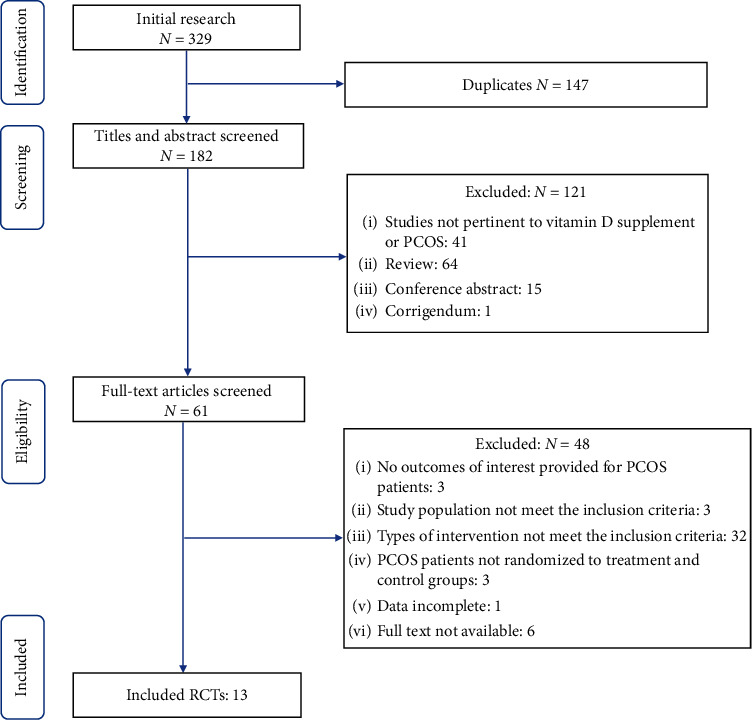
Methods: Literature research was conducted in Pubmed, Embase, Web of Science, Clinical Trials, and Cochrane Library to identify relevant randomized controlled trials (RCTs) up to March 2020. The effect of vitamin D supplementation alone on women with PCOS was compared with administration of placebo. The systematic review and meta-analysis protocol was registered in the International Prospective Register of Systematic Reviews (Prospero) as number CRD42020157444.
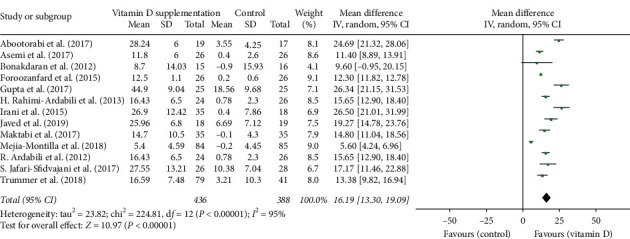
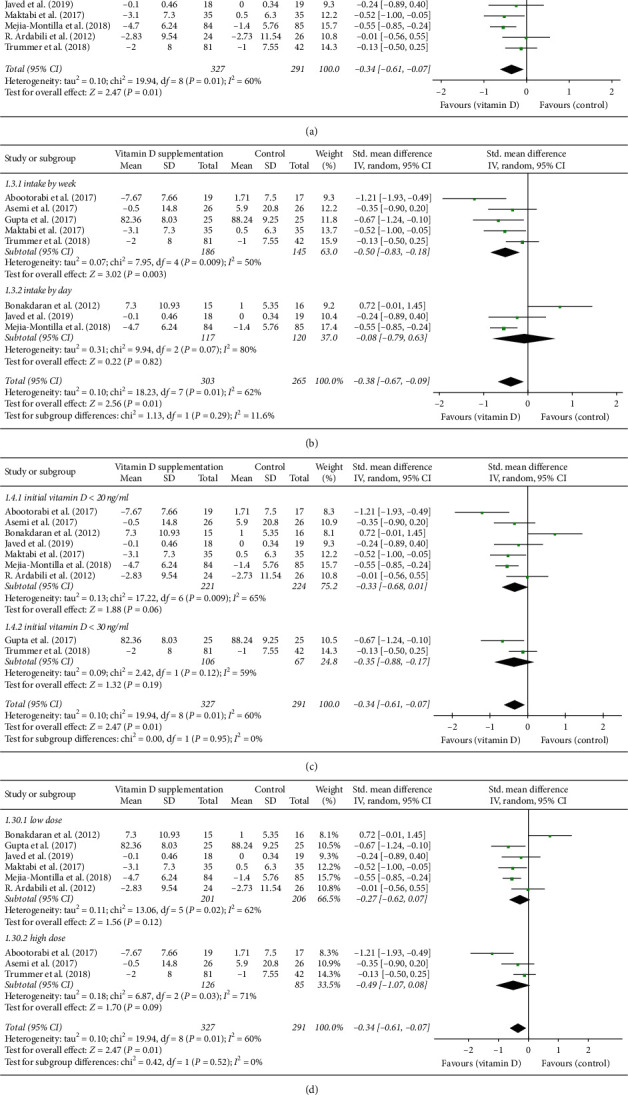
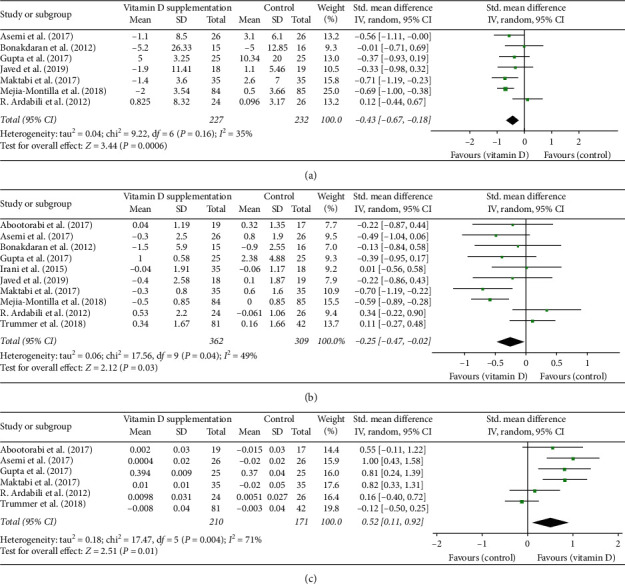
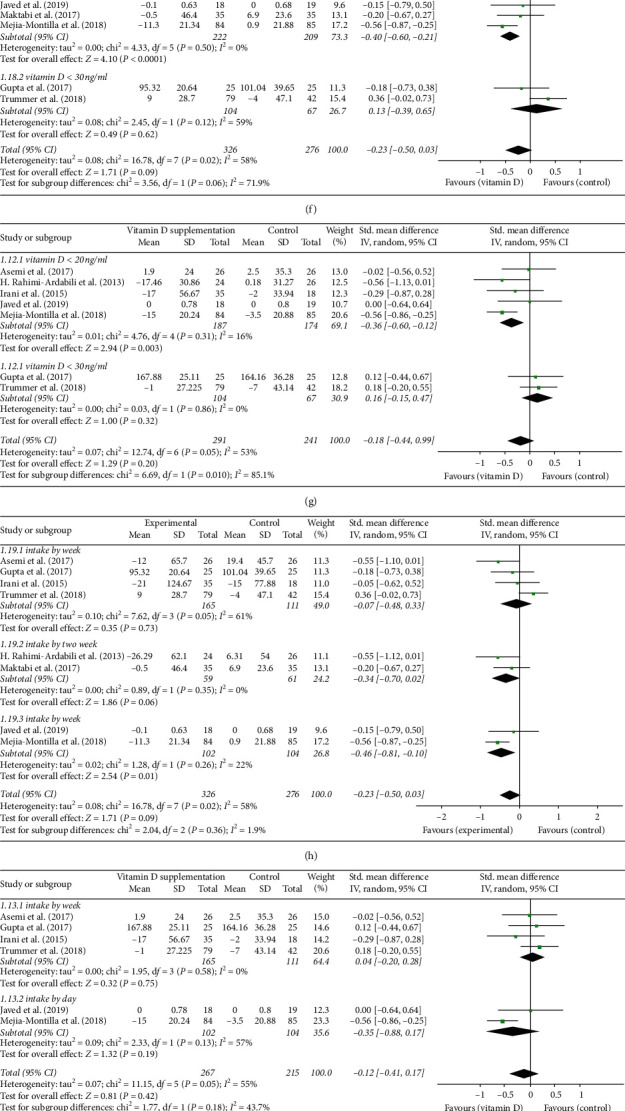
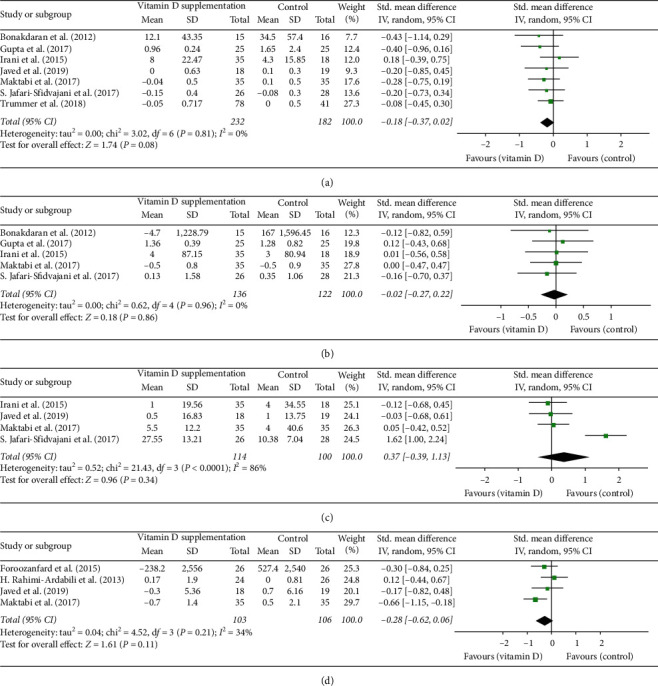
Results: Thirteen randomized controlled trials with 824 patients in total were included. Serum FPG, fasting insulin, HOMA-IR, and VLDL-C were significantly decreased in the vitamin D group versus placebo. Vitamin D supplementation group also showed a significantly elevated level of QUICKI. No significant impact was seen on serum triglyceride, total-C, LDL-C, HDL-C, total testosterone, DHEAS, SHBG, or hs-CRP. Subgroup analysis demonstrated that oral vitamin D intake had significantly decreased serum triglyceride and total-C level in women with PCOS who have vitamin D deficiency (serum vitamin D < 20 ng/ml).
Conclusion: The findings of the present meta-analysis indicate that vitamin D supplementation exerted favorable effects among women with PCOS on glucose metabolism and lipid metabolism, especially in vitamin D deficient women, but had no significant effect on the androgenic profile or inflammation status.
Copyright © 2020 Shan Guo et al.
Conflict of interest statement
The authors report no conflicts of interest related to this work.
Figures
References
LinkOut - more resources
Full Text Sources
Research Materials
Miscellaneous
