


Nicotinic cholinergic system and COVID-19: In silico evaluation of nicotinic acetylcholine receptor agonists as potential therapeutic interventions
- PMID: 33425684
- PMCID: PMC7776751
- DOI: 10.1016/j.toxrep.2020.12.013
Nicotinic cholinergic system and COVID-19: In silico evaluation of nicotinic acetylcholine receptor agonists as potential therapeutic interventions
Abstract
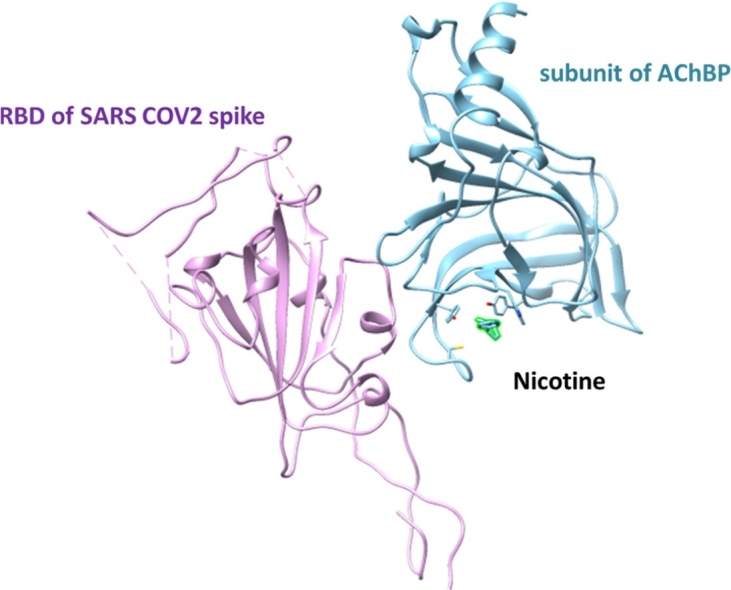
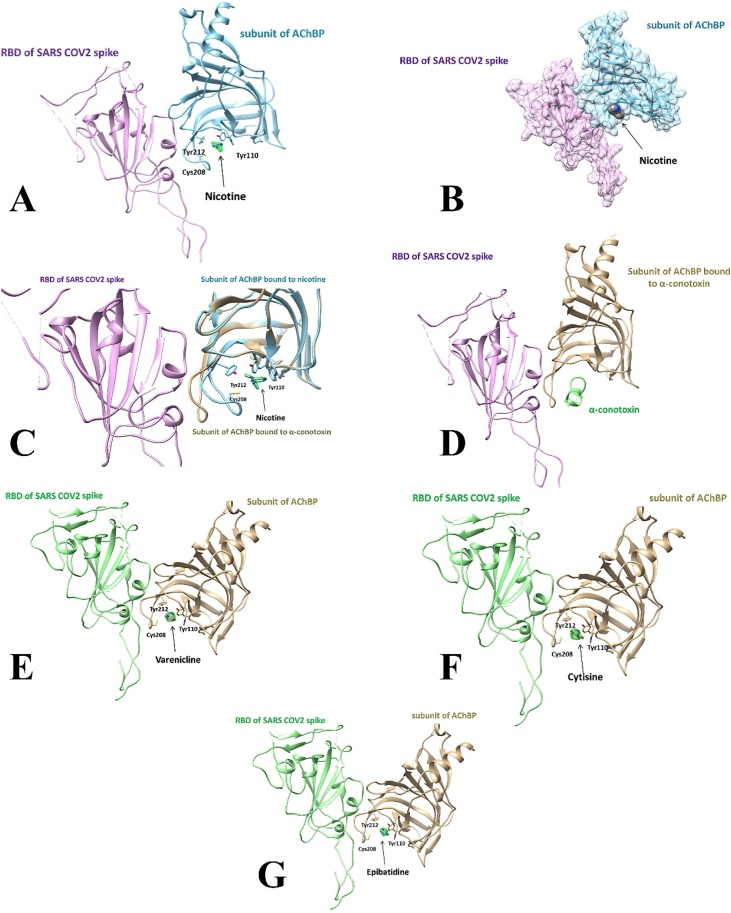
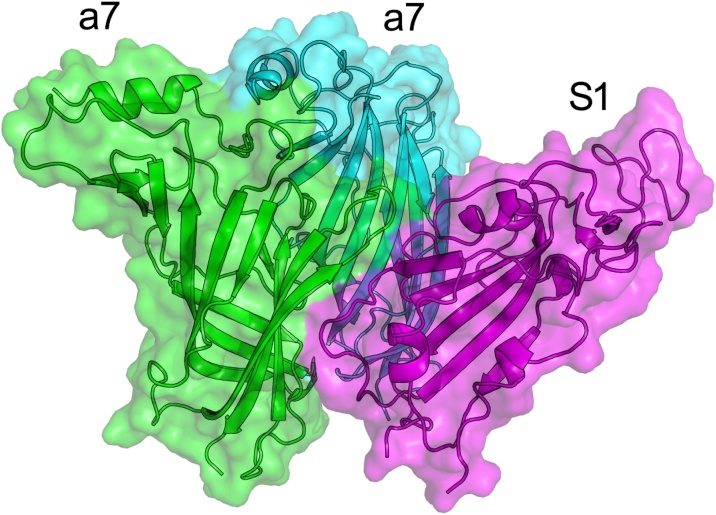
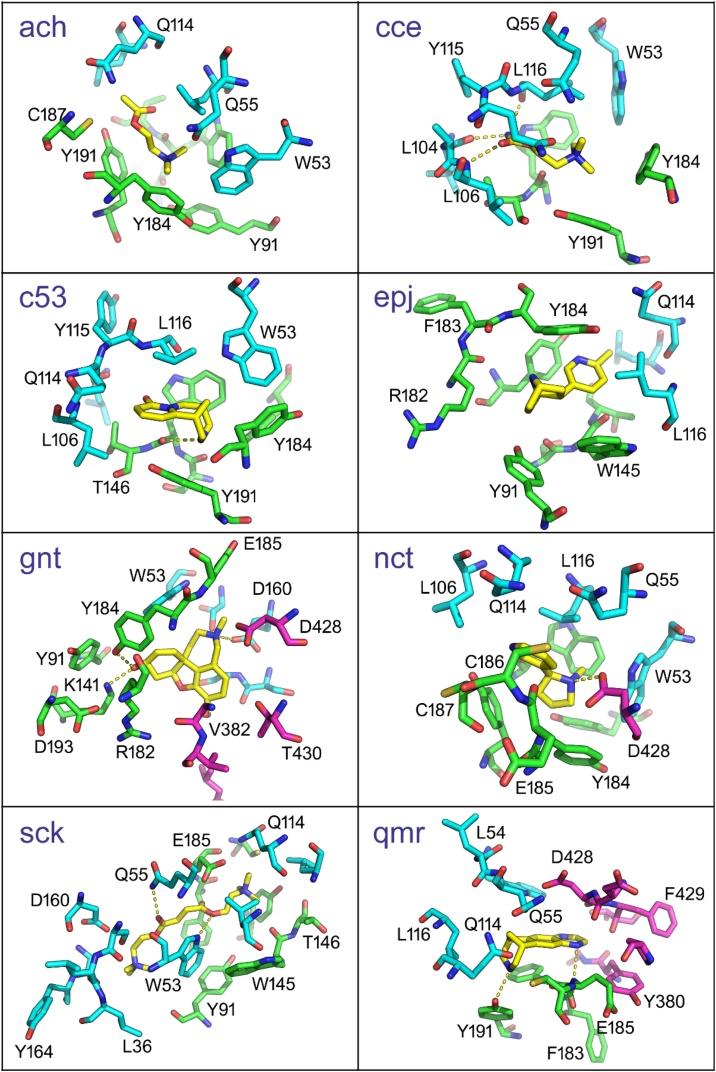
SARS-CoV-2 infection was announced as a pandemic in March 2020. Since then, several scientists have focused on the low prevalence of smokers among hospitalized COVID-19 patients. These findings led to our hypothesis that the Nicotinic Cholinergic System (NCS) plays a crucial role in the manifestation of COVID-19 and its severe symptoms. Molecular modeling revealed that the SARS-CoV-2 Spike glycoprotein might bind to nicotinic acetylcholine receptors (nAChRs) through a cryptic epitope homologous to snake toxins, substrates well documented and known for their affinity to the nAChRs. This binding model could provide logical explanations for the acute inflammatory disorder in patients with COVID-19, which may be linked to severe dysregulation of NCS. In this study, we present a series of complexes with cholinergic agonists that can potentially prevent SARS-CoV-2 Spike glycoprotein from binding to nAChRs, avoiding dysregulation of the NCS and moderating the symptoms and clinical manifestations of COVID-19. If our hypothesis is verified by in vitro and in vivo studies, repurposing agents currently approved for smoking cessation and neurological conditions could provide the scientific community with a therapeutic option in severe COVID-19.
Keywords: ACh, Acetylcholine; AChBP, Acetylcholine-binding protein; ARDS, acute respiratory distress syndrome; BLAST, Basic Local Alignment Search Tool; CHARMM, Chemistry at Harvard Macromolecular Mechanics; CNS, Central Nervous System; COVID-19; Cholinergic agonists; CoV, coronavirus; DCD, single precision binary FORTRAN; ECD, extracellular domain; HADDOCK, High Ambiguity Driven protein-protein DOCKing; HMGB1, High-mobility group protein 1; IL, Interleukin; Jak2, Janus kinases 2; LBD, Ligand Binding Domain; MD, Molecular Dynamics; MDS, Molecular Dynamics Simulations; MERS, Middle East Respiratory Syndrome; NAMD, Nanoscale Molecular Dynamics; NCBI, National Center for Biotechnology Information; NCS, Nicotinic Cholinergic System; NF-kB, nuclear factor kappa-light-chain-enhancer of activated B cells; NPT, constant number, pressure, energy; NVT, constant number, volume, energy; Nicotinic acetylcholine receptors; PDB, Protein Data Bank; PME, Particle Mesh Ewald; PRODIGY, PROtein binDIng enerGY prediction; PyMOL, Python Molecule; RBD, Receptor Binding Domain; RMSD, Root-mean-square deviation; SARS, Severe Acute Respiratory Syndrome; SARS-CoV-2; SARS-CoV-2 S1, SARS - 2 Spike Subunit 1 protein; STAT3, signal transducer and activator of transcription 3; STD NMR, Saturation Transfer Difference Nuclear Magnetic Resonance; Spike glycoprotein; TNF, Tumor Necrosis Factor; VMD, Visual Molecular Dynamics; lig, ligand; nAChRs, nicotinic acetylcholine receptors.
© 2020 The Authors. Published by Elsevier B.V.
Conflict of interest statement
The authors report no declarations of interest.
Figures
References
-
- Tsatsakis A., Petrakis D., Nikolouzakis T., Docea A., Calina D., Vinceti M., Goumenou M., Kostoff R., Mamoulakis C., Aschner M., Hernández A. COVID-19, an opportunity to reevaluate the correlation between long-term effects of anthropogenic pollutants on viral epidemic/pandemic events and prevalence. Food Chem. Toxicol. 2020;141:111418. - PMC - PubMed
-
- Docea A., Tsatsakis A., Albulescu D., Cristea O., Zlatian O., Vinceti M., Moschos S., Tsoukalas D., Goumenou M., Drakoulis N., Dumanov J., Tutelyan V., Onischenko G., Aschner M., Spandidos D., Calina D. A new threat from an old enemy: reemergence of coronavirus (review) Int. J. Mol. Med. 2020;45(6):1631–1643. doi: 10.3892/ijmm.2020.4555. - DOI - PMC - PubMed
-
- World Health Organization Coronavirus Disease (COVID-19) Pandemic. https://www.who.int/emergencies/diseases/novel-coronavirus-2019
-
- Goumenou M., Sarigiannis D., Tsatsakis A., Anesti O., Docea A., Petrakis D., Tsoukalas D., Kostoff R., Rakitskii V., Spandidos D., Aschner M., Calina D. COVID19 in Northern Italy: an integrative overview of factors possibly influencing the sharp increase of the outbreak (review) Mol. Med. Rep. 2020;22(1):20–32. doi: 10.3892/mmr.2020.11079. - DOI - PMC - PubMed
LinkOut - more resources
Full Text Sources
Other Literature Sources
Research Materials
Miscellaneous
