


Unmet Supportive Care Needs of Patients with Hematological Malignancies: A Systematic Review
- PMID: 33426184
- PMCID: PMC7785074
- DOI: 10.4103/apjon.apjon_41_20
Unmet Supportive Care Needs of Patients with Hematological Malignancies: A Systematic Review
Abstract
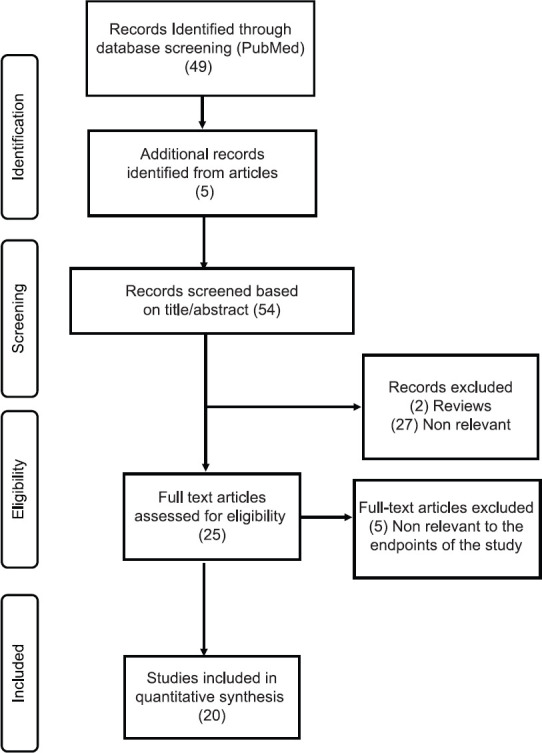
Hematological malignancies require intensive and long-term treatment, which brings a significant burden on patients, leading to unmet supportive care needs. The purpose of this review was to investigate the unmet supportive care needs of patients with hematological malignancies during and after active treatment as well as the factors that affect them. A systematic bibliographic search was carried out in the PubMed database for English articles published between 2009 and 2020 according to the Preferred Reporting Items for Systematic Reviews guidelines and under the terms: "unmet needs", "supportive care", "hematological malignancy" and "hematological cancer." Twenty studies were evaluated and reviewed. Hierarchical frequently reported unmet supportive care needs were informational, emotional, physical, daily living/practical (accessibility, transportation, and financial problems), and family life/relational needs. In particular, patients with multiple myeloma most frequently reported unmet needs at the informational, physical, emotional, and daily living/practical domain. Patients with myelodysplastic syndromes reported physical, emotional, practical, and relational needs. Patients with leukemia and lymphoma rated their needs as informational, physical, psychological, daily living, and sexual. Sexual and spiritual unmet needs were reported at a low level. Predictive indicators for increased unmet supportive care needs were the type of the hematological malignancy, younger age, marital status, female gender, monthly income, coexistence of anxiety and depression, and altered quality of life. To conclude with, the literature reports a significant number of unmet supportive care needs in patients with hematological malignancies, whose frequency and intensity were influenced by a variety of factors. However, the large heterogeneity of studies (design, sample, and needs assessment tools) makes the generalization of the results difficult.
Keywords: Hematological cancers; hematological malignancies; supportive care; unmet needs.
Copyright: © 2020 Ann & Joshua Medical Publishing Co. Ltd.
Conflict of interest statement
There are no conflicts of interest.
Figures
References
-
- Sant M, Allemani C, Tereanu C, De Angelis R, Capocaccia R, Visser O, et al. Incidence of hematologic malignancies in Europe by morphologic subtype: Results of the HAEMACARE project. Blood. 2010;116:3724–34. - PubMed
-
- Hall A, Lynagh M, Bryant J, Sanson-Fisher R. Supportive care needs of hematological cancer survivors: A critical review of the literature. Crit Rev Oncol Hematol. 2013;88:102–16. - PubMed
-
- Allart P, Soubeyran P, Cousson-Gélie F. Are psychosocial factors associated with quality of life in patients with haematological cancer.A critical review of the literature? Psychooncology. 2013;22:241–9. - PubMed
Publication types
LinkOut - more resources
Full Text Sources
Other Literature Sources
