


A Comparison of Neuromuscular Electrical Stimulation Parameters for Postoperative Quadriceps Strength in Patients After Knee Surgery: A Systematic Review
- PMID: 33428557
- PMCID: PMC8167342
- DOI: 10.1177/1941738120964817
A Comparison of Neuromuscular Electrical Stimulation Parameters for Postoperative Quadriceps Strength in Patients After Knee Surgery: A Systematic Review
Abstract
Context: Postoperative quadriceps strength weakness after knee surgery is a persistent issue patients and health care providers encounter.
Objective: To investigate the effect of neuromuscular electrical stimulation (NMES) parameters on quadriceps strength after knee surgery.
Data sources: CINAHL, MEDLINE, SPORTDiscus, and PubMed were systematically searched in December 2018.
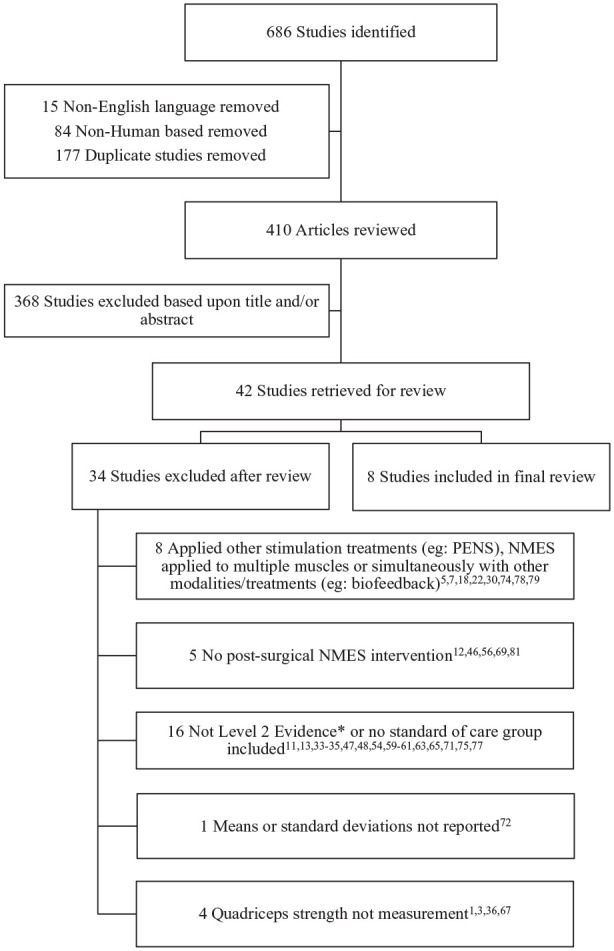
Study selection: Studies were excluded if they did not assess quadriceps strength or if they failed to report the NMES parameters or quadriceps strength values. Additionally, studies that applied NMES to numerous muscle groups or simultaneously with other modalities/treatments were excluded. Study quality was assessed with the Physiotherapy Evidence Database (PEDro) scale for randomized controlled trials.
Study design: Systematic review.
Level of evidence: Level 1.
Data extraction: Treatment parameters for each NMES treatment was extracted for comparison. Quadriceps strength means and standard deviations were extracted and utilized to calculate Hedge g effect sizes with 95% CIs.
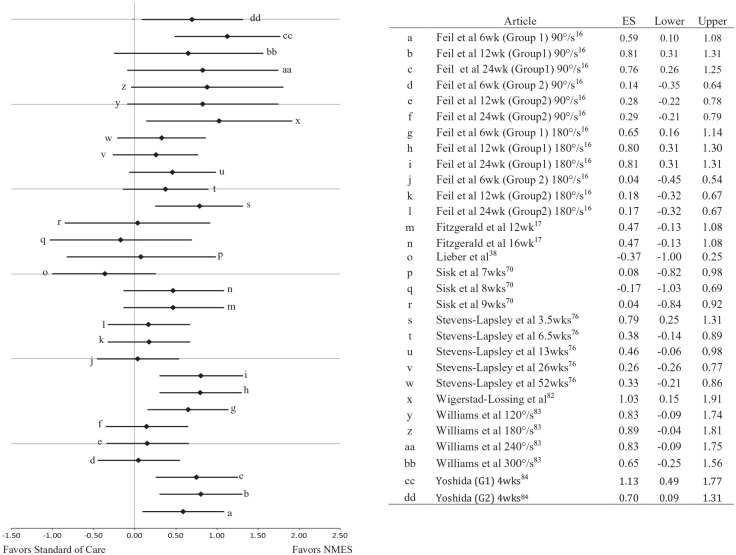
Results: Eight RCTs were included with an average Physiotherapy Evidence Database scale score of 5 ± 2. Hedge g effect sizes ranged from small (-0.37; 95% CI, -1.00 to 0.25) to large (1.13; 95% CI, 0.49 to 1.77). Based on the Strength of Recommendation Taxonomy Quality of Evidence table, the majority of the studies included were low quality RCTs categorized as level 2: limited quality patient-oriented evidence.
Conclusion: Because of inconsistent evidence among studies, grade B evidence exists to support the use of NMES to aid in the recovery of quadriceps strength after knee surgery. Based on the parameters utilized by studies demonstrating optimal treatment effects, it is recommended to implement NMES treatment during the first 2 postoperative weeks at a frequency of ≥50 Hz, at maximum tolerable intensity, with a biphasic current, with large electrodes and a duty cycle ratio of 1:2 to 1:3 (2- to 3-second ramp).
Keywords: anterior cruciate ligament; meniscectomy; quadriceps impairment; total knee arthroplasty.
Conflict of interest statement
The following authors declared potential conflicts of interest: C.E.W.C.’s institution received financial support from International Cartilage Regeneration and Joint Preservation Society Patient Registry. C.L. is a paid consultant for Joint Restoration Foundation, Samumed, and Vericel.
Figures
References
-
- Akkaya N, Ardic F, Ozgen M, Akkaya S, Sahin F, Kilic A. Efficacy of electromyographic biofeedback and electrical stimulation following arthroscopic partial meniscectomy: a randomized controlled trial. Clin Rehabil. 2012;26:224-236. - PubMed
-
- Alon G, Kantor G, Ho HS. Effects of electrode size on basic excitatory responses and on selected stimulus parameters. J Orthop Sports Phys Ther. 1994;20:29-35. - PubMed
-
- Avramidis K, Karachalios T, Popotonasios K, Sacorafas D, Papathanasiades AA, Malizos KN. Does electric stimulation of the vastus medialis muscle influence rehabilitation after total knee replacement? Orthopedics. 2011;34:175. - PubMed
-
- Bax L, Staes F, Verhagen A. Does neuromuscular electrical stimulation strengthen the quadriceps femoris? Sports Med. 2005;35:191-212. - PubMed
Publication types
MeSH terms
LinkOut - more resources
Full Text Sources
Other Literature Sources
Medical
Research Materials
