


Whole genome sequencing of coagulase positive staphylococci from a dog-and-owner screening survey
- PMID: 33428679
- PMCID: PMC7799803
- DOI: 10.1371/journal.pone.0245351
Whole genome sequencing of coagulase positive staphylococci from a dog-and-owner screening survey
Abstract
Background: Staphylococcus aureus and S. pseudintermedius are the two most common coagulase positive staphylococci (CPS). S. aureus is more prevalent among humans, whereas S. pseudintermedius is more commonly isolated from dogs, however, both can cause various community and hospital acquired diseases in humans.
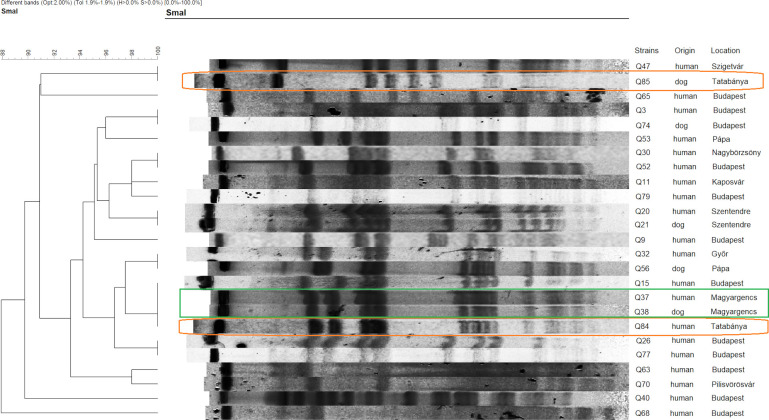
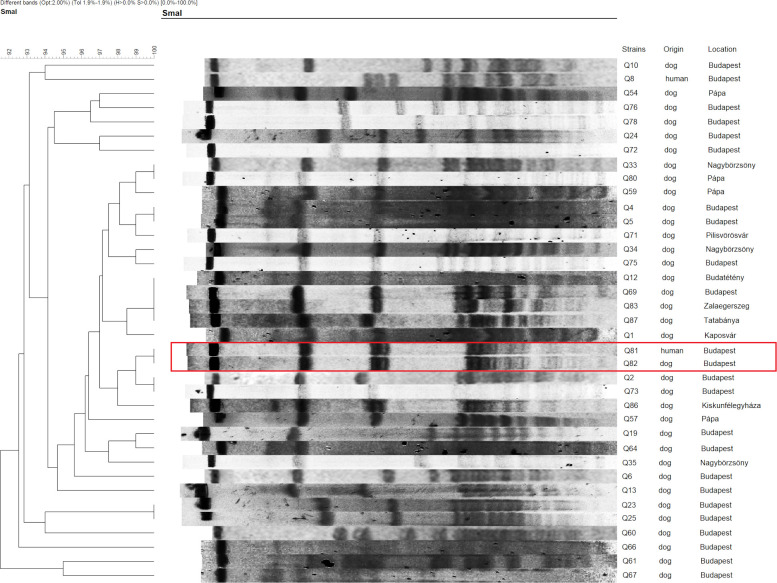
Methods: In the current study we screened 102 dogs and 84 owners in Hungary. We tested the antibiotic susceptibility of the strains and in order to get a better picture of the clonal relationship of the strains, we used pulsed-field gel electrophoresis. In addition, three pairs of isolates with identical PFGE patterns were whole genome sequenced, MLST and spa types were established.
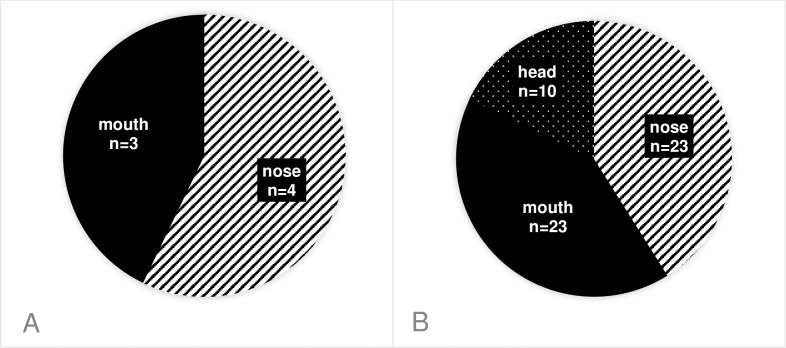
Results: Carriage rate of S. aureus was 23.8% in humans and 4.9% in dogs and two cases of co-carriage were found among dogs and owners. S. pseudintermedius carriage rate was 2.4% and 34.3%, respectively, with only one co-carriage. The isolates were generally rather susceptible to the tested antibiotics, but high tetracycline resistance of S. pseudintermedius strains was noted. The co-carried isolates shared almost the same resistance genes (including tet(K), bla(Z), norA, mepR, lmrS, fosB) and virulence gene pattern. Apart from the common staphylococcal enzymes and cytotoxins, we found enterotoxins and exfoliative toxins as well. The two S. aureus pairs belonged to ST45-t630, ST45-t671 and ST15-t084, ST15-t084, respectively. The co-carried S. pseudintermedius isolates shared the same housekeeping gene alleles determining a novel sequence type ST1685.
Conclusions: Based on the genomic data, dog-owner co-carried strains displayed only insignificant differences therefore provided evidence for potential human-to-dog and dog-to-human transmission.
Conflict of interest statement
The authors have declared that no competing interests exist.
Figures

References
-
- European Food Safety Authority. Analysis of the baseline survey on the prevalence of methicillin-resistant Staphylococcus aureus (MRSA) in holdings with breeding pigs, in the EU, 2008—Part A: MRSA prevalence estimates. EFSA J. 2009;7(11):1376.
MeSH terms
Substances
LinkOut - more resources
Full Text Sources
Other Literature Sources
Medical
Miscellaneous
