


Residence, Clinical Features, and Genetic Risk Factors Associated with Symptoms of COVID-19 in a Cohort of Older People in Madrid
- PMID: 33429394
- PMCID: PMC7900450
- DOI: 10.1159/000513182
Residence, Clinical Features, and Genetic Risk Factors Associated with Symptoms of COVID-19 in a Cohort of Older People in Madrid
Abstract
Background: The older population has been especially affected by the severe acute respiratory syndrome coronavirus 2 pandemic (COVID-19).
Objective: The aim of the study was to explore the incidence, severity, mortality rate, clinical features, and risk factors of symptoms of COVID-19 in home-dwelling older people, and its association with type of residence, cognitive deterioration, and neurodegenerative diseases.
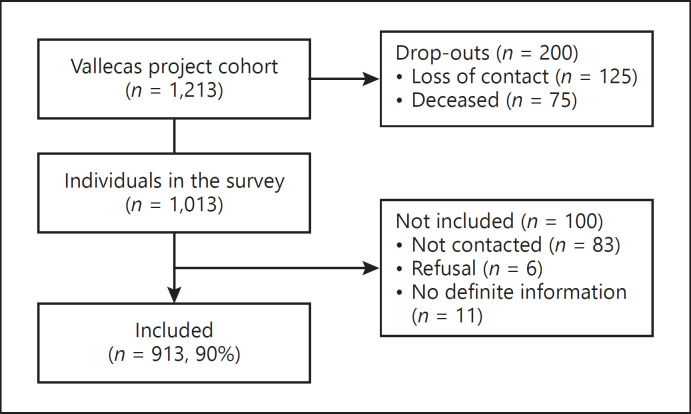
Methods: Data about symptoms of COVID-19 were collected through a telephone survey in the cohort of 913 older volunteers of the Vallecas Project, aged 75-90 years, most of them (902) home-dwelling, in Madrid, Spain. The association of demographic and anthropometric measures, genetic polymorphisms, comorbidities, life habits, type of residence, and frailty surrogates were explored as potential risk factors for the incidence, severity, and mortality of COVID-19 in the older population.
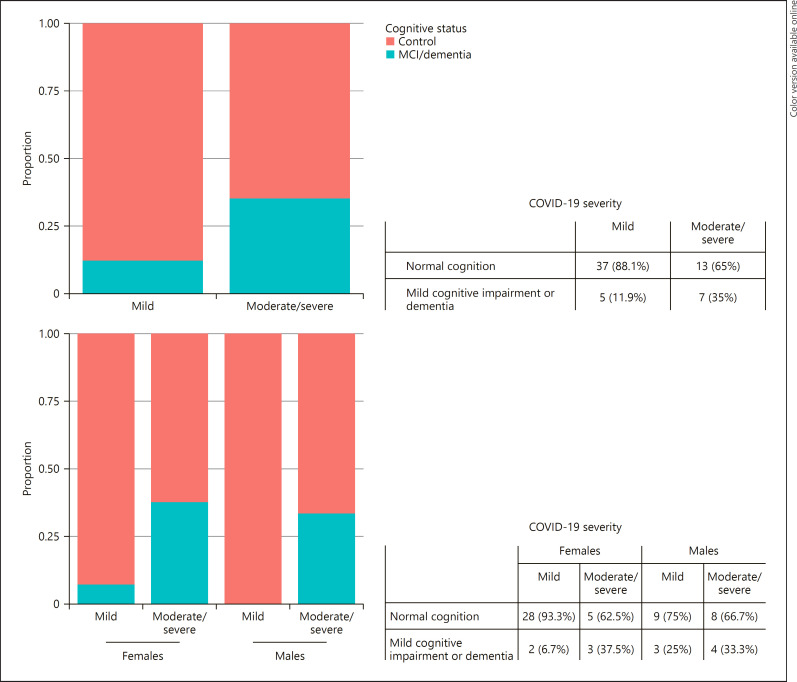
Findings: Sixty-two cases reported symptoms compatible with COVID-19; 6 of them had died, 4 in their home and 2 in the nursing home. Moderate/severe cases were significantly older and more frequently males. The APOE ε4 allele was associated with the presence of symptoms of COVID-19. Higher systolic blood pressure, more intense smoking habit, more alcohol intake, lower consumption of coffee and tea, and cognitive impairment were associated with disease severity.
Conclusions: The estimated incidence of symptomatic COVID-19 in this older cohort of Madrid was 6.8%, with an overall mortality rate of 0.7% (18.2% in those living in a nursing home) and a fatality rate of 9.9%. Our exploratory study indicates that life habits, other clinical conditions and, the ε4 variant of the APOE gene are associated with the presence and clinical severity of coronavirus infection.
Keywords: APOE gene; COVID-19; Clinical features; Cognitive impairment; Incidence; Madrid; Mortality; Nursing home; Older people; Risk factors; Vallecas Project.
© 2021 S. Karger AG, Basel.
Conflict of interest statement
A.R. and M.C. are cofounders of Biocross SL and own stock options from the company, which is developing blood tests for the diagnosis of Alzheimer's disease, including the e4Risk® test, which is a method to detect the presence of the protein ApoE4 in human blood plasma, using high-throughput chemistry analyzers.
O.C. and M.C. participate in the European patent application EP 16 794 966.8-1111, entitled “Methods for Apolipoprotein Detection” that was granted by the European patent Agency on January 09, 2019, which is licensed to Biocross SL and directly related to the e4Risk® test.
The other authors do not report any financial or personal conflicts of interest. They do not have any employment, consultancies, stock ownership, honoraria, paid expert testimony, patents or patent applications, or travel grants related to the content of this research.
Figures
Comment in
-
Apolipoprotein E4 Allele in Subjects with COVID-19.Gerontology. 2021;67(3):320-322. doi: 10.1159/000516200. Epub 2021 May 7. Gerontology. 2021. PMID: 33965962 Free PMC article. No abstract available.
References
-
- Instituto de Salud Carlos III; RENAVE, Red Nacional de Vigilancia Epidemiológica. Informe nº 26. Situación de COVID-19 en España a 27 de abril de 2020. Equipo COVID-19.Centro Nacional de Epidemiología. Centro Nacional de Microbiología. Avalable from: https://www.isciii.es/QueHacemos/Servicios/VigilanciaSaludPublicaRENAVE/....
-
- Korean Society of Infectious Diseases; Korean Society of Pediatric Infectious Diseases; Korean Society of Epidemiology; Korean Society for Antimicrobial Therapy; Korean Society for Healthcare-associated Infection Control and Prevention; Korea Centers for Disease Control and Prevention Report on the epidemiological features of coronavirus disease 2019 (COVID-19) outbreak in the Republic of Korea from January 19 to March 2, 2020. J Korean Med Sci. 2020 Mar 16;35((10)):e112. - PMC - PubMed
Publication types
MeSH terms
LinkOut - more resources
Full Text Sources
Other Literature Sources
Medical
Miscellaneous
