


Nitric Oxide and S-Nitrosylation in Cardiac Regulation: G Protein-Coupled Receptor Kinase-2 and β-Arrestins as Targets
- PMID: 33430208
- PMCID: PMC7825736
- DOI: 10.3390/ijms22020521
Nitric Oxide and S-Nitrosylation in Cardiac Regulation: G Protein-Coupled Receptor Kinase-2 and β-Arrestins as Targets
Abstract
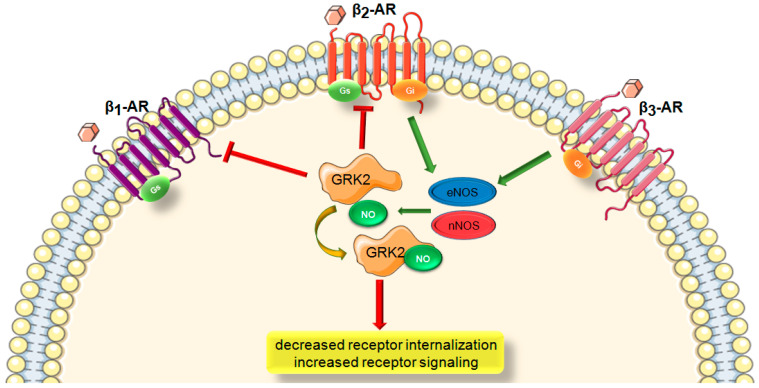
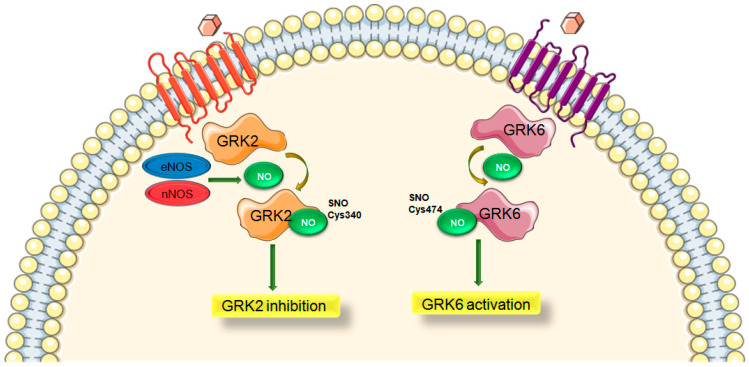
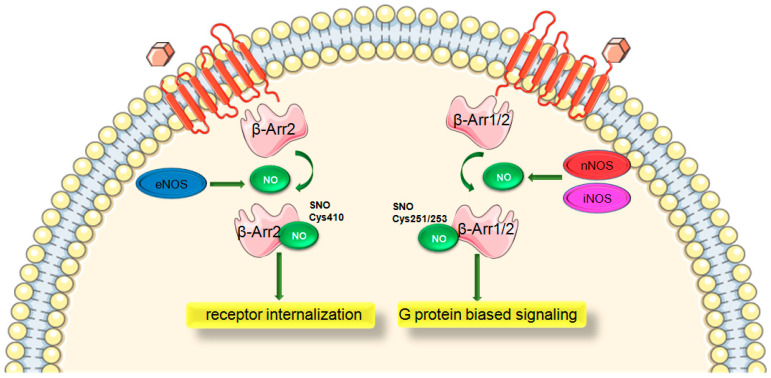
Cardiac diseases including heart failure (HF), are the leading cause of morbidity and mortality globally. Among the prominent characteristics of HF is the loss of β-adrenoceptor (AR)-mediated inotropic reserve. This is primarily due to the derangements in myocardial regulatory signaling proteins, G protein-coupled receptor (GPCR) kinases (GRKs) and β-arrestins (β-Arr) that modulate β-AR signal termination via receptor desensitization and downregulation. GRK2 and β-Arr2 activities are elevated in the heart after injury/stress and participate in HF through receptor inactivation. These GPCR regulators are modulated profoundly by nitric oxide (NO) produced by NO synthase (NOS) enzymes through S-nitrosylation due to receptor-coupled NO generation. S-nitrosylation, which is NO-mediated modification of protein cysteine residues to generate an S-nitrosothiol (SNO), mediates many effects of NO independently from its canonical guanylyl cyclase/cGMP/protein kinase G signaling. Herein, we review the knowledge on the NO system in the heart and S-nitrosylation-dependent modifications of myocardial GPCR signaling components GRKs and β-Arrs.
Keywords: GRK2; S-nitrosylation; nitric oxide; β-arrestins.
Conflict of interest statement
The authors declare no conflict of interest.
Figures
References
Publication types
MeSH terms
Substances
Grants and funding
LinkOut - more resources
Full Text Sources
Other Literature Sources
Research Materials
Miscellaneous
