


Common Mechanism for Target Specificity of Protein- and DNA-Targeting ADP-Ribosyltransferases
- PMID: 33430384
- PMCID: PMC7827354
- DOI: 10.3390/toxins13010040
Common Mechanism for Target Specificity of Protein- and DNA-Targeting ADP-Ribosyltransferases
Abstract
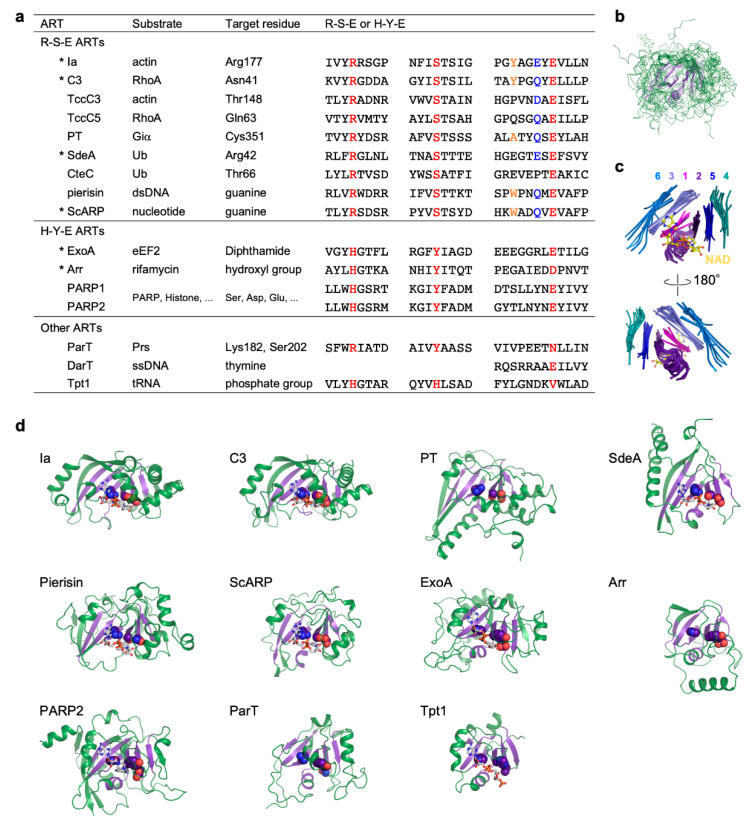
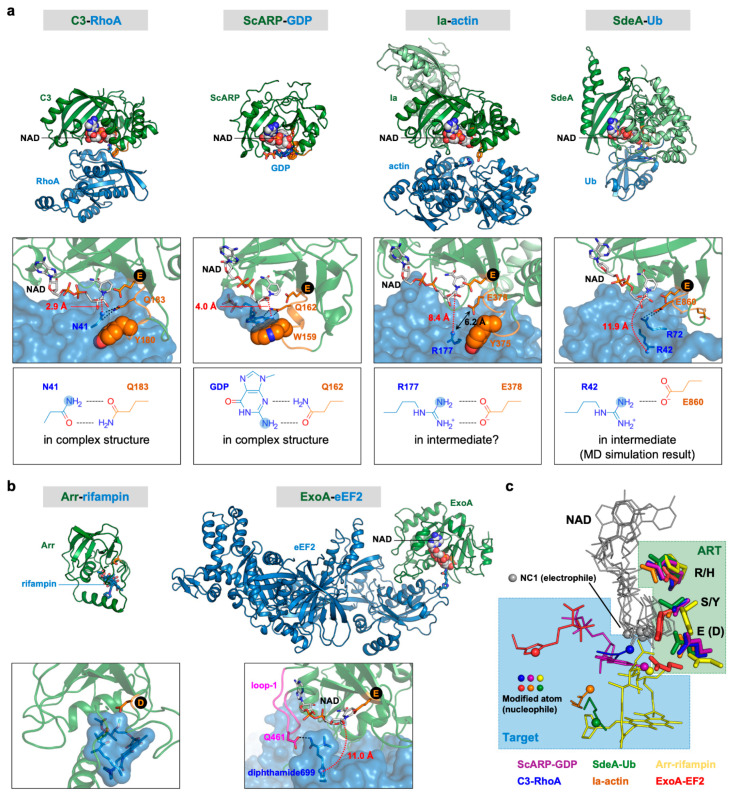
Many bacterial pathogens utilize ADP-ribosyltransferases (ARTs) as virulence factors. The critical aspect of ARTs is their target specificity. Each individual ART modifies a specific residue of its substrates, which could be proteins, DNA, or antibiotics. However, the mechanism underlying this specificity is poorly understood. Here, we review the substrate recognition mechanism and target residue specificity based on the available complex structures of ARTs and their substrates. We show that there are common mechanisms of target residue specificity among protein- and DNA-targeting ARTs.
Keywords: ADP-ribosyltransferase; complex structure of enzyme and substrate; substrate recognition; target residue specificity.
Conflict of interest statement
The authors declare no conflict of interest.
Figures
References
Publication types
MeSH terms
Substances
Grants and funding
- 15K08289/Japan Society for the Promotion of Science/International
- 17K15095/Japan Society for the Promotion of Science/International
- 23121529/Ministry of Education, Culture, Sports, Science and Technology/International
- 25121733/Ministry of Education, Culture, Sports, Science and Technology/International
LinkOut - more resources
Full Text Sources
Other Literature Sources
