


The Educational Efficacy of Humane Teaching Methods: A Systematic Review of the Evidence
- PMID: 33430457
- PMCID: PMC7827170
- DOI: 10.3390/ani11010114
The Educational Efficacy of Humane Teaching Methods: A Systematic Review of the Evidence
Abstract
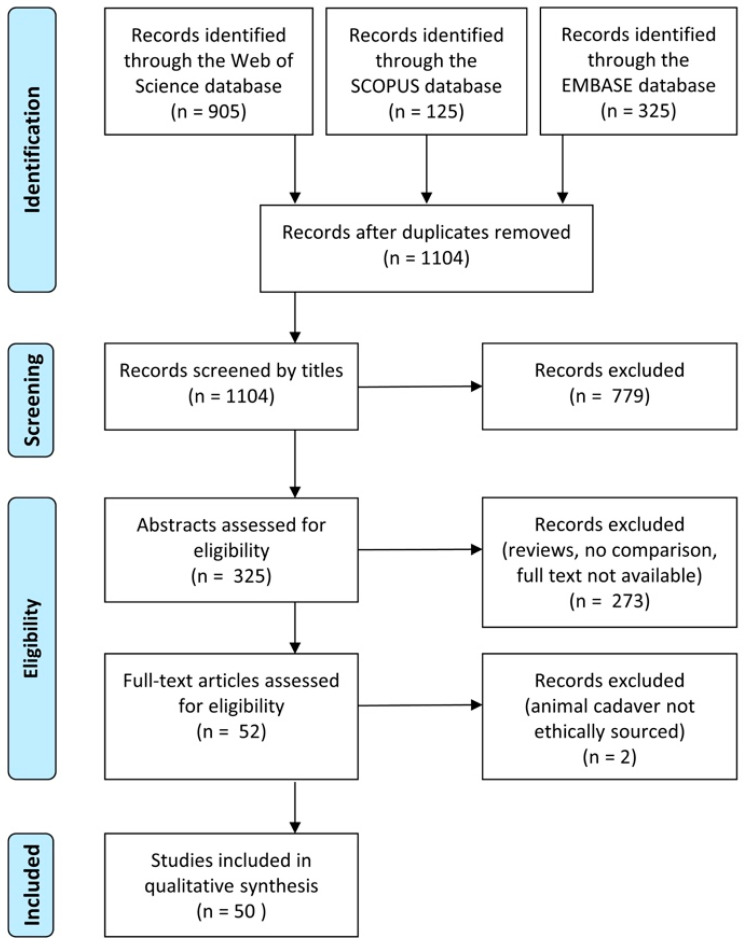
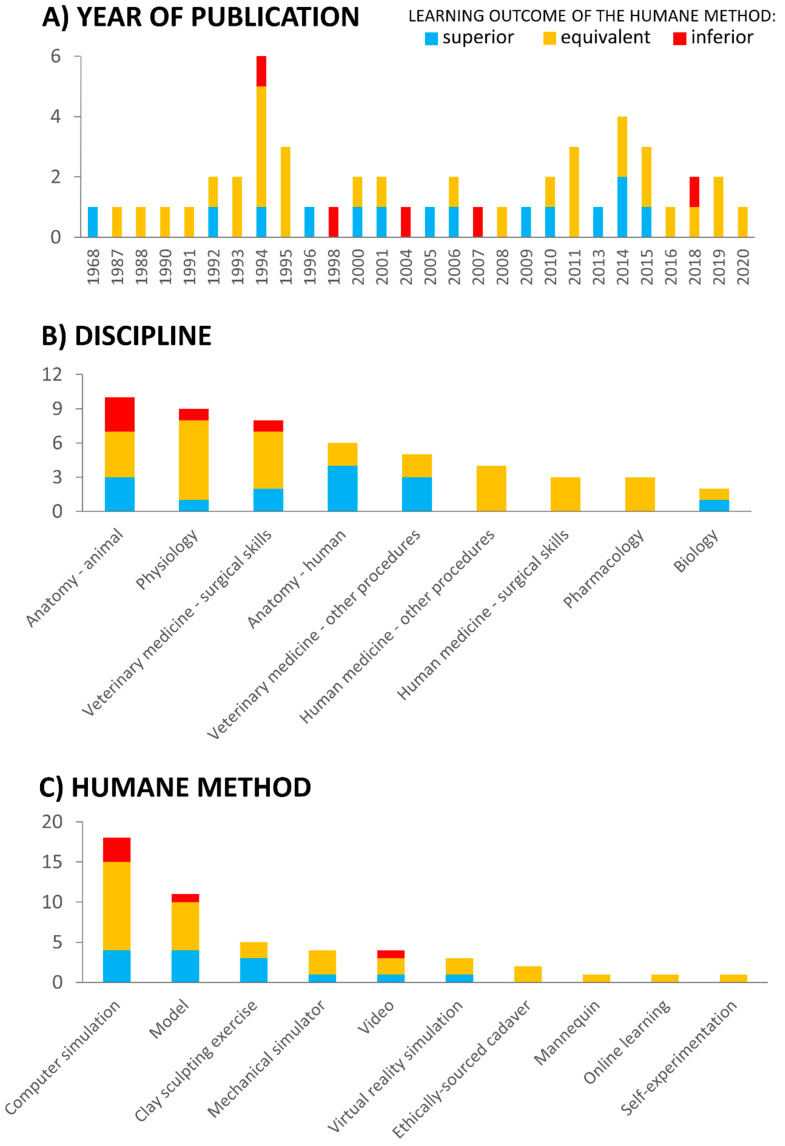
Humane alternatives to harmful educational animal use include ethically-sourced cadavers, models, mannequins, mechanical simulators, videos, computer and virtual reality simulations, and supervised clinical and surgical experiences. In many life and health sciences courses, however, traditional animal use persists, often due to uncertainty about the educational efficacy of humane alternatives. The most recent comprehensive reviews assessing learning outcomes of humane teaching methods, in comparison to harmful animal use, were published more than 10 years ago. Therefore, we aimed to collate and analyse the combined evidence from recent and older studies about the efficacy of humane teaching methods. Using specific search terms, we systematically searched the Web of Science, SCOPUS, and EMBASE databases for relevant educational studies. We extracted information on publication years, the country in which the study was conducted, field, humane teaching methods, form of learning outcome assessment, and the learning outcome of the humane teaching methods, in comparison with harmful animal use. We found 50 relevant studies published from 1968-2020, primarily stemming from the USA, UK, and Canada. Humane teaching methods produced learning outcomes superior (30%), equivalent (60%), or inferior (10%) to those produced by traditional harmful animal use. In conclusion, a wide-spread implementation of humane teaching methods would not only preserve learning outcomes, but may in fact be beneficial for animals, students, educators, and institutions.
Keywords: 3Rs; alternatives; animal use; education; learning outcome; replacement.
Conflict of interest statement
M.A.Z. is a Scientific Associate at the Animalfree Research foundation, a Postdoctoral Research Fellow at the Centre for Compassionate Conservation at the University of Technology Sydney, and an Associate Fellow of the Oxford Centre for Animal Ethics. A.K. is Founding Director of the Centre for Animal Welfare at the University of Winchester. All these organisations aim to promote animal welfare and/or animal ethics.
Figures
References
-
- Balcombe J. The Use of Animals in Higher Education: Problems, Alternatives, and Recommendations. The Humane Society Press; Washington, DC, USA: 2000.
-
- Freire R., Nicol C.J. A bibliometric analysis of past and emergent trends in animal welfare science. Anim. Welf. 2019;28:465–485. doi: 10.7120/09627286.28.4.465. - DOI
-
- Crettaz von Roten F. European attitudes towards animal research: Overview and consequences for science. Sci. Technol. Soc. 2009;14:349–364. doi: 10.1177/097172180901400207. - DOI
-
- Funk C., Rainie L. Attitudes and beliefs on science and technology topics. In: Funk C., Rainie L., editors. Public and Scientists’ Views on Science and Society. Pew Research Center; Washington, DC, USA: 2015.
Publication types
Grants and funding
LinkOut - more resources
Full Text Sources
Other Literature Sources
