Adaptation and Implementation of the Multiple-Family Group Intervention in Ghana
- PMID: 33430647
- PMCID: PMC9805812
- DOI: 10.1176/appi.ps.201900626
Adaptation and Implementation of the Multiple-Family Group Intervention in Ghana
Abstract
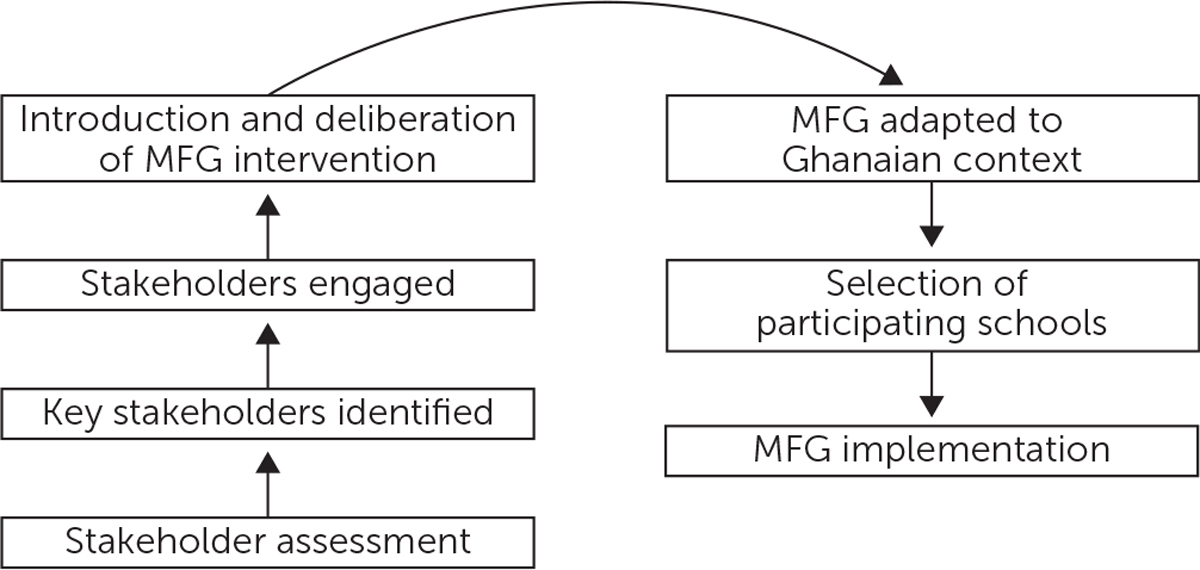
Background: The health system in Ghana is severely underequipped to meet the needs of children with behavioral health problems. A substantial treatment gap exists among individuals with behavioral challenges, necessitating the implementation of an evidence-based intervention to address child behavioral challenges in Ghana. This article presents learning opportunities from the adaptation and initiation process of an evidence-based approach, the multiple-family group (MFG) intervention, aimed at addressing child behavioral challenges in northern Ghana.
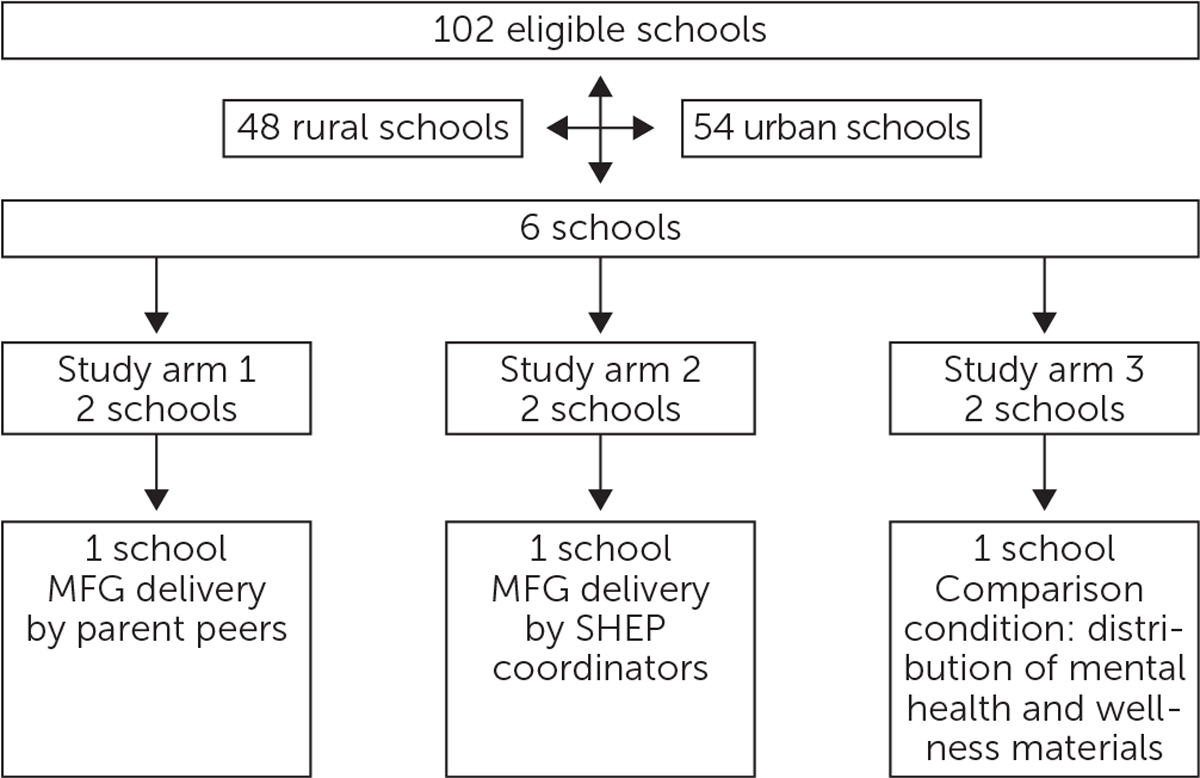
Methods: The MFG intervention will be tested and implemented in three schools selected through a clustered randomization process, with 60 child-caregiver dyads per school. Each school will be assigned to MFG delivery by parent peers, MFG delivery by School Health Education Program (SHEP) coordinators, or an intervention where students are supplied only with mental health wellness materials and educational supports. The providers will be assessed on a fidelity measure.
Results: The approach of engaging stakeholders in Ghana is anticipated to prove challenging because multiple partners are involved in MFG implementation. Participants are expected to actively participate, however, given some changes to the protocol to adapt it to the Ghanaian context, including the types of MFG facilitators and sample size. Other anticipated challenges include obtaining permission from key partners such as the education authorities, timing of the study within the academic calendar in Ghana, and meeting the high expectations of school authorities for the study.
Next steps: The MFG intervention will be delivered by parent peers and SHEP coordinators at the selected schools.
Trial registration: ClinicalTrials.gov NCT03081195.
Keywords: Adolescents; Behavior therapy; Child behavioral health; Ghana; Multiple Family Group intervention; School Health Education Program (SHEP).
Figures
References
-
- Sankoh O, Sevalie S, Weston M: Mental health in Africa. Lancet Glob Health 2018; 6:e954–e955 - PubMed
-
- Global Health Estimates 2016: Burden of Disease by Cause, Age, Sex, by Country and by Region, 2000–2016. Geneva, World Health Organization, 2018. https://www.who.int/healthinfo/global_burden_disease/estimates/en. Accessed Sept 16, 2020
-
- World Population Prospects: The 2017 Revision. New York, United Nations Department of Economic and Social Affairs Population Division, 2017. https://www.un.org/development/desa/publications/world-population-prospe.... Accessed Sept 16, 2020
-
- Next Generation Kenya: Listening to the Voices of Young People. Manchester, United Kingdom, British Council, 2018. https://www.britishcouncil.org/sites/default/files/h198_next_generation_...
-
- United Nations Development Programme: Sustainable Development Goals. New York, United Nations, 2018. https://unfoundation.org/what-we-do/issues/sustainable-development-goals.... Accessed Sept 16, 2020
Publication types
MeSH terms
Associated data
Grants and funding
LinkOut - more resources
Full Text Sources
Other Literature Sources
Medical
Miscellaneous