


Homology analysis between clinically isolated extraintestinal and enteral Klebsiella pneumoniae among neonates
- PMID: 33430787
- PMCID: PMC7802202
- DOI: 10.1186/s12866-020-02073-2
Homology analysis between clinically isolated extraintestinal and enteral Klebsiella pneumoniae among neonates
Erratum in
-
Correction to: Homology analysis between clinically isolated extraintestinal and enteral Klebsiella pneumoniae among neonates.BMC Microbiol. 2021 Feb 2;21(1):37. doi: 10.1186/s12866-021-02100-w. BMC Microbiol. 2021. PMID: 33530923 Free PMC article. No abstract available.
Abstract
Background: Klebsiella pneumoniae is a leading cause of hospital-associated (HA) infections. It has been reported that gastrointestinal colonization (GI) is likely to be a common and significant reservoir for the transmission and infections of K. pneumoniae in both adults and neonates. However, the homologous relationship between clinically isolated extraintestinal and enteral K. pneumoniae in neonates hasn't been characterized yet.
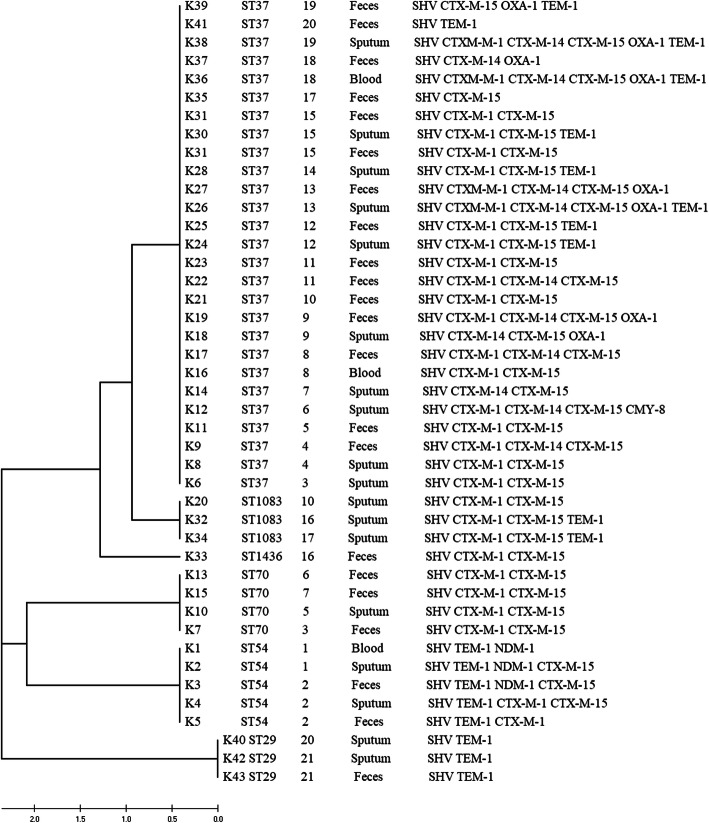
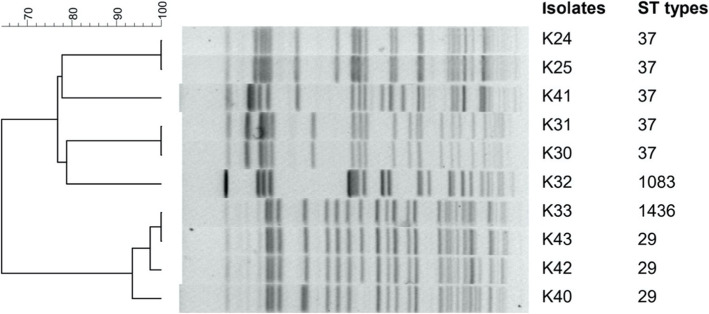
Results: Forty-three isolates from 21 neonatal patients were collected in this study. The proportion of carbapenem resistance was 62.8%. There were 12 patients (12/21, 57.4%) whose antibiotic resistance phenotypes, genotypes, and ST types (STs) were concordant. Six sequence types were detected using MLST, with ST37 and ST54 being the dominant types. The results of MLST were consist with the results of PFGE.
Conclusions: These data showed that there might be a close homologous relationship between extraintestinal K. pneumoniae (EXKP) and enteral K. pneumoniae (EKP) in neonates, indicating that the K. pneumoniae from the GI tract is possibly to be a significant reservoir for causing extraintestinal infections.
Keywords: Antibiotic resistance; Endogenic infection; Gastrointestinal colonization; Klebsiella pneumoniae; Multiple locus sequence typing.
Conflict of interest statement
The funding bodies played the role in the design of the study and collection, analysis, and interpretation of data and in writing the manuscript. The authors declare that they have no competing interests.
Figures
References
Publication types
MeSH terms
Substances
Grants and funding
LinkOut - more resources
Full Text Sources
Other Literature Sources
Medical
Molecular Biology Databases
