


Regional brain volume predicts response to methylphenidate treatment in individuals with ADHD
- PMID: 33430830
- PMCID: PMC7798216
- DOI: 10.1186/s12888-021-03040-5
Regional brain volume predicts response to methylphenidate treatment in individuals with ADHD
Erratum in
-
Correction to: Regional brain volume predicts response to methylphenidate treatment in individuals with ADHD.BMC Psychiatry. 2021 Feb 16;21(1):102. doi: 10.1186/s12888-021-03096-3. BMC Psychiatry. 2021. PMID: 33593305 Free PMC article. No abstract available.
Abstract
Background: Despite the effectiveness of methylphenidate for treating ADHD, up to 30% of individuals with ADHD show poor responses to methylphenidate. Neuroimaging biomarkers to predict medication responses remain elusive. This study characterized neuroanatomical features that differentiated between clinically good and poor methylphenidate responders with ADHD.
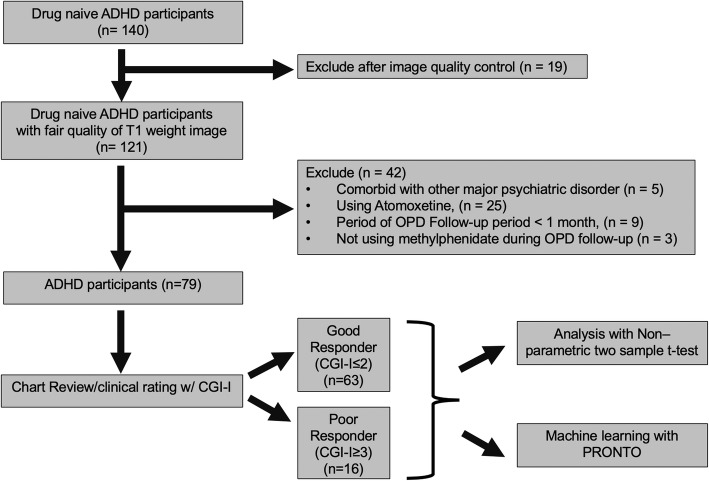
Methods: Using a naturalistic observation design selected from a larger cohort, we included 79 drug-naive individuals (aged 6-42 years) with ADHD without major psychiatric comorbidity, who had acceptable baseline structural MRI data quality. Based on a retrospective chart review, we defined responders by individuals' responses to at least one-month treatment with methylphenidate. A nonparametric mass-univariate voxel-based morphometric analysis was used to compare regional gray matter volume differences between good and poor responders. A multivariate pattern recognition based on the support vector machine was further implemented to identify neuroanatomical indicators to predict an individual's response.
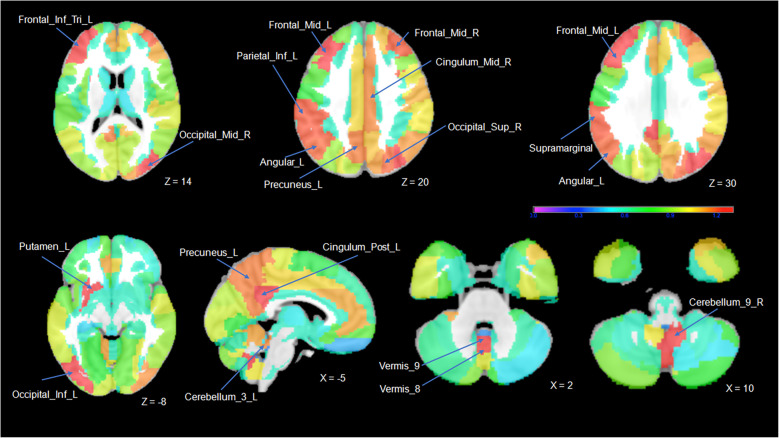
Results: 63 and 16 individuals were classified in the good and poor responder group, respectively. Using the small-volume correction procedure based on the hypothesis-driven striatal and default-mode network masks, poor responders had smaller regional volumes of the left putamen as well as larger precuneus volumes compared to good responders at baseline. The machine learning approach identified that volumetric information among these two regions alongside the left frontoparietal regions, occipital lobes, and posterior/inferior cerebellum could predict clinical responses to methylphenidate in individuals with ADHD.
Conclusion: Our results suggest regional striatal and precuneus gray matter volumes play a critical role in mediating treatment responses in individuals with ADHD.
Keywords: ADHD; Methylphenidate; Striatum; Support vector machine; Treatment response; VBM.
Conflict of interest statement
SSG and HYL were among the investigators of a clinical trial supported by Orient Pharma Co., Ltd. (OP-2PN012–301), Taiwan. The authors declare no other competing interests related to this work.
Figures

References
-
- Cortese S, Adamo N, Del Giovane C, Mohr-Jensen C, Hayes AJ, Carucci S, Atkinson LZ, Tessari L, Banaschewski T, Coghill D, et al. Comparative efficacy and tolerability of medications for attention-deficit hyperactivity disorder in children, adolescents, and adults: a systematic review and network meta-analysis. Lancet Psychiatry. 2018;5(9):727–738. doi: 10.1016/S2215-0366(18)30269-4. - DOI - PMC - PubMed
-
- Gau SS, Chen SJ, Chou WJ, Cheng H, Tang CS, Chang HL, Tzang RF, Wu YY, Huang YF, Chou MC, et al. National survey of adherence, efficacy, and side effects of methylphenidate in children with attention-deficit/hyperactivity disorder in Taiwan. J Clin Psychiatry. 2008;69(1):131–140. doi: 10.4088/JCP.v69n0118. - DOI - PubMed
Publication types
MeSH terms
Substances
LinkOut - more resources
Full Text Sources
Other Literature Sources
Medical
