


Coffee consumption and risk of prostate cancer: a systematic review and meta-analysis
- PMID: 33431520
- PMCID: PMC7805365
- DOI: 10.1136/bmjopen-2020-038902
Coffee consumption and risk of prostate cancer: a systematic review and meta-analysis
Abstract
Objectives: To conduct a systematic review with meta-analysis of cohort studies to evaluate the association of coffee consumption with the risk of prostate cancer.
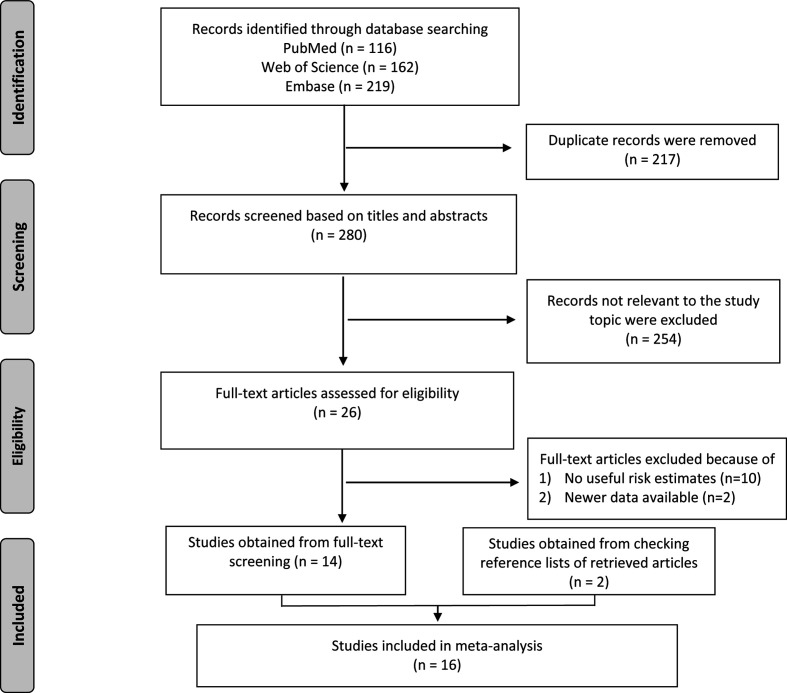
Data sources: PubMed, Web of Science and Embase were searched for eligible studies up to September 2020.
Study selection: Cohort studies were included.
Data extraction and synthesis: Two researchers independently reviewed the studies and extracted the data. Data synthesis was performed via systematic review and meta-analysis of eligible cohort studies. Meta-analysis was performed with the "metan" and "glst" commands in Stata 14.0.
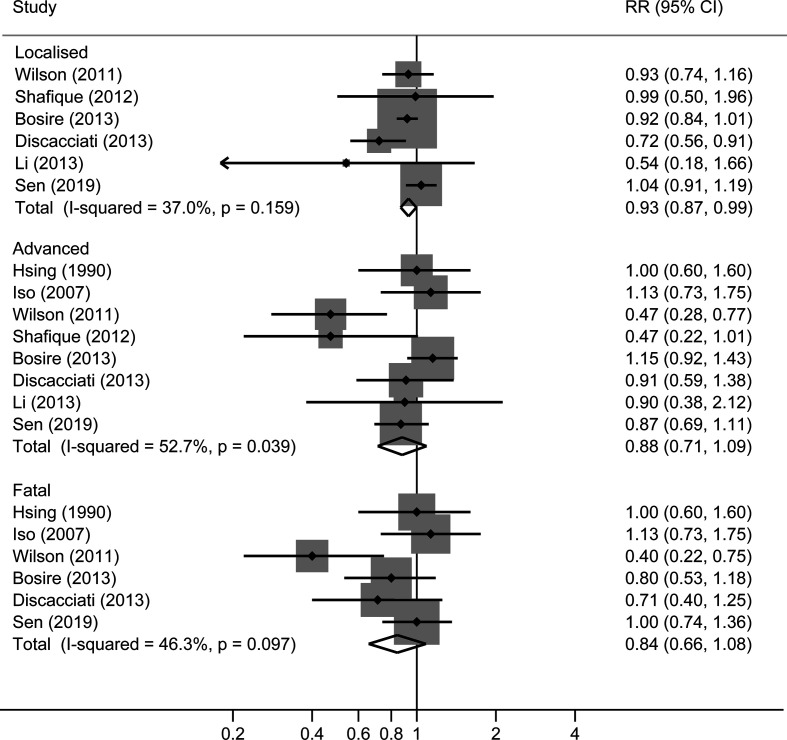
Main outcomes and measures: Prostate cancer was the main outcome. It was classified as localised prostate cancer which included localised or non-aggressive cancers; advanced prostate cancer which included advanced or aggressive cancers; or fatal prostate cancer which included fatal/lethal cancers or prostate cancer-specific deaths.
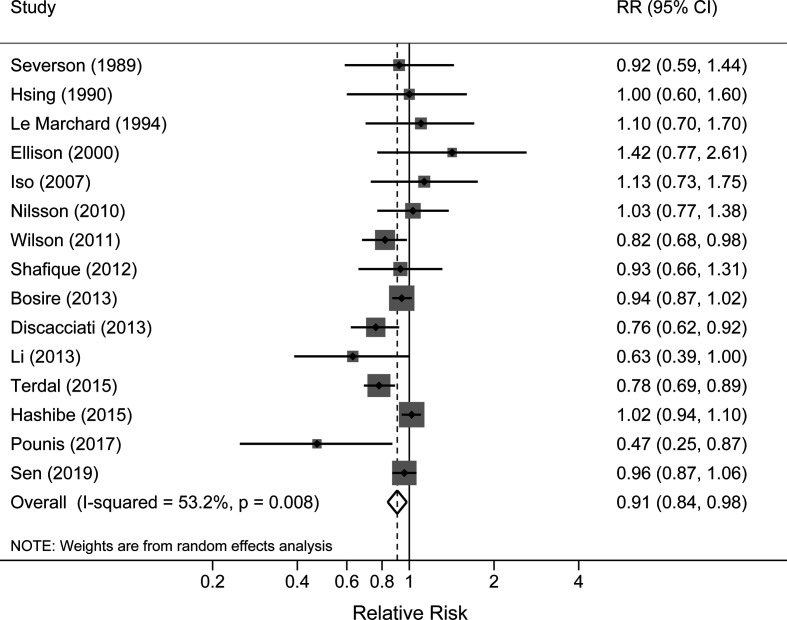
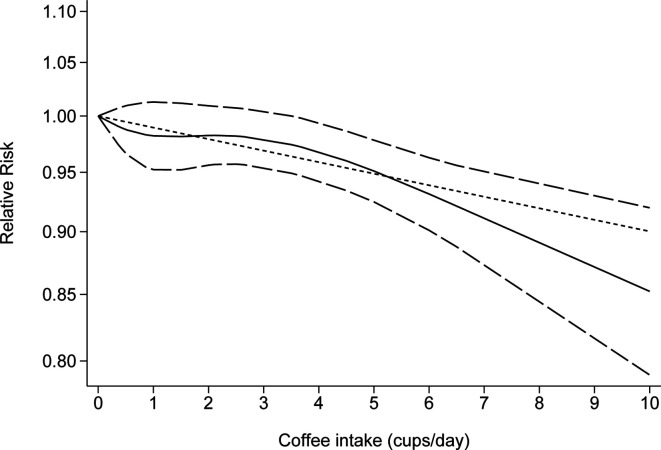
Results: Sixteen prospective cohort studies were finally included, with 57 732 cases of prostate cancer and 1 081 586 total cohort members. Higher coffee consumption was significantly associated with a lower risk of prostate cancer. Compared with the lowest category of coffee consumption, the pooled relative risk (RR) was 0.91 (95% CI 0.84 to 0.98), I2= 53.2%) for the highest category of coffee consumption. There was a significant linear trend for the association (p=0.006 for linear trend), with a pooled RR of 0.988 (95% CI 0.981 to 0.995) for each increment of one cup of coffee per day. For localised, advanced and fatal prostate cancer, the pooled RRs were 0.93 (95% CI 0.87 to 0.99), 0.88 (95% CI 0.71 to 1.09) and 0.84 (95% CI 0.66 to 1.08), respectively. No evidence of publication bias was indicated in this meta-analysis.
Conclusions: This study suggests that a higher intake of coffee may be associated with a lower risk of prostate cancer.
Keywords: epidemiology; nutrition; prostate disease.
© Author(s) (or their employer(s)) 2020. Re-use permitted under CC BY-NC. No commercial re-use. See rights and permissions. Published by BMJ.
Conflict of interest statement
Competing interests: None declared.
Figures
Comment in
-
Die erste Seite.MMW Fortschr Med. 2021 Feb;163(2):3. doi: 10.1007/s15006-021-9602-7. MMW Fortschr Med. 2021. PMID: 33527260 German. No abstract available.
References
Publication types
MeSH terms
Substances
LinkOut - more resources
Full Text Sources
Other Literature Sources
Medical
