Use of a Tablet-Based System to Perform Abdominal Ultrasounds in a Field Investigation of Schistosomiasis-Related Morbidity in Western Kenya
- PMID: 33432910
- PMCID: PMC7941846
- DOI: 10.4269/ajtmh.20-1175
Use of a Tablet-Based System to Perform Abdominal Ultrasounds in a Field Investigation of Schistosomiasis-Related Morbidity in Western Kenya
Abstract
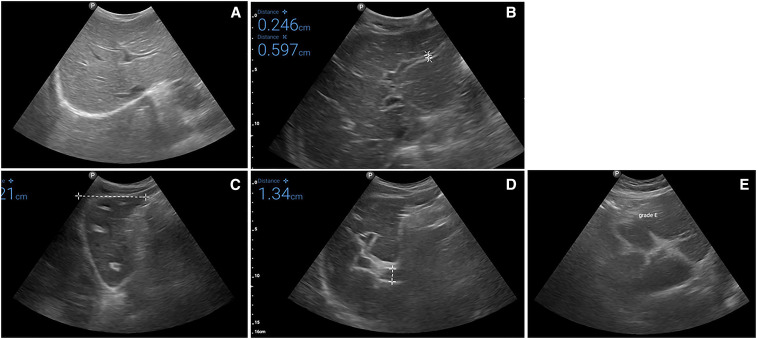
Chronic intestinal schistosomiasis can cause severe hepatosplenic disease and is a neglected tropical disease of public health importance in sub-Saharan Africa, including Kenya. Although the goal of control programs is to reduce morbidity, milestones for program performance focus on reductions in prevalence and intensity of infection, rather than actual measures of morbidity. Using ultrasound to measure hepatosplenic disease severity is an accepted method of determining schistosomiasis-related morbidity; however, ultrasound has not historically been considered a field-deployable tool because of equipment limitations and unavailability of expertise. A point-of-care tablet-based ultrasound system was used to perform abdominal ultrasounds in a field investigation of schistosomiasis-related morbidity in western Kenya; during the study, other pathologies and pregnancies were also identified via ultrasound, and participants referred to care. Recent technological advances may make it more feasible to implement ultrasound as part of a control program and can also offer important benefits to the community.
Figures
References
-
- van der Werf MJ, de Vlas SJ, Brooker S, Looman CW, Nagelkerke NJ, Habbema JD, Engels D, 2003. Quantification of clinical morbidity associated with schistosome infection in sub-Saharan Africa. Acta Trop 86: 125–139. - PubMed
-
- World Health Organization , 2013. Schistosomiasis Progress Report 2001–2011, Strategic Plan 2012–2020. Geneva, Switzerland: WHO.
-
- King CH, Dangerfield-Cha M, 2008. The unacknowledged impact of chronic schistosomiasis. Chronic Illn 4: 65–79. - PubMed
-
- World Health Organization , 2020. Ending the Neglect to Attain the Sustainable Development Goals: a Road Map for Neglected Tropical Diseases 2021–2030. Geneva, Switzerland: WHO.
Publication types
MeSH terms
LinkOut - more resources
Full Text Sources
Other Literature Sources