


Sensory Features, Liking and Emotions of Consumers towards Classical, Molecular and Note by Note Foods
- PMID: 33435148
- PMCID: PMC7826582
- DOI: 10.3390/foods10010133
Sensory Features, Liking and Emotions of Consumers towards Classical, Molecular and Note by Note Foods
Abstract
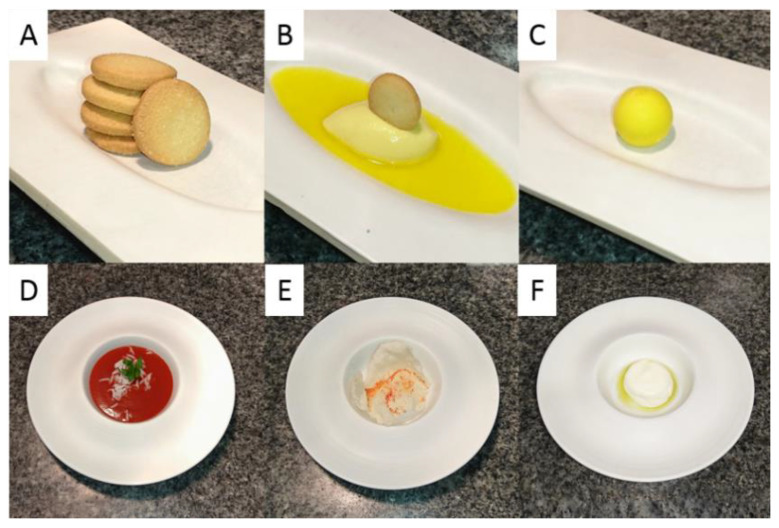
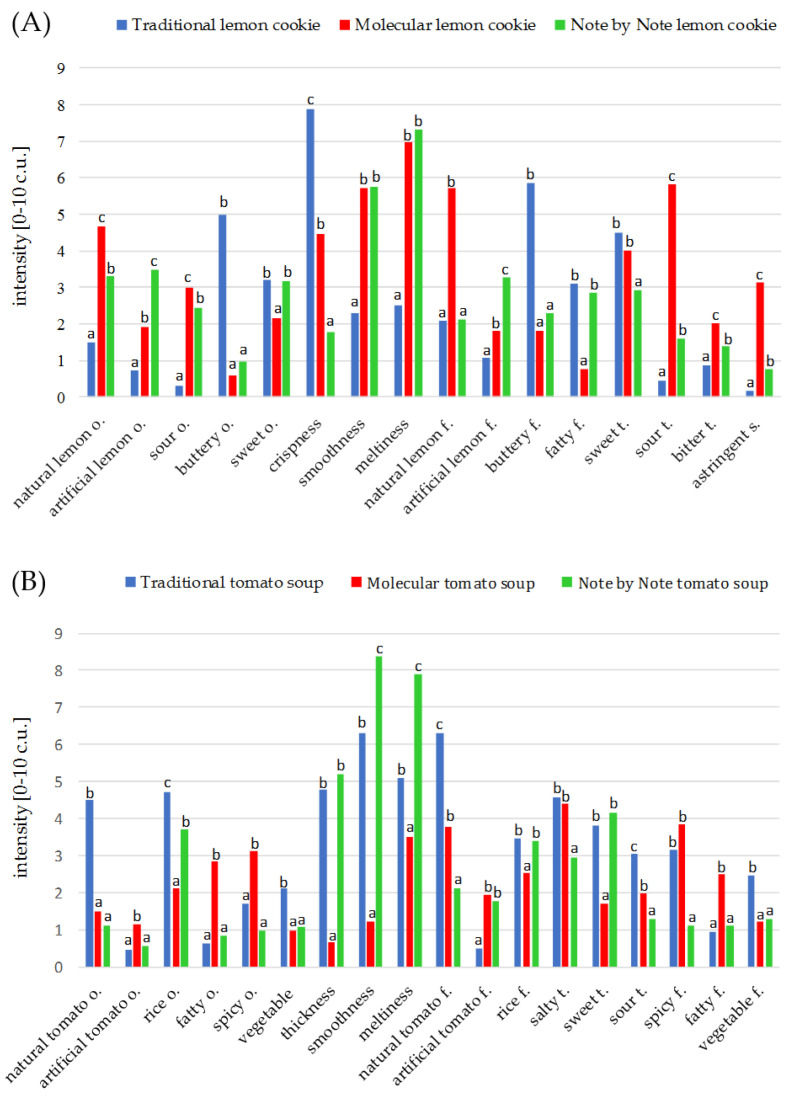
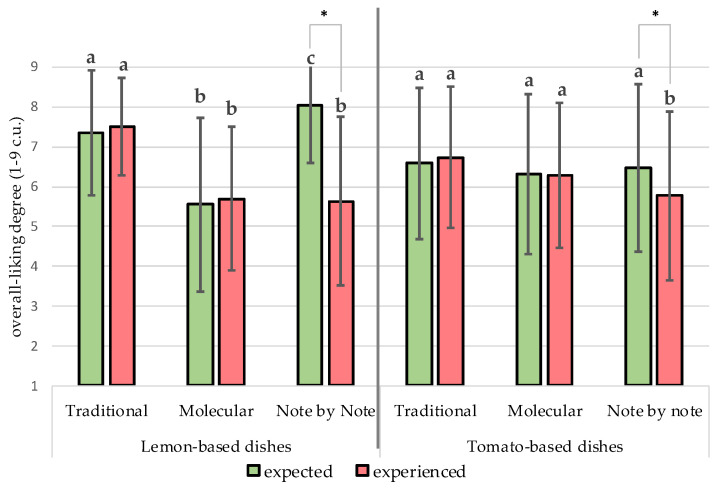
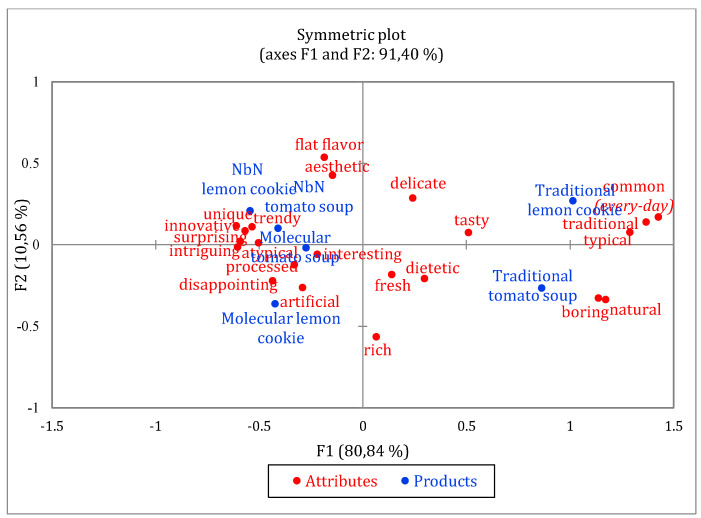
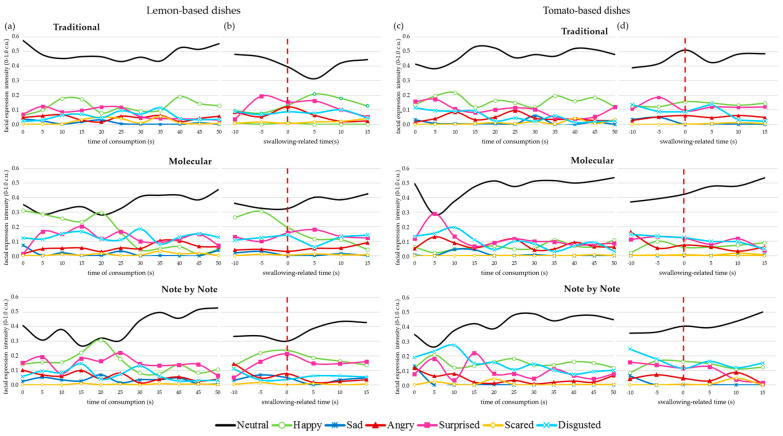
Modern cuisine served at top-end restaurants attempts to attract customers, who increasingly demand new flavor, pleasure and fun. The materials were six dishes prepared using lemon or tomatoes and made in the traditional (classical), molecular and Note by Note (NbN) versions. The study explores sensory characteristics, consumer liking of key attributes, their declared sensations and emotions, as well as consumers' facial expressions responding to the dishes. These objectives were investigated by descriptive quantitative analysis and consumer tests. Tests included a 9-point hedonic scale for degree of liking a dish, Check-All-That-Apply (CATA) for declared sensations and FaceReader for facial expressions. The influence of factors associated with consumer attitudes toward new food and willingness to try the dishes in the future were also determined. It was stated that the product profiles represent different sensory characteristics due to the technology of food production and the ingredients used. The food neophobia and consumer innovativeness had a significant (p ≤ 0.05) effect on liking. The odor-, flavor-, texture- and overall-liking of the NbN dishes were lower than that of traditional versions but did not vary from scores for molecular samples. The expected liking of NbN dishes was higher than experienced-liking. Traditional and modern products differed in CATA terms. Classical dishes were perceived by consumers as more tasty, traditional and typical while modern cuisine dishes were perceived as more surprising, intriguing, innovative and trendy. Mimic expressions assessment by FaceReader showed similar trends in some emotions in both classical dishes and separate temporal patterns in modern products.
Keywords: CATA; classical dishes; consumer research; emotions; molecular and Note by Note products; new product development; sensory profiling.
Conflict of interest statement
The authors declare no conflict of interest.
Figures
References
-
- Guiné R.P., Barros A., Queirós A., Pina A., Vale A., Ramoa H., Folha J., Carneiro R. Development of a solid vinaigrette and product testing. J. Culin. Sci. Technol. 2013;11:259–274. doi: 10.1080/15428052.2013.769872. - DOI
-
- Mărkut L., Mărkut A., Mârza B. Modern Tendencies in Changing the Consumers’ Preference. Procedia Econ. Financ. 2014;16:535–539. doi: 10.1016/S2212-567100835-1. - DOI
-
- Baldwin C., Wilberforce N., Kapur A. Restaurant and food service life cycle assessment and development of a sustainability standard. Int. J. Life Cycle Assess. 2011;16:40–49. doi: 10.1007/s11367-010-0234-x. - DOI
-
- Haghighi M., Dorosti A., Rahnama A., Hoseinpour A. Evaluation of factors affecting customer loyalty in the restaurant industry. Afr. J. Bus. Manag. 2012;6:5039–5046. doi: 10.5897/AJBM11.2765. - DOI
LinkOut - more resources
Full Text Sources
Other Literature Sources
Research Materials
Miscellaneous
